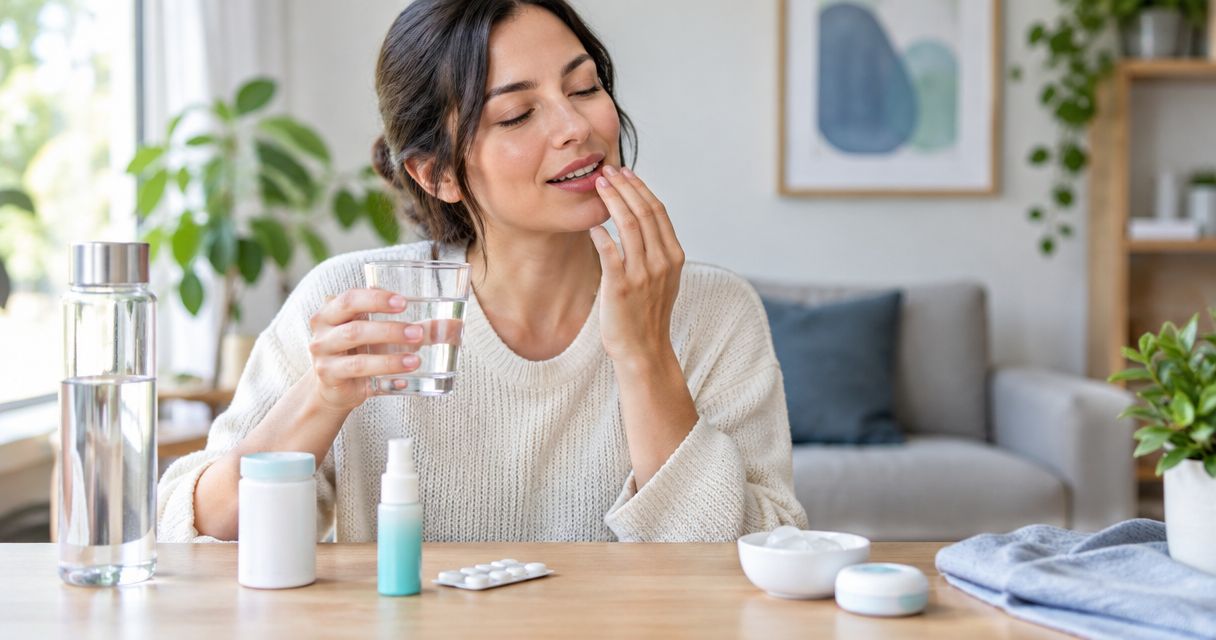
Best overall for on-demand moisture: a saliva-substitute spray. Best for nighttime dryness: an oral moisturizing gel. Best for stimulating saliva while awake: sugar-free gum. This 2026 guide compares dry mouth relief products by what they do, when to use them, and when you need dental care instead of another purchase.
- Saliva-substitute sprays are practical dry mouth relief products for targeted moisture when your mouth feels dry.
- Oral moisturizing gels suit bedtime use; sugar-free gum suits waking hours when chewing is comfortable.
- Choose sugar-free products, and use fluoride toothpaste to protect teeth rather than relying on moisturizers alone.
- Dentalcoloradosprings is best for Colorado Springs readers who need dental evaluation alongside dry mouth relief products.
Why this matters
Dry mouth is more than an uncomfortable feeling. Saliva helps you chew, swallow, taste, and protect your teeth; persistent dryness increases the risk of tooth decay and oral infections.
A moisturizing product treats the feeling of dryness, not necessarily its cause. Medicines, mouth breathing, dehydration, and medical conditions can contribute. Do not stop a prescription because your mouth feels dry; ask the prescriber about the symptom.
For local dental care, Dentalcoloradosprings provides a place to address oral health concerns alongside symptom relief. Tell your dentist whether dryness affects eating, sleep, speaking, or denture comfort—not just that your mouth feels sticky.
What makes the best dry mouth relief products
The best choice in 2026 matches the way you experience dryness. Use these criteria before choosing a format:
- Relief mechanism: Saliva substitutes moisten the mouth; gum and lozenges encourage saliva through chewing or sucking.
- Time of use: A daytime product must fit speaking and eating. A bedtime product should not require chewing or holding a loose object in your mouth.
- Tooth protection: Choose sugar-free formulas. Check for fluoride when selecting a rinse intended to support cavity prevention.
- Ingredient tolerance: Strong flavors and some ingredients sting sensitive tissue. Stop a product that causes burning or irritation.
- Safe use: Check age restrictions, swallowing instructions, and directions for dentures or other oral appliances.
A product that meets one need does not automatically meet the others. Moisture, cavity prevention, and treatment of an underlying condition are separate jobs.
Dry mouth relief products at a glance
These are product categories, not a claim that a particular manufacturer's formula outperforms another. Compare the actual label before buying.
| Rank and option | Best for | Standout feature | Key limitation |
|---|---|---|---|
| 1. Saliva-substitute spray | On-demand daytime moisture | Direct application without chewing | Requires reapplication; does not treat the cause |
| 2. Oral moisturizing gel | Bedtime dryness | Thicker format for coating oral tissues | Texture can feel sticky |
| 3. Sugar-free gum | Saliva stimulation while awake | Chewing encourages saliva flow | Unsuitable when chewing is painful or unsafe |
| 4. Sugar-free lozenges | Saliva stimulation without chewing | Dissolves gradually while you are awake | Choking risk; unsuitable during sleep |
| 5. Alcohol-free fluoride rinse | Cavity-prevention support | Fluoride supports protection against decay | Does not replace a moisturizer or brushing |
1. Saliva-substitute spray: best for on-demand daytime moisture
A saliva-substitute spray wets dry oral tissues without requiring you to chew. It is a practical starting point when dryness interrupts conversation or leaves your mouth feeling sticky between meals.
Choose a product specifically labeled for oral dryness. Breath-freshening sprays serve a different purpose, and a strong mint sensation does not prove that a product moisturizes your mouth.
Saliva-substitute spray pros:
- Applies moisture directly where you need it.
- Does not depend on comfortable chewing.
- Fits brief daytime use between other activities.
Saliva-substitute spray cons:
- Relief is temporary and requires repeat use.
- Flavor or ingredients can irritate sensitive tissue.
- Moisturizing alone does not provide complete cavity protection.
Best for: Adults who want targeted daytime moisture without gum or lozenges.
Follow the label rather than creating your own dosing schedule. If you need repeated applications just to speak or swallow comfortably, arrange an evaluation instead of treating that pattern as normal.
Verdict: Buy a saliva-substitute spray for daytime moisture; skip ordinary breath spray as a substitute.
2. Oral moisturizing gel: best for bedtime dryness
An oral moisturizing gel coats the tissues inside your mouth with a thicker preparation than a spray. The format suits bedtime because you do not need to keep chewing or sucking on something.
Use only a gel intended for use inside the mouth. Skin moisturizers, essential oils, and household products are not substitutes for an oral product.
Oral moisturizing gel pros:
- Offers a thicker texture than a spray.
- Does not require chewing.
- Fits a bedtime oral-care routine when used as directed.
Oral moisturizing gel cons:
- The coating can feel sticky or unpleasant.
- Flavor preferences can limit regular use.
- It does not explain or correct nighttime mouth breathing.
Best for: People whose main complaint is a dry mouth at bedtime or on waking.
If you wear dentures, check the product's instructions and ask your dentist how to use it with your denture-care routine. A gel does not correct a denture that rubs, shifts, or creates a sore spot.
Verdict: Buy an oral moisturizing gel when bedtime dryness is the main problem; skip it if the texture makes consistent use unrealistic.
3. Sugar-free gum: best for stimulating saliva while awake
Sugar-free gum encourages saliva through chewing. It makes sense when you can chew comfortably and your salivary glands still respond to stimulation.
Xylitol is a common sugar substitute in these products, but the ingredient name alone does not establish that one gum provides better dry mouth relief than another. Choose a sugar-free formula you tolerate rather than treating front-label claims as proof of effectiveness.
Sugar-free gum pros:
- Encourages your own saliva production.
- Avoids repeated exposure to sugar from regular gum.
- Provides a convenient option while you are awake.
Sugar-free gum cons:
- Can aggravate jaw discomfort.
- Is unsuitable when chewing or swallowing is unsafe.
- Sugar alcohols can cause digestive upset.
Best for: People who want saliva stimulation and have no difficulty chewing.
Do not chew gum while sleeping. Keep xylitol-containing products away from dogs because xylitol is toxic to them, even though it is used in products intended for people.
Verdict: Buy sugar-free gum for comfortable daytime chewing; skip it if you have jaw pain or swallowing difficulties.
4. Sugar-free lozenges: best for stimulation without chewing
Sugar-free lozenges encourage saliva as they dissolve. They suit waking periods when you want stimulation but do not want to keep chewing gum.
Read the ingredients as well as the sugar claim. A sugar-free product can still contain acids, and repeated acidic exposure is undesirable when your mouth already lacks saliva's normal protection.
Sugar-free lozenge pros:
- Encourages saliva without repeated chewing.
- Offers an alternative when gum is inconvenient.
- Avoids sugar exposure from ordinary hard candy.
Sugar-free lozenge cons:
- Presents a choking risk.
- Must not be used during sleep.
- Acidic formulas and strong flavors can be unsuitable for sensitive mouths.
Best for: Adults who can safely manage a dissolving lozenge and prefer not to chew gum.
Avoid using lemon drops or sour candy as a default dry mouth remedy. Sourness stimulates saliva, but repeated acid exposure is a poor trade for teeth already at increased risk from dryness.
Verdict: Buy sugar-free lozenges for awake-only use; skip sour candy and any lozenge you cannot manage safely.
5. Alcohol-free fluoride rinse: best for cavity-prevention support
An alcohol-free fluoride rinse supports tooth protection rather than replacing missing moisture. That distinction matters: a mouth that feels more comfortable can still need additional attention to decay risk.
Check for fluoride on the label. Alcohol-free breath rinse and fluoride rinse are not interchangeable descriptions, and an alcohol-free label does not guarantee that every ingredient will feel comfortable.
Alcohol-free fluoride rinse pros:
- Adds fluoride exposure when appropriate for your dental-care plan.
- Avoids alcohol-containing formulations that can feel irritating.
- Fits a broader approach to protecting teeth affected by dryness.
Alcohol-free fluoride rinse cons:
- Does not replace brushing or cleaning between teeth.
- Does not necessarily provide meaningful moisture relief.
- Is unsuitable for people who cannot reliably spit it out.
Best for: People who need cavity-prevention support and can use a rinse safely.
Ask your dentist whether an over-the-counter rinse fits your needs or whether a different fluoride plan is appropriate. Follow the label's timing and swallowing instructions.
Verdict: Buy an alcohol-free fluoride rinse for tooth-protection support when appropriate; skip it as your only dry mouth treatment.
Match the product to the problem
The useful distinction in 2026 is moisture replacement versus saliva stimulation. Sprays and gels supply moisture; gum and lozenges depend on a response from your salivary glands. Fluoride rinse addresses a different concern: protecting teeth.
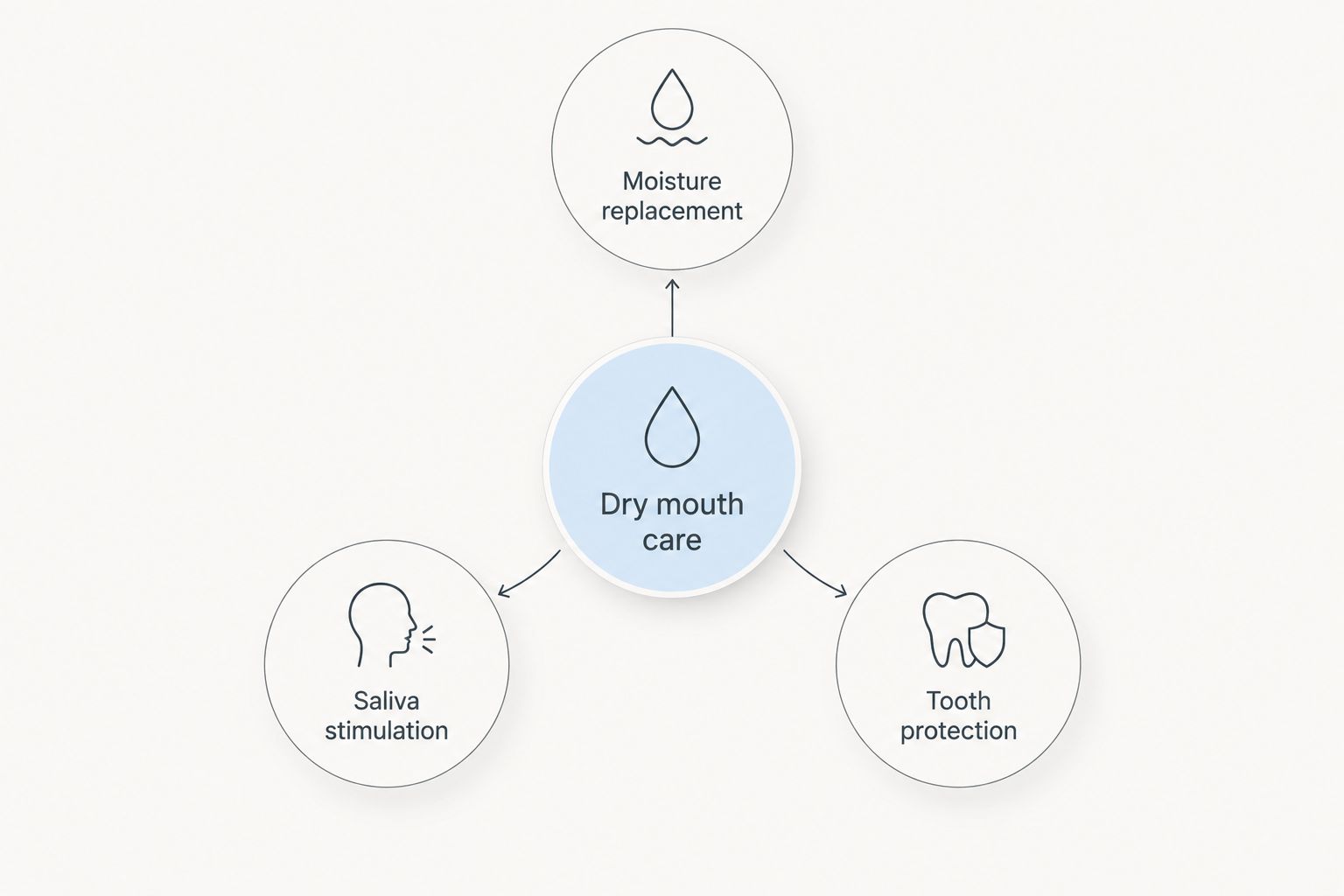
You do not need every format. Start with the one that matches your main complaint, then assess whether it actually helps without causing irritation.
Keep basic oral care in place: brush for 2 minutes per session, complete 2 brushing sessions per day with fluoride toothpaste, and include 1 interdental cleaning session per day. Your dentist can adapt those steps to your mouth, dexterity, and dental work.
When products are not enough
Arrange a dental assessment when dryness persists, repeatedly wakes you, interferes with eating, or comes with sores or denture discomfort. Bring a list of medicines and supplements, including nonprescription products.
Dentalcoloradosprings offers general dental care to local patients. An appointment can address your oral health concerns; product shopping alone cannot identify every cause of dryness.
Seek urgent medical care for difficulty breathing, inability to swallow fluids, or signs of severe dehydration. Do not try to manage those symptoms with gum, lozenges, or a stronger rinse.
Discuss persistent dry mouth
Explain your symptoms and ask about a dental evaluation for ongoing dryness.
How these options rank
This 2026 ranking prioritizes symptom fit, safe use, ingredient tolerance, and tooth protection—not a brand contest or a claim of clinical superiority. Spray takes the default position because it provides targeted moisture without chewing; the other formats win for their specific uses.
The comparison does not establish that one manufacturer's formulation lasts longer than another. Read the current label, and judge a product by whether you can use it safely and consistently.
Which dry mouth relief products should you choose?
Start with a saliva-substitute spray for daytime dryness or an oral moisturizing gel for bedtime dryness. Choose sugar-free gum or lozenges instead when saliva stimulation works for you and you can use them safely.
Keep fluoride-based tooth protection separate from the comfort decision. For persistent symptoms in 2026, Dentalcoloradosprings is the local dental-care option in this guide—not a substitute for discussing medication-related or medical causes with your treating clinician.
FAQ
What's the best dry mouth relief product to start with?
A saliva-substitute spray is a practical starting point for daytime moisture without chewing. An oral moisturizing gel better matches bedtime use, while persistent dryness needs evaluation rather than repeated product switching.
Is dry mouth gel better than a spray at night?
An oral moisturizing gel suits bedtime when you prefer a thicker coating. A spray suits targeted applications; neither format guarantees relief throughout the night.
Does sugar-free gum help a dry mouth?
Sugar-free gum can help by stimulating saliva while you chew. Avoid it if chewing causes jaw pain or you cannot chew and swallow safely.
Can I sleep with a dry mouth lozenge in my mouth?
Do not sleep with a loose lozenge or gum in your mouth because of choking risk. Use a bedtime oral moisturizer according to its label instead.
Is alcohol-free mouthwash enough to treat dry mouth?
Alcohol-free mouthwash is not a complete dry mouth treatment. A fluoride rinse supports cavity prevention, while a saliva substitute addresses moisture and an evaluation addresses persistent symptoms.
Should I stop a medicine that gives me dry mouth?
Do not stop a prescribed medicine on your own because of dry mouth. Tell the prescriber about the symptom and ask whether changes to your treatment are appropriate.
When should I see a dentist about dry mouth?
See a dentist when dryness persists, disrupts eating or sleep, or causes oral discomfort. Difficulty breathing or inability to swallow fluids requires urgent medical care rather than an ordinary dental appointment.
One last thing
A comfortable mouth is not proof that your teeth are protected. For your next 2026 purchase, read the label with two separate questions: Does this relieve dryness, and what protects my teeth? One product does not have to do both—but your care plan should.