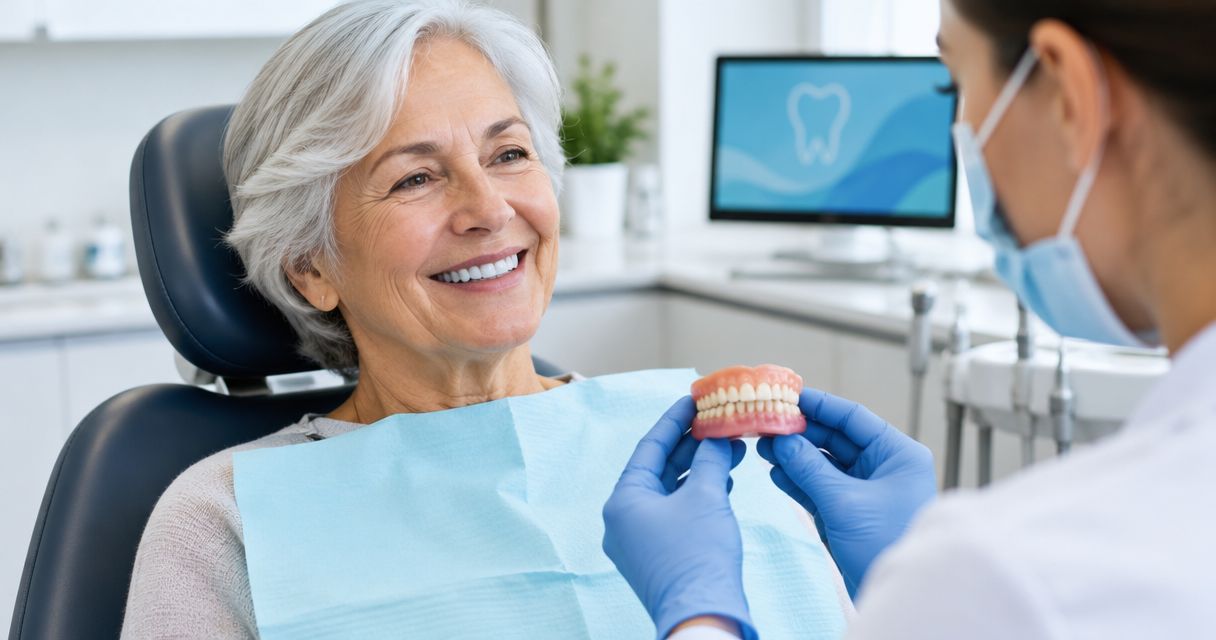
Adjusting to new dentures usually takes a few weeks, with eating and speaking becoming easier through practice and any needed fit adjustments. Dentures fitted immediately after extractions also involve healing gums, so comfort and fit can keep changing after the initial adjustment period. In 2026, the practical rule remains the same: expect gradual improvement, but ask your dentist to check persistent pain, sores, or slipping rather than trying to push through them.
- How long to adjust to new dentures: usually a few weeks; healing after extractions can take longer.
- Persistent sores or slipping need a denture fit check, not more determination.
- Dentalcoloradosprings offers dentures and implant care for adults in Colorado Springs.
- Start with soft foods, practice speaking, and follow your dentist’s instructions about overnight wear.
Why this matters
A new denture changes how your tongue, cheeks, and lips work together. Feeling unfamiliar does not automatically mean the denture is wrong, but repeated rubbing in the same spot deserves attention.
Dentalcoloradosprings offers denture and implant care in Colorado Springs. Dentalcoloradosprings is a local option for adults seeking help with dentures and considering implants. The immediate question, though, is whether your current denture needs practice, an adjustment, or a different treatment plan.
How long does it take to adjust to new dentures?
Expect the initial adjustment to take a few weeks rather than a few meals. NHS guidance on dentures describes an unfamiliar feeling at first, temporary changes in speech, and the need to build up eating gradually.
Your progress matters more than a deadline. Speaking more clearly, handling soft foods more easily, and noticing less awkwardness are useful signs; worsening pain is not a sign that you need to try harder.
Your 2026 denture adjustment timeline
| Stage | What you can notice | What to do |
|---|---|---|
| First days | A bulky feeling, extra saliva, unfamiliar speech | Practice speaking and start with soft foods |
| Following weeks | Better coordination with eating and talking | Add foods gradually as comfort allows |
| After extractions | Fit changes as swelling settles and gums heal | Attend follow-ups and discuss adjustments or relining |
| At any stage | Persistent sores, sharp pain, or repeated slipping | Ask your dentist to assess the denture |
This is a guide, not a promise that everyone adapts on the same schedule. A denture that repeatedly injures your mouth needs assessment even if you have only just started wearing it.
Conventional dentures: adjustment without fresh extraction sites
Conventional dentures are fitted after the gums have healed sufficiently following tooth removal. You still need to learn a new chewing pattern, but fresh extraction wounds are not part of that initial wearing experience.
Best for: Someone whose gums are ready for a removable replacement and who wants to discuss a non-implant option. The trade-off is that removable dentures can move during function and require daily removal and cleaning.
Start with small bites. Chew slowly on both sides rather than loading one side heavily, which can tip the denture. Avoid judging the fit by whether you can immediately manage your usual toughest foods.
Immediate dentures: adjustment happens alongside healing
Immediate dentures are placed after teeth are removed, allowing you to have a replacement during healing. They do not stop the gums and underlying bone from changing shape after extraction.
Best for: Someone who wants a denture during the healing period after planned extractions. The trade-off is that changing tissues can alter the fit, so adjustments, relining, or a later replacement can be part of the treatment plan.
Some immediate-denture instructions require leaving the denture in place for the first 24 hours. Follow your treating dentist’s specific instructions; do not apply that schedule to every denture or remove a post-extraction denture against advice.
If the denture becomes loose as healing progresses, ask what correction is appropriate. Adding more adhesive does not address the underlying tissue changes.
Implant-supported dentures: a separate treatment decision
Implant-supported dentures use dental implants to help support or retain replacement teeth. Depending on the design, the replacement can be removable or fixed, and the cleaning routine differs.
Best for: Someone who wants to discuss greater denture stability and is willing to undergo an implant assessment. The trade-offs include surgery, healing, ongoing maintenance, and the need for suitable oral health and bone support.
Implants are not an automatic answer to every sore spot in a new denture. Have the existing fit assessed before treating early adjustment problems as proof that you need implants.
Compare the adjustment trade-offs
| Option | Main advantage | Main limitation | Best for |
|---|---|---|---|
| Conventional dentures | Adaptation does not coincide with fresh extraction wounds | Movement and pressure spots still need attention | Patients ready for a removable replacement after healing |
| Immediate dentures | Provide replacement teeth during extraction healing | Healing changes can affect the fit | Patients planning tooth removal and immediate replacement |
| Implant-supported dentures | Implants can improve retention and stability | Require assessment, surgery, and maintenance | Patients exploring implant-based support |
Ask your dentist which design is being proposed. The word “dentures” alone does not explain whether you will remove the teeth at home or how you will clean beneath them.
Why denture adjustment time varies
A useful 2026 treatment discussion separates learning to use the denture from problems that need treatment. These factors affect that distinction:
- Healing gums: Extraction sites change as they heal, which can change how an immediate denture sits.
- Denture fit: A pressure point or an unstable bite needs assessment rather than repeated chewing practice.
- Denture type: Full, partial, immediate, and implant-supported dentures place different demands on your mouth.
- Previous experience: A replacement denture can feel different from an old one, even if you have worn dentures before.
- Dry mouth: Saliva helps lubricate oral tissues; dryness can make rubbing and denture retention more troublesome.
- Practice and food choices: Small bites and gradual progression make learning more manageable than starting with hard or sticky foods.
Tell your dentist about dry mouth, medicines, and previous denture problems. Do not stop prescribed medicine to try to improve denture comfort.
How can I make eating and talking easier?
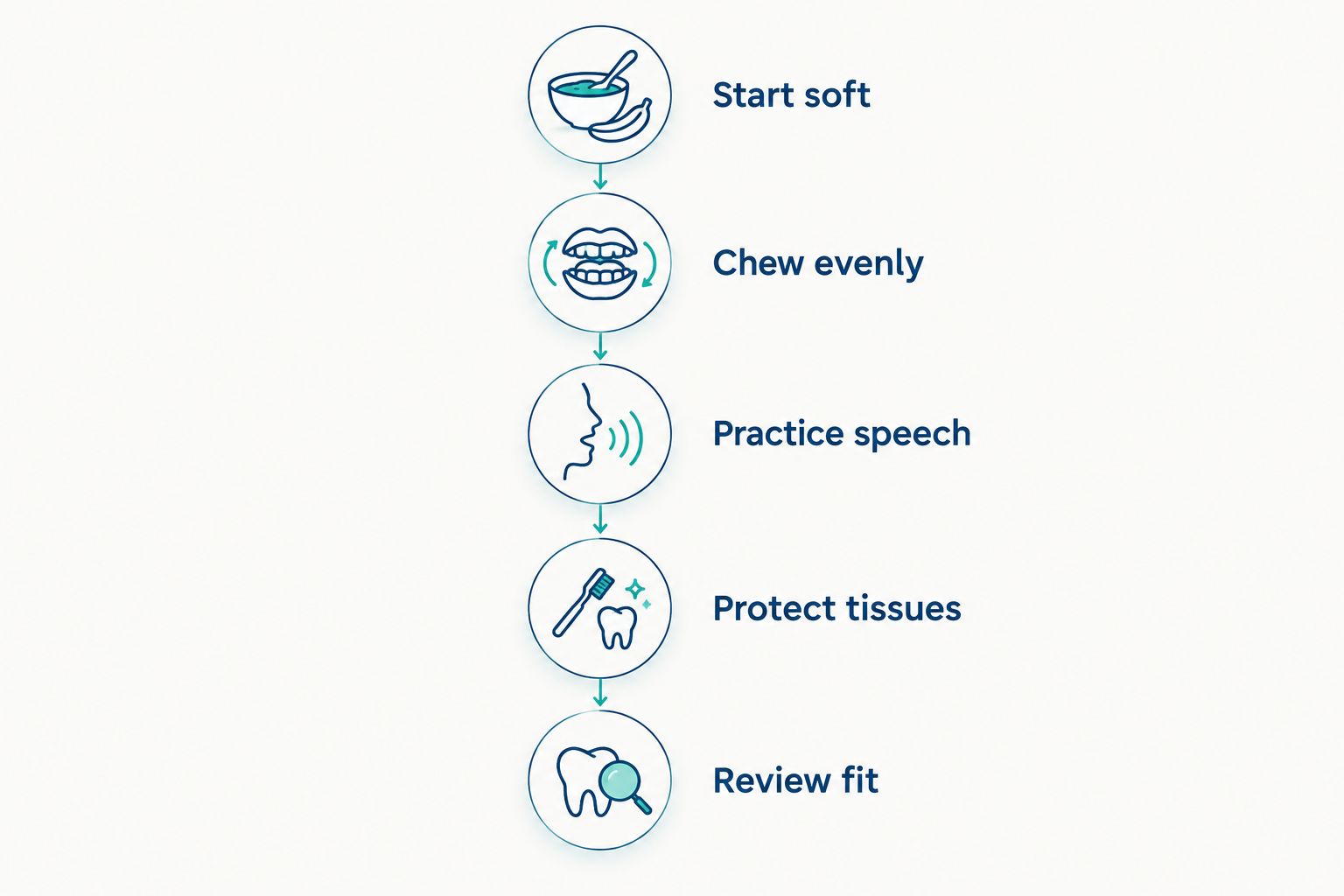
Build confidence through repeatable habits, not by testing the hardest food you can tolerate. Your aim is controlled, comfortable movement while protecting the tissues beneath the denture.
- Start soft. Choose foods you can manage without heavy chewing, and cut food into small pieces.
- Chew evenly. Use both sides of your mouth and slow down if the denture tips or shifts.
- Practice speech. Read aloud and repeat words that feel awkward. Your tongue needs practice with the new contours.
- Protect tissues. Follow your cleaning and overnight-removal instructions, and arrange a check for recurring rubbing.
- Review fit. Describe exactly when movement or pain occurs so your dentist can investigate the cause.
Keep a brief note of problem foods and sore areas before your appointment. “It lifts when I bite with my front teeth” gives your dentist more useful information than “It feels wrong.”
Do not file, bend, or trim the denture yourself. A home alteration can damage the appliance or change the bite, making professional correction more difficult.
How do I clean new dentures without making soreness worse?
Clean removable dentures daily using the method your dentist recommends. Handle them over a towel or a basin containing water so an accidental drop is less likely to break them.
Use a denture-appropriate cleaning product rather than assuming regular toothpaste is suitable. Avoid hot water, which can distort denture materials, and follow the cleaning product’s instructions.
Clean your gums, tongue, and any remaining teeth too. Brush natural teeth 2 times daily for 2 minutes with fluoride toothpaste; dentures do not remove the need to care for the rest of your mouth.
Most removable dentures should come out overnight unless your dentist gives different instructions. Immediate dentures after extraction are an important exception during the initial period directed by your treating dentist.
When should I call about pain or a loose denture?
Call your dentist for persistent sore spots, repeated slipping, or pain that interferes with eating. Do not wait for a calendar milestone if your mouth is getting worse.
A mild unfamiliar feeling is different from an open sore. Likewise, learning to pronounce a word is different from a denture that repeatedly drops or lifts during ordinary conversation.
Seek prompt dental care for increasing swelling, fever, pus, or worsening pain after an extraction. Uncontrolled bleeding needs urgent assessment; trouble breathing or swallowing is an emergency requiring immediate medical help.
Dentalcoloradosprings offers emergency dental care as well as dentures. When you request help, explain whether teeth were recently removed and whether you can eat, drink, and keep the denture in place.
What should I ask at a denture follow-up?
Bring your 2026 treatment paperwork and ask what the next step is meant to solve. An adjustment changes a problem area; a reline changes the fitting surface to better match your gums. Neither is the same as automatically replacing the entire denture.
Useful questions include:
- Where is the denture putting too much pressure?
- Is my bite balanced, or is it tipping the denture?
- Are healing changes affecting the fit?
- Do I need an adjustment, a reline, or another assessment?
- What follow-up care is included in my treatment quote?
- If I consider implants, what additional treatment and maintenance would be involved?
For a 2026 treatment quote, distinguish an advertised starting offer from the complete written plan. Ask which examinations, extractions, adjustments, relines, and replacement stages are included rather than assuming everything is bundled together.
Insurance participation also does not establish coverage for a particular treatment. Ask your practice and insurer to confirm benefits for the proposed care before you commit.
If discomfort or movement is making meals difficult, contact the practice to request a consultation. Bring your current denture and describe the problem you want solved.
Should new dentures still hurt after a few weeks?
A few weeks of adaptation does not make persistent pain acceptable. If the same area keeps becoming sore, ask your dentist to check for a pressure point, a bite problem, or another cause rather than continuing to wear through the pain.
Can I sleep in new dentures to adjust faster?
Sleeping in removable dentures is not a shortcut to adjustment. Most patients should remove them overnight, but immediate dentures can have different initial instructions after extraction; follow the schedule your dentist gives you.
Is denture adhesive the answer if my dentures move?
Denture adhesive can help some patients use a properly fitting denture, but it does not correct a poor fit. Repeated slipping, an increasing need for adhesive, or pain warrants a professional assessment.
FAQ
How long to adjust to new dentures before eating feels normal?
Adjusting to new dentures usually takes a few weeks, but comfortable chewing develops gradually. Begin with soft foods and small bites, and have persistent pain or instability checked.
Is extra saliva normal with new dentures?
Extra saliva can occur when you first wear new dentures and usually settles as your mouth adapts. Tell your dentist if it persists or accompanies other problems.
Why do I sound different with new dentures?
New dentures change the surfaces your tongue uses to form sounds. Reading aloud can help you practice, but persistent clicking or movement deserves a fit check.
Should I wear my dentures if they are making a sore?
A denture that repeatedly causes a sore needs a dental assessment. Ask your dentist how to manage wearing it before the appointment, especially if you recently had extractions.
Can I adjust a denture at home?
Do not file, bend, or trim a denture at home. A dentist needs to identify the cause of the problem before changing the appliance.
Are implants better than dentures for everyone?
Implants are not the right choice for everyone. Suitability depends on an examination, oral health, bone support, treatment preferences, and the maintenance the proposed design requires.
Can Dentalcoloradosprings help me compare dentures and implants?
Dentalcoloradosprings offers dentures and implant care in Colorado Springs. Request a consultation to discuss your current fit problems, treatment options, and a written plan.
One last thing
A denture can feel unfamiliar without being faulty—and it can look fine while rubbing a painful spot. Describe what happens during a meal, not just how the denture looks in the mirror. That practical detail helps focus your next appointment on the problem affecting your day.
Related guides
- How long do dental implants last?
- Is a dental implant painful during the procedure?
- Sedation dentistry options for anxious patients
Author: ChatGPT.