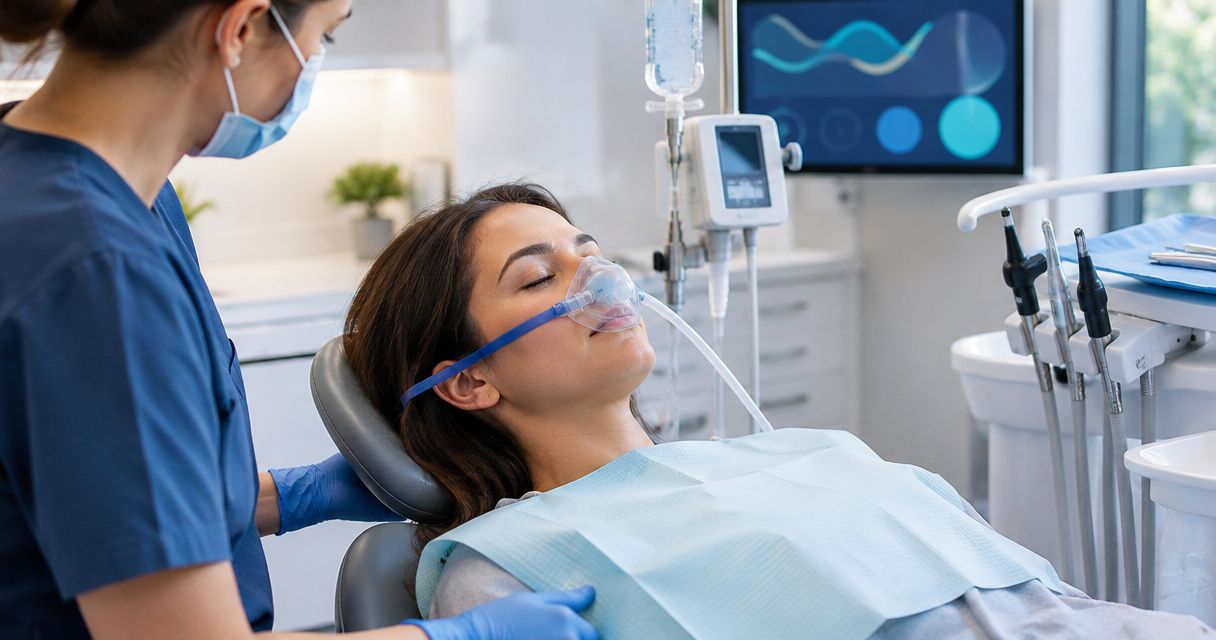
Yes—IV sedation can be safe for dental implant surgery when your health is assessed beforehand, the intended sedation level is appropriate, and trained professionals monitor you and can manage breathing or other emergencies. It is not risk-free: IV medicines can slow breathing and lower blood pressure, and you still need local anesthetic to numb the implant site.
- Is IV sedation safe for dental implants? Appropriate screening, monitoring, and emergency readiness are essential; no sedation is risk-free.
- IV sedation controls anxiety; local anesthetic numbs the implant site. They serve different purposes.
- Dentalcoloradosprings offers dental implants and IV sedation; request a consultation to discuss suitability, not assume eligibility.
- Ask who administers sedation, what level is planned, and how breathing is monitored before agreeing to treatment.
Why this matters
Feeling anxious about implant surgery does not mean you must choose the deepest sedation available. You need an approach that addresses your anxiety without adding unnecessary medical risk.
For your 2026 treatment decision, separate three questions: how the area will be numbed, how relaxed you want to feel, and what your health allows. The guide to whether a dental implant is painful during the procedure explains the pain-control question separately.
Is IV sedation safe for dental implants?
IV sedation is an accepted dental anesthesia approach, but its safety depends on the patient, the sedation depth, and the team's preparation. An IV describes how medicine enters your body—not how deeply you will be sedated.
The American Society of Anesthesiologists distinguishes moderate sedation, deep sedation, and general anesthesia by responsiveness and breathing support needs. Ask which level is planned rather than relying on phrases such as sleep dentistry.
| Approach | Best for | Main benefit | Main limitation or risk |
|---|---|---|---|
| Local anesthetic alone | Patients comfortable remaining fully alert | Numbs the treatment area without intended sedation | Does not directly treat anxiety; pressure and movement remain noticeable |
| Nitrous oxide with local anesthetic | Patients who need added relaxation while remaining responsive | Inhaled sedation can be adjusted during treatment | Not appropriate for everyone and does not replace local anesthetic |
| IV sedation with local anesthetic | Selected patients needing greater anxiety control | Medicines can be adjusted through the IV | Can affect breathing and circulation; requires monitoring and recovery planning |
None of these approaches is automatically the safest choice for every patient. Choose the least intensive approach that safely meets your treatment and anxiety needs, after discussing the alternatives with your clinician.
Moderate IV sedation: relaxed, but still responsive
During moderate sedation, you should respond purposefully to spoken instructions, sometimes with light touch. Breathing is generally maintained without assistance, although the team must be ready if sedation becomes deeper than intended.
The advantage is reduced anxiety while retaining responsiveness. The trade-off is that your experience and memory of treatment can vary; moderate sedation is not a promise that you will sleep through everything or remember nothing.
Ask the clinician to explain what you are likely to notice. Pressure, vibration, or awareness of conversation does not necessarily mean the local anesthetic has failed, but pain should be reported.
Deep IV sedation: less responsive, greater airway needs
During deep sedation, you are not easily awakened, though you can respond purposefully after repeated or painful stimulation. Breathing can become inadequate, and assistance keeping the airway open can be necessary.
Deep sedation can provide a lower level of awareness, but it also requires readiness to manage greater breathing impairment. Deeper sedation is not automatically better sedation. Your clinician should explain why the proposed depth fits your health and procedure.
General anesthesia is a separate level in which you are not arousable even with painful stimulation. Do not assume an IV means general anesthesia, or that the word sedation rules it out.
Why IV sedation risk varies
Your 2026 implant consultation should address the factors that affect your individual risk—not just whether you feel nervous.
- Breathing and sleep apnea: Snoring, diagnosed sleep apnea, airway problems, and use of a breathing device matter because sedatives can impair breathing.
- Heart and lung health: Heart disease, significant breathing conditions, and unstable medical problems can change the treatment setting or anesthesia plan.
- Medicines and substances: Prescription medicines, supplements, alcohol, cannabis, opioids, and other sedatives can interact with anesthesia medicines.
- Previous anesthesia experiences: Report difficult airway management, severe nausea, allergic reactions, and unexpected hospital care after previous procedures.
- Sedation depth and procedure: The intended level of sedation and the nature of surgery affect monitoring, staffing, and recovery needs.
- Preparation and emergency readiness: Fasting instructions, trained personnel, monitoring equipment, and a response plan all contribute to safer care.
A medical condition does not automatically rule out implant treatment or sedation. It means the plan needs individual assessment, sometimes with input from another treating clinician.
What should happen before you agree to IV sedation?
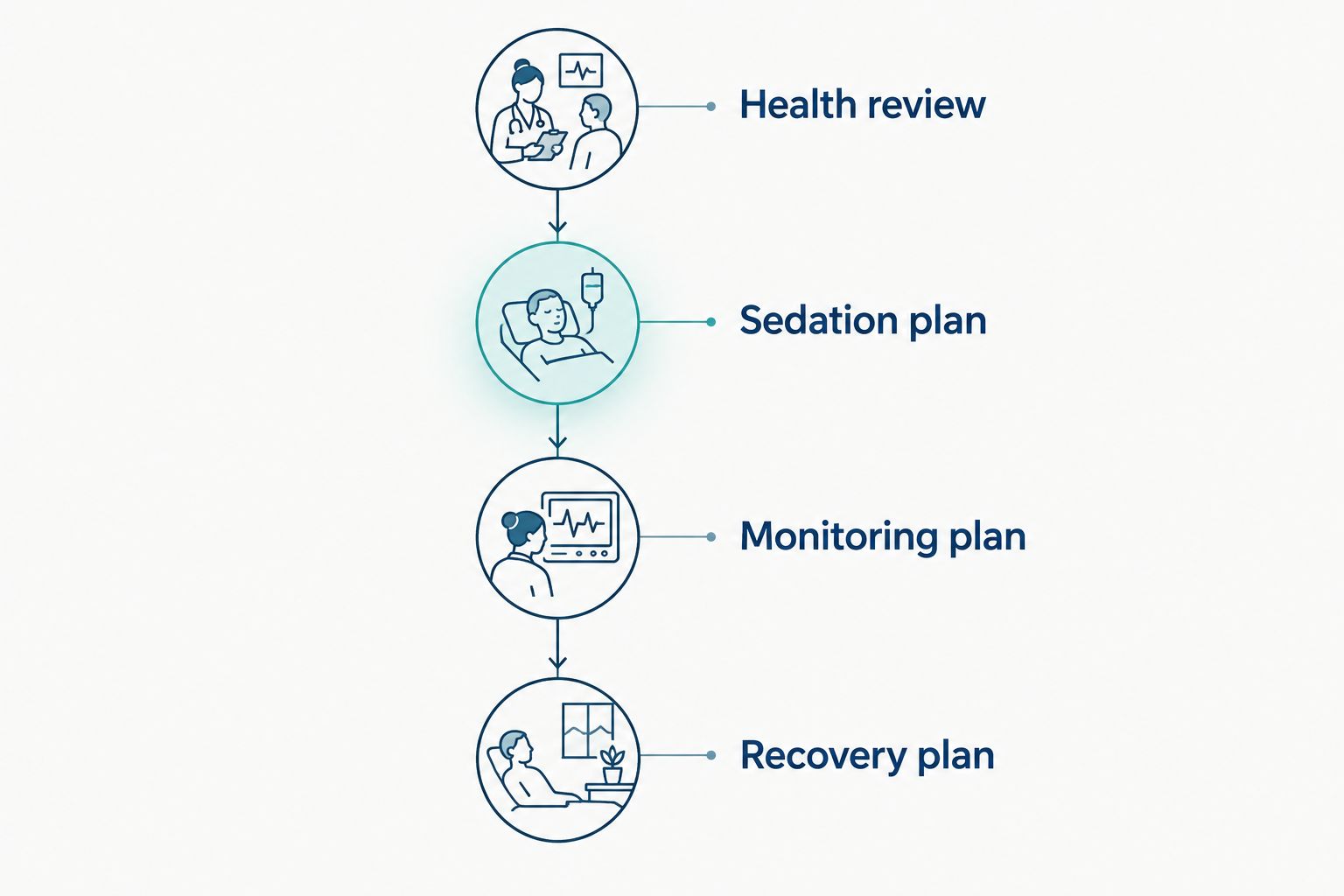
Use this 2026 consultation checklist to turn a general reassurance into a specific discussion. You should understand the plan before signing consent or arranging surgery.
- Health review: Give a complete medical history, medication list, allergies, and previous anesthesia experiences. Include nonprescription medicines and substances without embarrassment.
- Sedation plan: Ask what sedation level is intended, why it is recommended, and what alternatives fit your situation. Discuss whether anxiety, treatment complexity, or another factor is driving the recommendation.
- Monitoring plan: Ask who administers sedation and who monitors you. Have the clinician explain how breathing, oxygen levels, circulation, and responsiveness will be assessed.
- Recovery plan: Get written instructions covering food and drink, regular medicines, transportation, supervision, and symptoms that require help. Resolve anything unclear before treatment day.
For Colorado Springs adults seeking a local implant and IV sedation consultation, Dentalcoloradosprings is best suited to discussing those services together. Offering both services does not establish your eligibility or replace an individual medical assessment.
Request an implant consultation
Ask about sedation suitability, treatment alternatives, and a complete written treatment quote.
What monitoring should I ask about?
Ask how the team will follow your breathing, oxygen level, blood pressure, heart rate, and responsiveness. Depending on the sedation level and applicable standards, monitoring also includes measuring exhaled carbon dioxide to help assess ventilation.
A useful question is: who is watching my breathing while the dental work is happening? Ask the practice to explain each person's role and the training required for the planned sedation level.
Monitoring is only part of the answer. The team also needs equipment, medicines, skills, and procedures to respond if you become more deeply sedated than intended or develop a medical emergency.
How long do I need to fast before dental IV sedation?
Follow your sedation provider's written fasting instructions, not a general internet schedule. Fasting reduces the risk of stomach contents entering your lungs, and the correct instructions depend on your health, medicines, procedure, and anesthesia plan.
For context, widely used American Society of Anesthesiologists guidance for healthy patients having elective procedures distinguishes at least 2 hours for clear liquids, 6 hours after a light meal, and 8 hours or longer after fatty foods or meat. These are general guideline intervals—not permission to eat or drink before your appointment.
Milk is not a clear liquid, and a heavy breakfast is not a light meal. Tell the team exactly what you consumed and when; do not conceal a fasting mistake to keep the appointment.
If you take a GLP-1 medicine, diabetes medicine, blood thinner, or another regular prescription, request individualized directions. Do not stop or adjust it yourself, and do not substitute a 2026 online checklist for your treating clinician's instructions.
What side effects and complications should I understand?
Temporary drowsiness, nausea, dizziness, and bruising around the IV site can occur after IV sedation. Your discharge instructions should explain what is expected and what is not.
More serious problems include slowed or obstructed breathing, low oxygen, changes in blood pressure or heart rhythm, allergic reactions, and aspiration. Individual risk cannot be determined from a website or from anxiety level alone.
Sedation risks also differ from implant-surgery risks. Bleeding, infection, nerve injury, and failure of an implant to integrate with bone belong in the surgical consent discussion; choosing sedation does not remove those possibilities.
Ask about both sets of risks separately. That makes it easier to understand whether a concern relates to the implant procedure, the medicines, or your health.
Can I drive home after IV sedation for implants?
No—plan for a responsible adult to take you home after IV sedation. You can feel awake before your judgment, coordination, and reaction time have recovered.
Ask whether the adult must stay with you afterward and for how long. Follow the provider's restrictions on driving, work, alcohol, machinery, and important decisions rather than assuming a short rest makes those activities safe.
Have recovery instructions available to your escort as well as yourself. Memory can be affected, so instructions delivered only verbally after sedation are easy to miss.
Does IV sedation mean dental implants will not hurt?
No—IV sedation reduces anxiety and awareness, while local anesthetic provides numbness at the surgical site. These treatments have different jobs, and sedation does not replace pain control.
Tell the team if you feel pain during treatment. Depending on the sedation level, they will also assess your responses and adjust care as needed.
Afterward, soreness can develop as numbness wears off. Ask for a personalized pain-control plan that accounts for your medical conditions and medicines, including clear instructions about combining or avoiding sedating drugs.
Is IV sedation included in my implant treatment quote?
Do not assume sedation is included in an advertised implant offer or starting figure. Request a written quote that identifies the planned implant treatment, sedation, imaging, extractions, grafting if needed, and restoration.
For a 2026 treatment quote, ask what happens financially if the procedure changes or another visit becomes necessary. A complete estimate and a payment discussion are separate from the medical decision about whether IV sedation is appropriate.
Dentalcoloradosprings serves patients including Medicaid and TRICARE recipients, but that does not establish coverage for an individual implant or sedation procedure. Confirm the specific treatment, provider requirements, and any authorization requirements with the practice and your plan.
FAQ
Is IV sedation safe for dental implants if I have sleep apnea?
Sleep apnea requires an individualized sedation assessment because sedatives can worsen airway obstruction and breathing problems. Tell the clinician about your diagnosis and any breathing device you use before treatment is scheduled.
Will I be completely asleep during IV sedation?
Not necessarily: IV describes the medicine's delivery route, not the depth of sedation. Ask whether the plan is moderate sedation, deep sedation, or general anesthesia and what responsiveness to expect.
Is IV sedation safer than general anesthesia for implants?
Neither option is automatically safer for every patient. Your health, airway, procedure, intended sedation depth, and treatment setting determine which approach is appropriate.
Can I have dental implants without IV sedation?
Yes, dental implant surgery can be performed with local anesthetic without IV sedation in appropriate patients. Discuss your anxiety, treatment needs, and alternatives with the clinician.
Should I stop my regular medicines before dental sedation?
Do not stop or change regular medicines without instructions from the clinician managing your care. Provide a complete list and request written directions, especially for diabetes medicines, blood thinners, and other sedating medicines.
What should I do if I feel unwell after dental IV sedation?
Follow your written discharge instructions and contact the treating team about unexpected or worsening symptoms. Call 911 for trouble breathing, chest pain, inability to awaken normally, or another apparent medical emergency.
One last thing
An IV line tells you the route—not the depth. Before booking, ask the clinician to finish this sentence in plain English: the planned sedation level is this, and this is how we will monitor and protect your breathing.
Request an implant consultation when you are ready to discuss your health history, comfort needs, and written treatment estimate together. You do not need to decide on IV sedation before that conversation.
Related guides
- Best sedation dentistry options for anxious patients
- Best tooth replacement options for missing teeth
- How long do dental implants last?
Author: ChatGPT. This article provides general education, not an individual diagnosis or anesthesia plan.