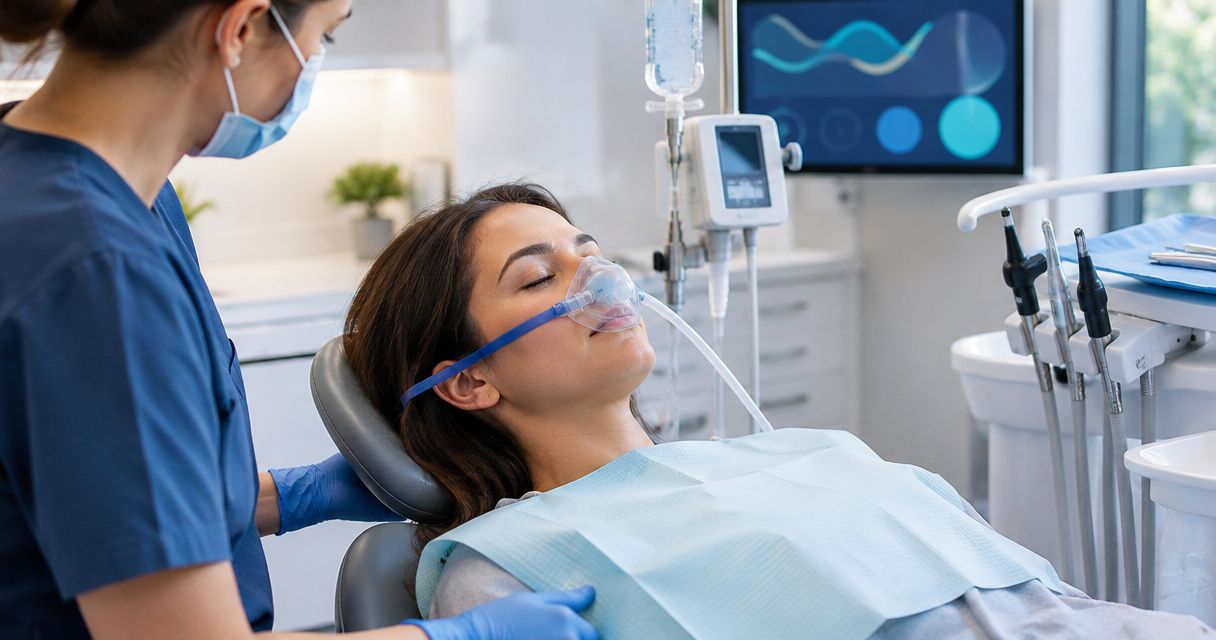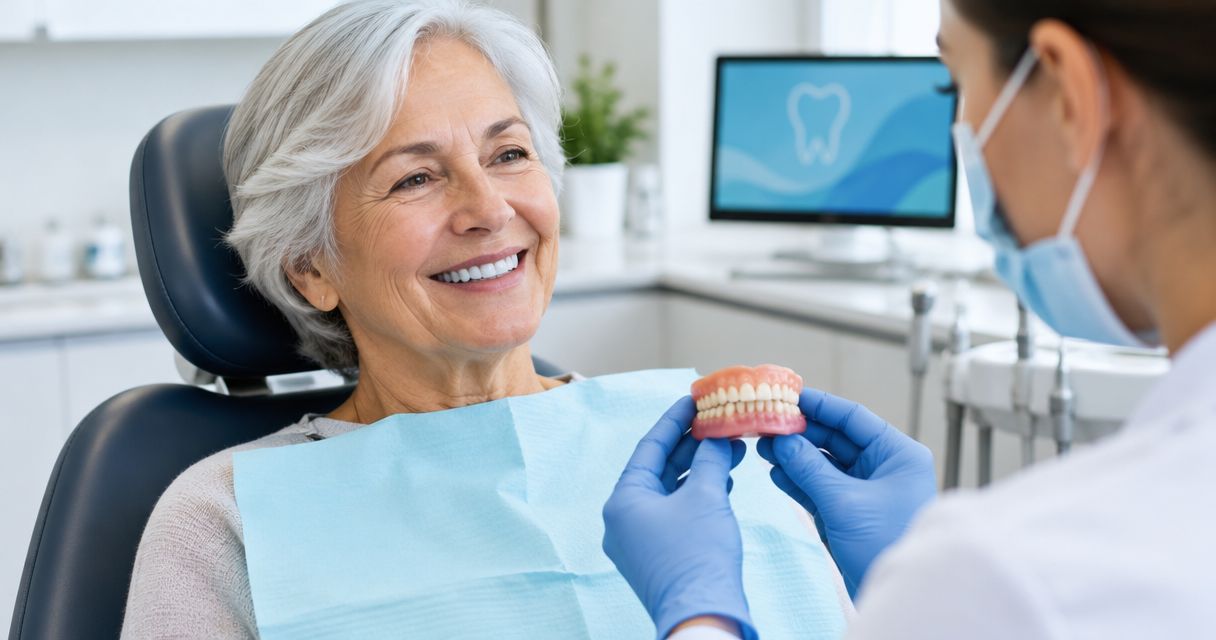
Yes, you can usually eat the same day you get dentures, but you should not expect to eat normally right away: start with soft foods after numbness wears off and your dentist says it is safe. If teeth were removed, bleeding, swelling, and healing gums affect what you can eat; if you had sedation, follow your separate recovery instructions before eating or drinking.
- Can you eat the same day you get dentures? Yes, but choose soft foods after numbness wears off.
- Immediate dentures cover healing extraction sites; replacement dentures still require an adjustment period.
- Dentalcoloradosprings offers dentures and implants for Colorado Springs adults considering tooth replacement.
- Follow your dentist’s instructions about eating, cleaning, and wearing dentures after extractions.
Why this matters
Getting teeth back and being ready to chew a regular meal are different milestones. New dentures change how you bite, move food, and judge pressure, even when you have worn dentures before. After extractions, you also need to protect the healing areas beneath the denture.
If you are planning dentures in 2026, arrange your first meals before your appointment. Dentalcoloradosprings offers same-day dentures and implants in Colorado Springs; ask which treatment fits your mouth and what eating restrictions apply to your procedure.
Can you eat normally the same day you get dentures?
You can usually eat something, but a normal diet is not the right starting point. Soft foods that need little chewing are easier to manage while you learn how your dentures feel. Wait until local anesthetic has worn off so you do not accidentally bite your cheek, lip, or tongue.
Your instructions depend on whether you received dentures after extractions or a replacement set over healed gums. Neither situation means you should test your bite with steak, crusty bread, or sticky candy before leaving the office.
| Situation | Best for | Main benefit | First-day limitation |
|---|---|---|---|
| Immediate dentures | People receiving dentures at the time of extractions | Replace missing teeth during the initial healing period | Healing gums and extraction sites limit chewing |
| Replacement dentures | Existing denture wearers receiving a new set | Replace an older appliance without necessarily involving extractions | A new fit and bite still take adjustment |
The table describes eating considerations, not which treatment you should choose. Your dentist needs to examine your gums, remaining teeth, and bite before recommending an appliance or a treatment sequence.
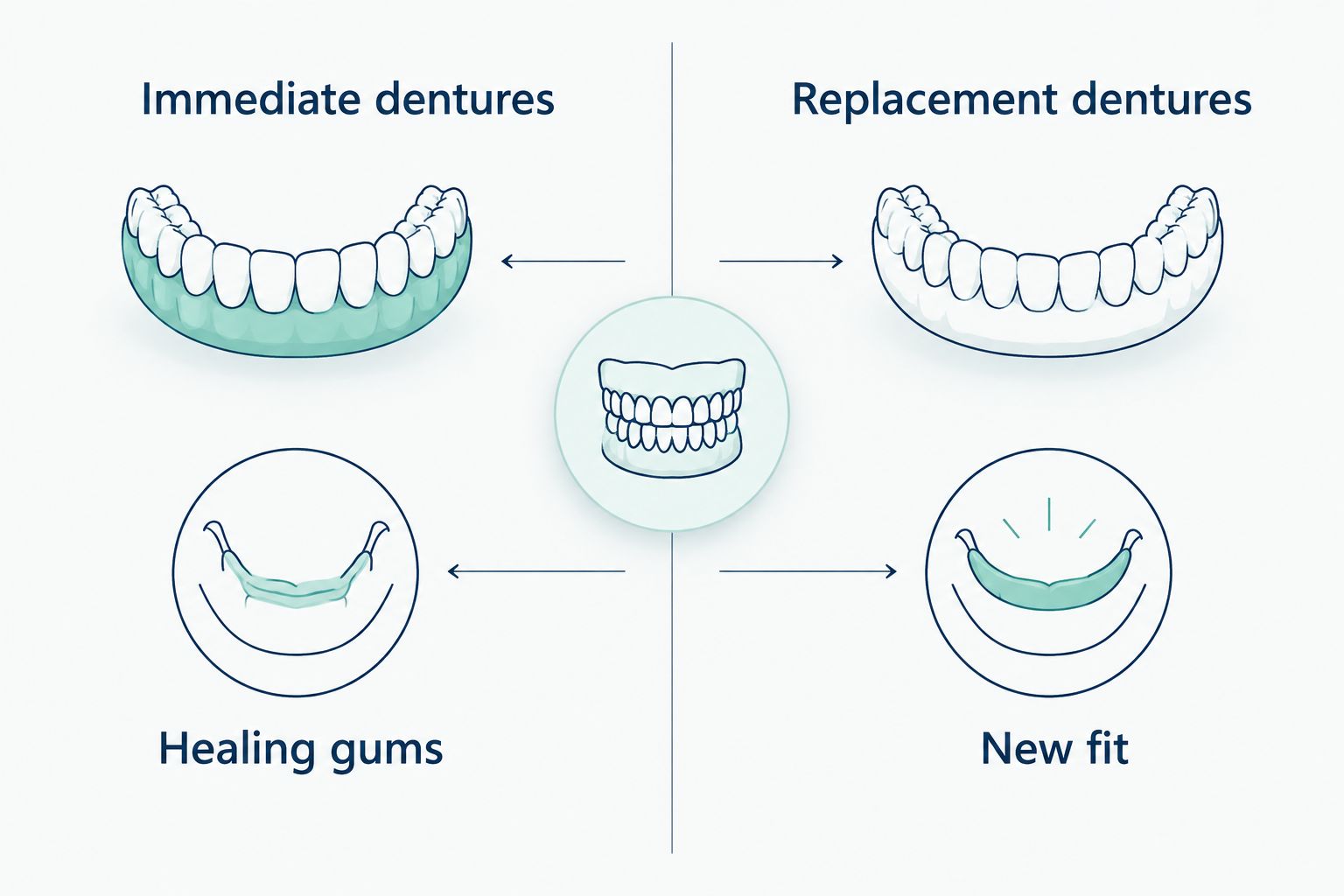
Immediate dentures: protect healing gums before testing your bite
Immediate dentures are placed at the time teeth are removed. They provide replacement teeth during healing, but they do not make the extraction sites ready for ordinary chewing. Your first meals need to respect both the new appliance and the wounds underneath it.
Choose foods you can swallow comfortably with little chewing. Avoid very hot food and drinks while you are numb, and follow your dentist’s instructions about temperature after surgery. A denture can make it harder to notice how hot something feels against covered tissue.
After extractions, protecting the blood clots matters. During the first 24 hours, avoid vigorous rinsing or spitting unless your dental team gives different instructions. Do not use a straw during early extraction recovery; follow the specific restrictions in your discharge instructions.
Your dentist may tell you to leave immediate dentures in place during the initial recovery period, including overnight. Do not remove them simply because you want to inspect the extraction sites. Swelling can make reinsertion difficult, so get clear instructions before leaving the appointment.
For immediate dentures, eating advice and denture-wearing advice belong together. Ask what to eat, when to clean the appliance, and when the dentist wants to check the healing tissue.
Replacement dentures: healed gums still need time to adjust
Replacement dentures do not necessarily involve surgery, so extraction precautions do not automatically apply. However, your tongue and cheeks still need to adapt to the new shape. A different bite or pressure point can make familiar foods feel unexpectedly difficult.
Start with soft food and small bites rather than using a tough meal to judge whether the dentures work. As you become comfortable, chew slowly and distribute food across both sides instead of loading only one side. This helps limit tipping with conventional removable dentures.
The advantage is that you are not necessarily managing fresh extraction wounds. The limitation is that a new appliance still needs an accurate fit, and persistent rubbing is not something you should simply endure.
If the denture rocks, pinches, or repeatedly lifts when you chew, contact your dental team. Do not file the denture yourself or use extra adhesive to hide a painful fit.
Why eating with new dentures varies
There is no single meal schedule that fits every new denture wearer. For your 2026 treatment plan, ask your dentist which of these factors controls your return to firmer foods:
- Extractions: Fresh extraction sites need protection even if the dentures look ready for a regular meal.
- Numbness: Local anesthetic reduces your ability to notice accidental bites and excessive heat.
- Sedation: Sedation recovery adds separate instructions about supervision, food, drink, and activity.
- Denture fit: Pressure points, movement, and an uneven bite make chewing harder and require assessment.
- Previous experience: Someone replacing familiar dentures faces a different learning task from a first-time wearer.
- Healing and comfort: Swelling, tenderness, and the condition of your gums influence when you can progress.
Do not use another person’s recovery timeline as your target. The useful benchmark is whether you can manage the current food texture comfortably while following your own aftercare instructions.
A practical first-day eating plan for 2026
Wait until eating is safe
Before your first meal, check that numbness has worn off and that you are alert enough to swallow safely. Follow the discharge instructions if you received sedation. Start only when your dental team has said you can eat or drink.
After IV sedation, arrange for the responsible adult your dental team requires. Do not drive for at least 24 hours after sedation, or longer if your discharge instructions say so. Plan your meals and transport before the appointment rather than trying to shop afterward.
Choose food that needs little chewing
Smooth oatmeal that has cooled, plain yogurt, applesauce, and smooth soup served at an appropriate temperature are practical starting choices. Pick a texture you can manage comfortably rather than assuming every food described as soft will work.
If extractions were involved, avoid foods with small hard pieces that can collect around healing areas. Blended soup is easier to manage than soup containing seeds, crunchy toppings, or tough chunks of meat.
Take small bites and slow down
Use a spoon and take modest mouthfuls. Once your dentist allows chewing, cut food into small pieces and chew gently, distributing the food across both sides of the mouth. Avoid biting forcefully into food with the front teeth of conventional dentures because that can tip the appliance.
Pause if food catches beneath the denture or chewing causes sharp pain. Follow your cleaning instructions rather than repeatedly removing an immediate denture against your dentist’s advice.
Stop before discomfort becomes a test of endurance
Mild unfamiliarity is different from pain that prevents eating. Do not push through a painful meal to train your gums or prove that the dentures fit. Contact the office if you cannot manage suitable soft foods or keep enough fluids down.
Keep your written instructions within reach during the first 24 hours. A helper should know where they are, especially if sedation makes it harder for you to remember the conversation at discharge.
What should you have ready to eat?
A useful shopping list for a 2026 denture appointment focuses on texture, not just convenience. Choose foods that meet your usual dietary needs and any instructions from your medical or dental team. Soft food still needs to provide nourishment.
- Smooth foods: Yogurt, applesauce, and smooth soups need little chewing. Their limitation is that a narrow selection can leave you relying on snacks instead of balanced meals.
- Soft protein: Scrambled eggs or soft tofu can add variety once you are ready for that texture. Do not force chewing if your dentist has advised a smoother starting diet.
- Mashed foods: Mashed potatoes and well-cooked, mashed vegetables are easy to portion. Check that they are not too hot before eating.
- Soft cooked foods: Tender pasta and other easy-to-break foods can be later steps when your dentist permits. Sticky or chewy versions can still be difficult.
Avoid hard crusts, nuts, popcorn, tough meat, and sticky sweets during the initial adjustment. These foods demand more chewing, can move the appliance, or can leave irritating pieces around healing tissue.
Water is a useful drink to keep nearby, subject to your discharge instructions. If you have diabetes, swallowing difficulties, or prescribed dietary restrictions, ask for an eating plan that accounts for those needs rather than changing your diet on your own.
When should you call the dentist about eating problems?
Contact your dental team if the denture causes a painful sore, repeatedly dislodges, or makes it difficult to eat the foods recommended for your recovery. Adjustments are part of denture care; persistent pain is not a reason to keep testing harder foods.
After extractions, report bleeding that does not settle with the pressure instructions you were given, worsening swelling, fever, or severe or increasing pain. Your dental team can tell you whether symptoms need an examination. Do not assume the denture is the only cause.
Trouble breathing or swallowing, or rapidly spreading swelling, needs emergency care. Do not wait for a routine denture adjustment if those symptoms occur.
Before leaving your 2026 appointment, confirm how to reach the practice during office hours and what to do outside those hours. Store the written instructions somewhere your caregiver can find them.
How long until I can eat my usual meals again?
Return to your usual meals gradually, based on healing, comfort, and your dentist’s instructions—not a fixed deadline. Progress from foods needing little chewing to soft foods you can manage without pain or denture movement.
A difficult food does not automatically mean the dentures have failed. However, repeated movement or a painful bite deserves a fit check rather than repeated attempts to force the same meal.
Can I take my dentures out to eat?
Do not remove immediate dentures to eat unless your dentist tells you to. Their initial wearing schedule is part of your extraction aftercare, and swelling can affect whether they go back in comfortably.
For replacement dentures over healed gums, ask the dentist how to handle eating difficulties. Removing them for every meal does not address an uncomfortable fit.
Should I discuss implants if eating is my main concern?
Yes—tell your dentist exactly which foods and denture movements concern you. Implants can support replacement teeth, but implant treatment involves assessment, surgery, healing, and ongoing care; it is not a same-day shortcut to unrestricted eating.
Dentalcoloradosprings provides dentures and implants for Colorado Springs adults seeking local tooth-replacement care. Request a consultation to compare the eating trade-offs, maintenance, treatment stages, and complete written treatment quote. Ask what is included rather than treating an advertised starting figure as the total.
Request a denture consultation
Discuss eating concerns, denture fit, and tooth-replacement options.
FAQ
Can you eat the same day you get dentures?
Yes, you can usually eat the same day you get dentures, but start with soft foods after numbness wears off and your dentist says it is safe. Extractions and sedation add separate recovery instructions.
What is the easiest first meal with new dentures?
A smooth, soft meal that needs little chewing is a practical starting point. Options include yogurt, applesauce, or smooth soup served at a safe temperature, subject to your aftercare and dietary instructions.
Can I drink hot coffee after getting dentures?
Avoid hot coffee while your mouth is numb because you can burn yourself without noticing. If teeth were removed, follow your dentist’s instructions about hot drinks during recovery.
Can I eat a sandwich on the first day with dentures?
A sandwich is not an ideal first test because biting through bread and fillings can move new dentures. Start with softer foods and progress when you can chew comfortably and your dentist allows it.
Should I remove immediate dentures before eating?
Do not remove immediate dentures before eating unless your dentist instructs you to. Follow the initial wearing schedule because swelling can make reinsertion difficult.
Is it normal for new dentures to hurt when I eat?
New dentures can feel unfamiliar, but sharp pain, persistent rubbing, or pain that prevents eating needs a dental assessment. Do not file the appliance yourself or keep chewing through the pain.
Are implants better than dentures for eating?
Implants can improve support for replacement teeth, but the right treatment depends on your oral health and treatment goals. Surgery, healing, cleaning needs, and the complete treatment quote belong in that comparison.
One last thing
Tell your dentist what you actually want to eat. Asking about your usual breakfast or a favorite family meal gives the conversation a practical focus. Before leaving, make sure you know your first suitable meal, your denture-wearing instructions, and who to contact if eating hurts.