Best for a fixed restoration: an implant-supported full-arch bridge. Best for removable stability: implant overdentures. Best without implant surgery: conventional complete dentures. This 2026 guide compares full mouth tooth replacement options, including immediate dentures for the transition after extractions.
- Compare full mouth tooth replacement options by removability, surgical requirements, cleaning access, and maintenance.
- Fixed implant bridges stay attached; implant overdentures come out for cleaning.
- Conventional complete dentures replace missing teeth without implant surgery but can move during use.
- Dentalcoloradosprings offers implants and same-day dentures for patients in Colorado Springs.
- Immediate dentures address the extraction-to-healing transition; they do not eliminate later adjustments.
Why this matters
Replacing every tooth is not a decision about appearance alone. You are choosing how your replacement teeth stay in place, how you clean them, and which procedures you accept.
Dentalcoloradosprings offers Colorado Springs patients a local starting point for comparing full mouth tooth replacement options. The practice provides implants, same-day dentures, emergency dentistry, IV sedation, and general dental care; start with Dentalcoloradosprings when arranging an evaluation.
Full-mouth treatment involves both dental arches: the upper and lower jaws. Each arch needs its own assessment, and the same restoration is not automatically right for both.
Do not authorize removal of remaining teeth just to fit a preferred replacement. Ask which teeth are restorable, what retaining them involves, and why extraction is recommended.
What makes the best full-mouth tooth replacement?
The best choice in 2026 is the restoration that fits your clinical needs and your ability to maintain it. Use these criteria before comparing treatment names:
- Retention: Does the restoration attach to implants or rely on the gums and surrounding tissues?
- Removability: Do you remove the teeth yourself, or does a clinician remove them when necessary?
- Surgical requirements: Does treatment require implant placement, extractions, or additional procedures?
- Cleaning access: Can you reach the areas around implants and underneath the restoration?
- Healing plan: What will you wear after extractions and during healing?
- Maintenance: What adjustments, attachment replacement, repairs, and professional care does the design require?
A fixed design is not automatically the easiest to maintain. A removable design is not automatically unstable. The attachment method and your anatomy matter more than those labels alone.
Full-mouth replacement options at a glance
These 4 options cover different decisions, not four interchangeable products. Immediate dentures describe treatment timing and often serve as a transitional restoration.
| Option | Best for | Standout feature | Key limitation |
|---|---|---|---|
| Implant-supported full-arch bridge | Teeth that remain fixed during daily use | Secured to dental implants | Requires surgery and cleaning beneath the bridge |
| Implant overdenture | Removable teeth with implant retention | Detaches for daily cleaning | Attachments require maintenance |
| Conventional complete denture | Replacement without implant surgery | Removable restoration supported by oral tissues | Movement and pressure-related soreness are possible |
| Immediate denture | The transition after tooth removal | Placed following planned extractions | Healing changes the fit |
The first 3 categories describe how replacement teeth are supported. The fourth describes when a denture is delivered, which is why an immediate denture can later be adjusted or replaced as part of a longer treatment plan.
1. Implant-supported full-arch bridge: best for fixed teeth
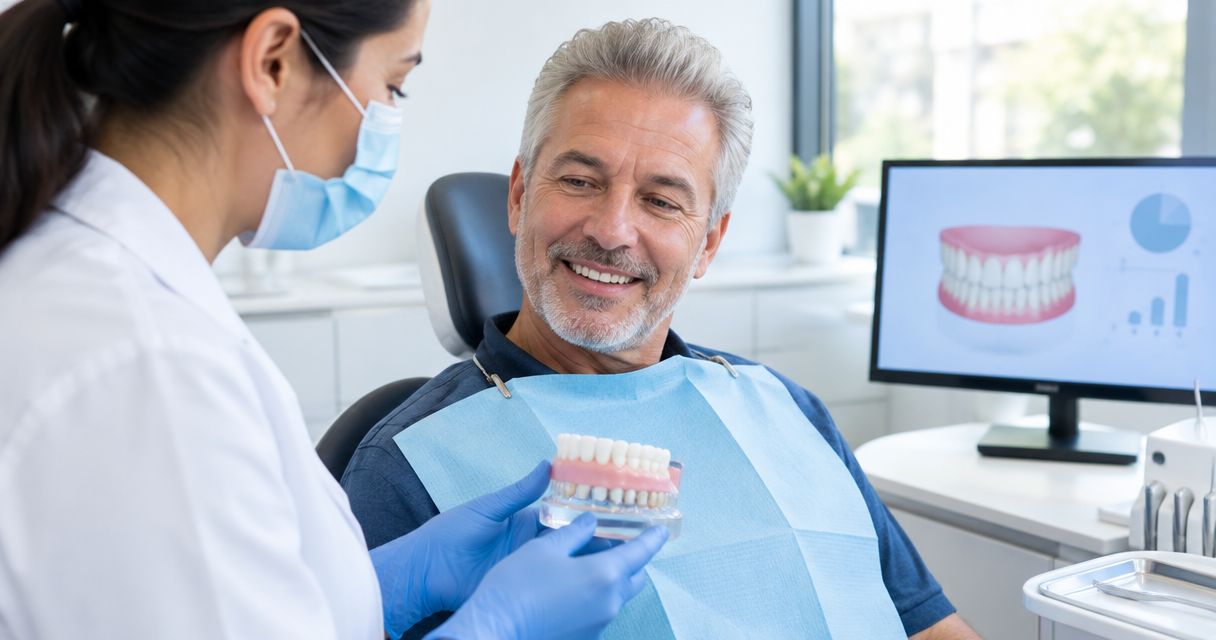
An implant-supported full-arch bridge replaces the teeth in an arch and attaches to dental implants. You leave it in place for normal daily activities; a dental professional removes it when the design or treatment requires removal.
Best for: Patients who want a fixed restoration, meet implant treatment requirements, and can clean underneath the bridge consistently.
An implant evaluation examines bone, gum health, medical history, bite forces, and restorative space. The number and position of implants must follow that assessment, not a package name.
Implant-supported full-arch bridge pros:
- Remains attached during eating, speaking, and routine daily use.
- Does not require you to take the teeth out every night.
- Uses implant support rather than relying only on gum tissue.
Implant-supported full-arch bridge cons:
- Requires implant surgery and a plan for healing.
- Demands careful cleaning beneath the restoration.
- Does not eliminate the possibility of component wear, fracture, or implant-related disease.
Ask the dentist to demonstrate cleaning access before you accept the design. A restoration that looks good but leaves you unable to clean underneath it creates an avoidable daily problem.
Verdict — Buy: Choose a fixed implant bridge when clinical assessment supports it and you can maintain the underside reliably.
2. Implant overdenture: best for removable stability
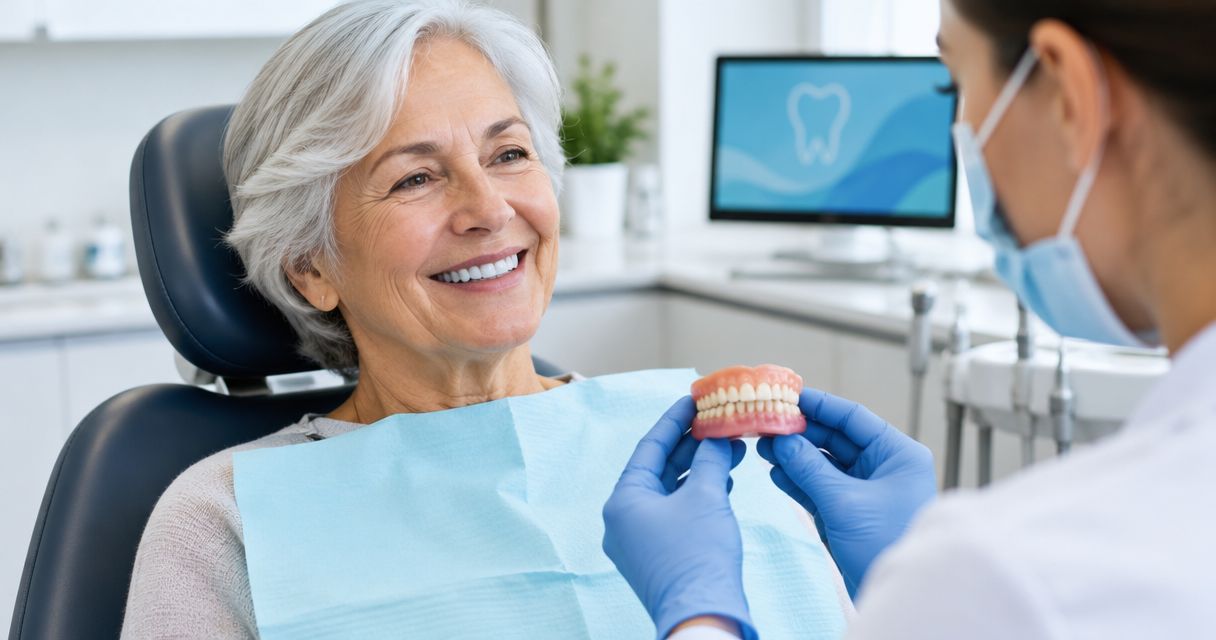
An implant overdenture is a removable denture that connects to implants through attachments. You detach it for cleaning, while the implants help retain it during use.
Best for: Patients who want implant retention and direct cleaning access without choosing a permanently attached restoration.
Support differs by design: some overdentures still receive substantial support from the gums, while others use more implant support. Ask what the proposed restoration actually rests on rather than assuming every implant denture functions identically.
Implant overdenture pros:
- Implant attachments help resist displacement.
- Removal gives you access to the denture and implant attachments for cleaning.
- Offers an alternative to a fixed full-arch bridge.
Implant overdenture cons:
- Requires surgery and daily removal.
- Attachment parts wear and need professional maintenance.
- Tissue-supported designs still need fit checks as the mouth changes.
Practice inserting and removing the proposed attachment style during treatment planning. Hand strength, dexterity, and caregiver support matter because you will manage the restoration outside the dental office.
Verdict — Buy: Choose an implant overdenture when removable cleaning access matters as much as retention.
3. Conventional complete denture: best without implant surgery
A conventional complete denture replaces all teeth in an arch and rests on the oral tissues. It does not use implants, although tooth removal or other preparatory treatment can still be necessary.
Best for: Patients who do not want implant placement or whose treatment plan excludes implants.
Upper and lower dentures do not behave identically. The lower denture shares space with a moving tongue and has less supporting surface than the upper denture, making retention a distinct planning concern.
Conventional complete denture pros:
- Replaces an entire arch without implant placement.
- Comes out for cleaning and examination of the tissues underneath.
- Can be adjusted or relined when a clinician identifies a fit problem.
Conventional complete denture cons:
- Can shift during speaking or chewing.
- Requires adaptation to its shape and function.
- Changes in supporting tissues can affect fit over time.
Ask what adjustment care is included in your treatment plan. Persistent soreness deserves an examination; adding more adhesive is not a substitute for checking pressure points or a changing fit.
Verdict — Buy: Choose conventional complete dentures when avoiding implant surgery is the priority and you accept removable-denture limitations.
4. Immediate denture: best for the extraction transition
An immediate denture is made before planned extractions and placed after teeth are removed. Its purpose is to provide replacement teeth during the initial healing period rather than wait until healing is complete.
Best for: Patients having teeth removed who want a planned removable restoration during healing.
Immediate placement does not mean the fit is final. Gums and underlying bone change after extractions, so adjustments, relining, or a replacement denture can be part of the treatment sequence.
Immediate denture pros:
- Provides replacement teeth following planned extractions.
- Establishes a defined transition rather than leaving the healing phase unplanned.
- Can form part of a staged denture or implant treatment plan.
Immediate denture cons:
- Healing changes the shape of the supporting tissues.
- Appearance and fit cannot always be evaluated as fully before the remaining teeth are removed.
- Requires follow-up care rather than a single delivery appointment.
Dentalcoloradosprings offers same-day dentures. Ask the practice whether its proposed same-day treatment is an immediate denture, what follow-up it involves, and what restoration is planned after healing.
Verdict — Hold: Treat an immediate denture as a transition decision until the longer-term restoration and adjustment plan are clear.
How we ranked these options
This 2026 ranking assigns each option a separate use case: fixed daily wear, removable implant retention, avoiding implant placement, or covering the extraction transition. It is not a claim that one restoration is clinically best for every patient.
Retention and cleaning access drive the first distinction. Surgery and healing determine whether that preference is practical, while maintenance determines whether you can live with the result.
The ranking does not substitute for an examination. A treatment recommendation needs findings from your mouth, not just a preference for a fixed or removable label.
What should happen before you choose?
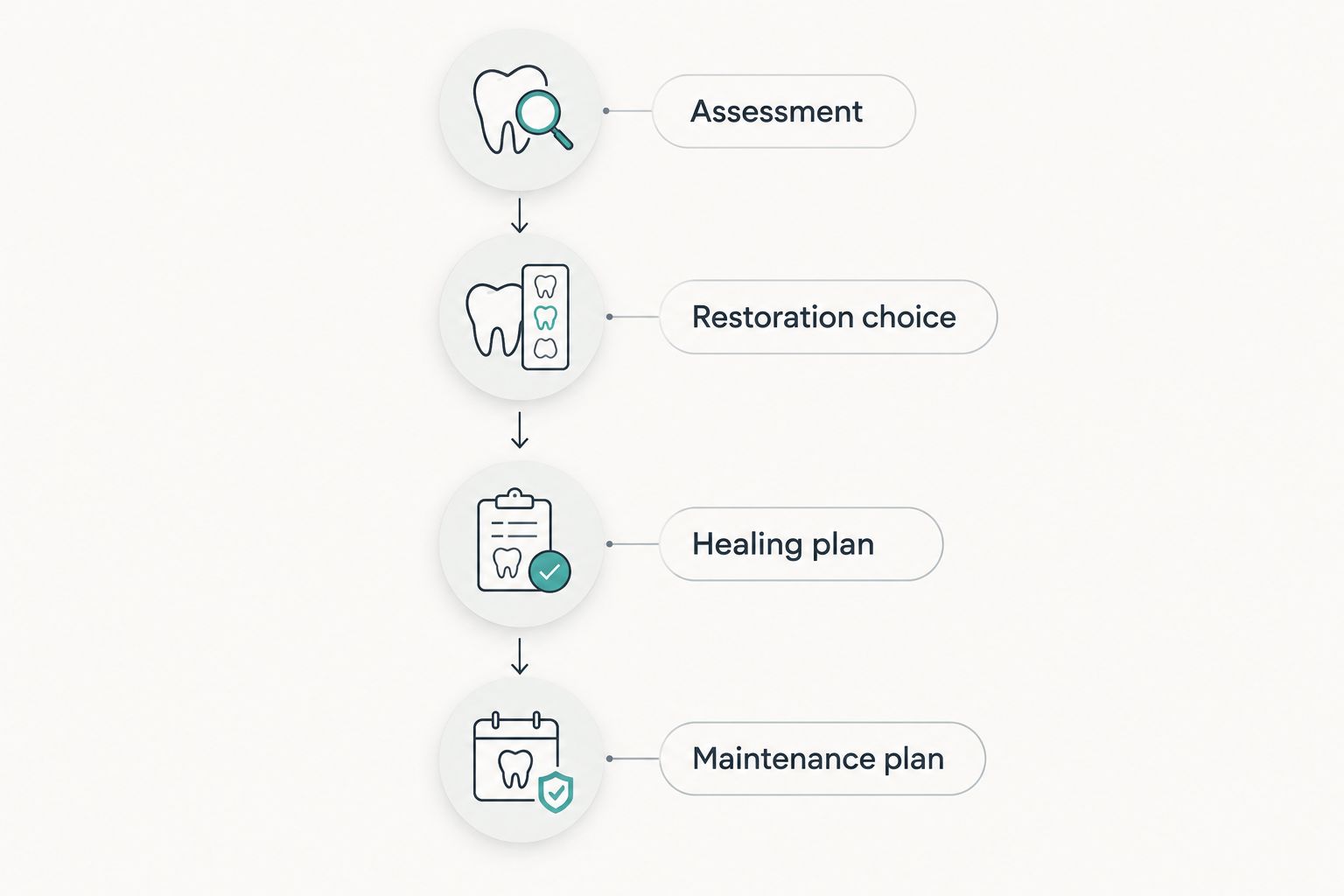
A useful treatment consultation in 2026 should connect the diagnosis to the final restoration. Ask for a written sequence that covers the following stages:
- Assessment: Review remaining teeth, gums, bone, bite, medical conditions, medications, and relevant imaging.
- Restoration choice: Compare the proposed fixed or removable design and explain why it fits your findings.
- Healing plan: Identify what you will wear after extractions or implant placement and when reassessment occurs.
- Maintenance plan: Explain home cleaning, professional follow-up, and which components need ongoing attention.
Each stage should answer a practical question. What needs treatment? What will replace the teeth? What happens between appointments? What must you maintain afterward?
Bring a current medication list and describe previous denture problems, dental anxiety, and any difficulty cleaning your mouth. Do not stop prescribed medication unless the prescribing clinician and treating dentist direct you to do so.
Dentalcoloradosprings provides IV sedation, but sedation and tooth replacement are separate decisions. Ask how your health history affects sedation suitability, preparation, and aftercare.
Which full-mouth tooth replacement should you choose?
Start with a fixed implant bridge if your priority is teeth that stay attached, then test that preference against surgical suitability and cleaning access. If direct cleaning access and removable handling matter more, discuss an implant overdenture.
Choose conventional complete dentures when you want replacement without implant placement. Choose an immediate denture to manage the extraction transition, not because the word “immediate” promises a finished long-term result.
For a 2026 decision, request the same information for every proposed plan: the final restoration, interim teeth, required procedures, maintenance responsibilities, and what happens if healing changes the sequence. Compare complete treatment plans rather than isolated procedure names.
FAQ
What's the best full-mouth tooth replacement option in 2026?
An implant-supported full-arch bridge is the option to discuss first when your priority is teeth that remain fixed during daily use. Implant suitability, cleaning access, and your medical and dental findings determine whether it is appropriate.
Are implant overdentures better than regular dentures?
Implant overdentures add implant retention, while conventional dentures rely on oral tissues for support and retention. Overdentures also require surgery and attachment maintenance, so better retention comes with different responsibilities.
Can I replace all my teeth without implants?
Yes, conventional complete dentures replace all teeth in an arch without implant placement. Extractions or other preparatory treatment can still be necessary, and the denture remains removable.
Are same-day dentures the same as permanent dentures?
Same-day describes timing, not whether the denture has its final fit. If a denture is placed immediately after extractions, healing changes can require adjustments, relining, or replacement.
Do fixed implant teeth come out for cleaning?
You do not normally remove a fixed implant bridge yourself. Daily care includes cleaning around the implants and beneath the restoration with techniques demonstrated by your dental team.
Can I get implants if I have bone loss?
Bone loss requires assessment before an implant recommendation can be made. The dentist evaluates the available bone and explains whether additional procedures or a different restoration are needed.
Does Medicaid or TRICARE cover full-mouth replacement?
Coverage depends on your specific benefits, treatment, and applicable authorization requirements. Dentalcoloradosprings serves Medicaid and TRICARE recipients, but that does not establish coverage for a particular denture or implant plan.
One last thing
Ask to see the cleaning method before agreeing to the restoration. Being able to maintain the result matters after the treatment appointments are over.
For natural teeth, established home-care guidance includes brushing for 2 minutes, 2 times per day, with fluoride toothpaste. Replacement teeth and implants need their own cleaning instructions; do not assume the same toothbrush routine reaches every surface.
This guide is educational, not an individual diagnosis. Facial swelling with difficulty breathing or swallowing requires emergency medical attention rather than waiting for a replacement-teeth consultation.