Best initial treatment for periodontitis: scaling and root planing; best for gingivitis: professional cleaning with daily plaque control; best for persistent deep pockets: periodontal surgery after reassessment. This 2026 guide compares gum disease treatment options by the problem they address—not by treating every procedure as an interchangeable choice.
- Scaling and root planing leads gum disease treatment options for initial nonsurgical treatment of periodontitis.
- Professional cleaning and daily plaque control treat gingivitis; established periodontitis requires a different treatment plan.
- Periodontal surgery addresses selected problems that remain after initial treatment and reassessment.
- Dentalcoloradosprings offers general dental care in Colorado Springs; ask about evaluation and referral needs.
For Colorado Springs patients comparing gum disease treatment options, Dentalcoloradosprings offers general dental care. Ask whether your evaluation and any recommended periodontal treatment belong in general practice or require a periodontist.
Why this matters
Bleeding gums do not tell you which procedure you need. Gingivitis is inflammation without the attachment and bone loss that define periodontitis; confusing the two leads to the wrong expectations about treatment.
Gingivitis is reversible with effective plaque removal and appropriate professional care. Periodontitis requires treatment to control infection and inflammation, followed by continuing maintenance; brushing alone does not restore lost supporting bone.
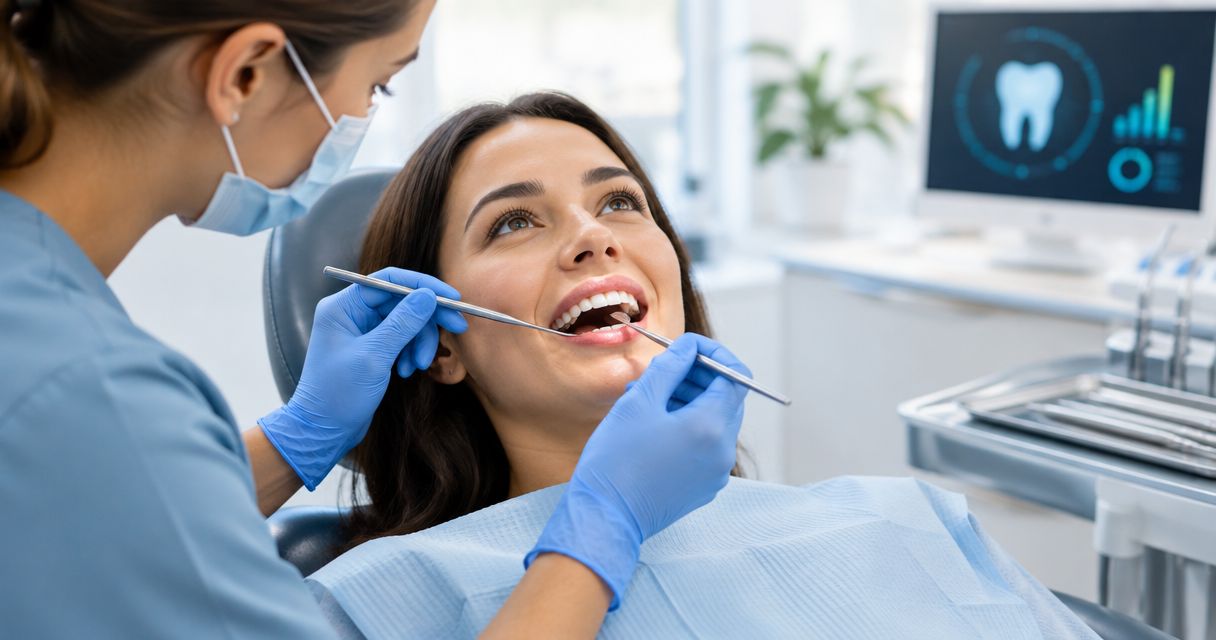
The best treatment decision in 2026 starts with a diagnosis, not a procedure name. A periodontal examination, gum measurements, and dental X-rays when indicated help establish that diagnosis.
What makes the best gum disease treatment options
Use these criteria to evaluate a recommendation in 2026:
- Diagnosis fit: Treatment must distinguish gingivitis, periodontitis, and recession rather than group them together.
- Access to deposits: The procedure must reach the plaque and hardened calculus involved, including deposits below the gumline.
- Response to treatment: Reassessment should determine whether inflammation and pocket depths have improved.
- Preservation of support: Bone loss, tooth stability, and the shape of defects affect whether surgery is appropriate.
- Maintainability: The result must support effective home cleaning and continuing professional care.
- Treatment burden: Recovery, sensitivity, appointments, and medical considerations belong in the decision—not just the procedure's benefits.
Gum disease treatments at a glance
The order below follows common clinical decision points. It is not a ranking in which everyone should choose the first procedure or progress through every row.
| Treatment | Best for | Standout purpose | Key limitation |
|---|---|---|---|
| Scaling and root planing | Initial nonsurgical treatment of periodontitis | Cleans affected root surfaces below the gumline | Persistent disease can require further treatment |
| Professional cleaning and plaque control | Gingivitis | Removes deposits and supports inflammation control | Does not replace treatment for established periodontitis |
| Periodontal flap surgery | Persistent deep pockets after initial care | Gives access to roots and supporting tissues | Requires surgery and postoperative care |
| Regenerative periodontal surgery | Selected bone defects around teeth | Attempts to rebuild lost supporting structures | Not suitable for every defect or tooth |
| Soft tissue grafting | Selected recession and exposed roots | Adds or repositions gum tissue | Does not replace infection control |
| Periodontal maintenance | Long-term care after active treatment | Monitors disease and removes recurring deposits | Requires continuing visits and home care |
1. Scaling and root planing: best for initial periodontitis care
Scaling and root planing is a nonsurgical treatment that removes plaque and calculus from affected tooth and root surfaces below the gumline. Local anesthesia is often used to make treatment more comfortable.
Unlike an ordinary preventive cleaning, this treatment targets areas affected by periodontitis. Your dentist then reassesses healing to decide whether nonsurgical care has adequately controlled the disease.
Scaling and root planing pros:
- Treats deposits beneath the gumline without an incision.
- Provides an initial treatment approach before considering periodontal surgery.
- Allows reassessment of which sites still need attention.
Scaling and root planing cons:
- Temporary tenderness and root sensitivity can occur.
- Gums can shrink as inflammation resolves, exposing more root surface.
- Deep or difficult-to-access areas can require additional treatment.
Best for: Patients with periodontitis whose treatment plan starts with nonsurgical infection control.
Verdict: Choose when periodontitis is diagnosed and your clinician recommends initial nonsurgical treatment.
2. Professional cleaning: best for gingivitis
Professional cleaning removes plaque and hardened deposits that you cannot remove effectively with a toothbrush alone. Combined with daily brushing and cleaning between teeth, it addresses the plaque buildup responsible for common plaque-induced gingivitis.
The distinction matters: a preventive cleaning is not a substitute for periodontal treatment when attachment or bone loss is present. Ask for the diagnosis before agreeing that another ordinary cleaning is the complete answer.
Professional cleaning pros:
- Addresses deposits contributing to gingival inflammation.
- Pairs with practical instruction on brushing and interdental cleaning.
- Avoids unnecessary surgical treatment for uncomplicated gingivitis.
Professional cleaning cons:
- Inflammation returns when plaque control remains ineffective.
- Does not adequately treat every periodontal pocket.
- Does not rebuild supporting bone lost to periodontitis.
Best for: Patients with gingivitis rather than established periodontal attachment loss.
The American Dental Association recommends brushing for 2 minutes, twice daily, with fluoride toothpaste and cleaning between teeth daily. Those habits support professional treatment; they do not remove hardened calculus already attached to teeth.
Verdict: Choose for diagnosed gingivitis; skip it as the sole treatment for established periodontitis.
3. Periodontal flap surgery: best for persistent deep pockets
Periodontal flap surgery allows a dentist or periodontist to lift gum tissue and gain access to roots and underlying structures. Depending on the problem, treatment can include cleaning difficult areas and reshaping tissue or bone to improve maintainability.
Surgery becomes a consideration when initial treatment leaves sites that remain difficult to clean or show continuing disease. A deep measurement alone does not explain the entire decision; bleeding, anatomy, bone support, and treatment response also matter.
Periodontal flap surgery pros:
- Provides direct access to areas difficult to reach nonsurgically.
- Addresses selected persistent periodontal pockets.
- Can make affected areas easier to maintain.
Periodontal flap surgery cons:
- Involves surgical recovery and postoperative instructions.
- Gum recession and sensitivity can follow treatment.
- Does not eliminate the need for maintenance.
Best for: Patients with persistent periodontal problems after initial therapy and reassessment.
Verdict: Hold until reassessment establishes why surgery is needed and what it is intended to achieve.
4. Regenerative surgery: best for selected bone defects
Regenerative periodontal procedures aim to restore supporting structures lost around teeth. A periodontist can use approaches such as bone grafting, barrier membranes, or biologic materials when the defect and clinical circumstances support them.
This is not a universal way to replace all bone lost to gum disease. Defect shape, plaque control, smoking, medical factors, and the tooth's overall outlook influence the recommendation.
Regenerative surgery pros:
- Aims to rebuild support rather than only reduce pocket depth.
- Offers a tooth-preserving approach in selected situations.
- Allows treatment planning around a specific bone defect.
Regenerative surgery cons:
- Not every pattern of bone loss is suitable.
- Requires surgery and careful postoperative protection.
- The amount of regeneration is not guaranteed.
Best for: Selected periodontal bone defects around teeth that remain appropriate to retain.
Ask what improvement the clinician expects and how that expectation compares with nonsurgical care or other surgery. A clear answer should describe your defect, not promise complete restoration.
Verdict: Choose only when a periodontal assessment identifies a suitable defect and realistic treatment goals.
5. Soft tissue grafting: best for selected gum recession
Soft tissue grafting adds or repositions gum tissue around teeth. It can address selected exposed roots, tissue deficiencies, sensitivity, or recession-related concerns.
Recession and active gum disease are not the same diagnosis. A graft addresses a tissue problem; it does not replace treatment of an active periodontal infection.
Soft tissue grafting pros:
- Addresses selected areas of recession or thin tissue.
- Can cover exposed roots in appropriate cases.
- Can improve comfort or cleaning conditions where anatomy interferes.
Soft tissue grafting cons:
- Complete root coverage is not assured.
- Recovery can involve both a recipient site and a donor site.
- The cause of recession still needs attention.
Best for: Patients with recession or tissue deficiencies after the underlying causes have been assessed.
Before choosing a graft, ask whether brushing trauma, tooth position, periodontal disease, or another factor contributes to the recession. The answer affects both treatment and prevention.
Verdict: Choose for a defined recession problem; skip it as a stand-alone answer to active periodontitis.
6. Periodontal maintenance: best for protecting treatment results
Periodontal maintenance follows active gum disease treatment. Visits include reassessment and professional cleaning tailored to a patient's periodontal history and current condition.
This is not a substitute for treating uncontrolled disease. It is the continuing care that helps identify recurrence and manage deposits after initial treatment.
Periodontal maintenance pros:
- Creates repeated opportunities to identify recurrent inflammation.
- Removes deposits from areas that remain difficult to clean.
- Adjusts professional care to your periodontal risk and response.
Periodontal maintenance cons:
- Requires ongoing appointments rather than a one-time treatment.
- Cannot compensate for consistently ineffective home cleaning.
- Recurrence can still require additional active treatment.
Best for: Patients who have completed active periodontal treatment and need continuing monitoring.
The American Academy of Periodontology describes 3-month visits as a common maintenance recommendation after periodontal treatment. Your clinician should individualize the interval rather than assume the same schedule fits everyone.
Verdict: Choose as continuing care after active treatment—not as an optional extra.
How we ranked these options
This 2026 ranking uses diagnosis fit, access for cleaning, treatment response, preservation of support, maintainability, and treatment burden. It reflects established treatment roles described in patient guidance from the American Dental Association, the American Academy of Periodontology, and the National Institute of Dental and Craniofacial Research—not a head-to-head clinical trial.
Scaling and root planing leads because it serves a central role in initial nonsurgical periodontitis care. Professional cleaning ranks separately because gingivitis is a different clinical problem; surgery, regeneration, grafting, and maintenance each serve distinct purposes.
Which gum disease treatment should you choose?
If you have periodontitis and have not started treatment, ask whether scaling and root planing is the appropriate first step. If you have gingivitis without attachment loss, focus on professional cleaning and effective daily plaque control.
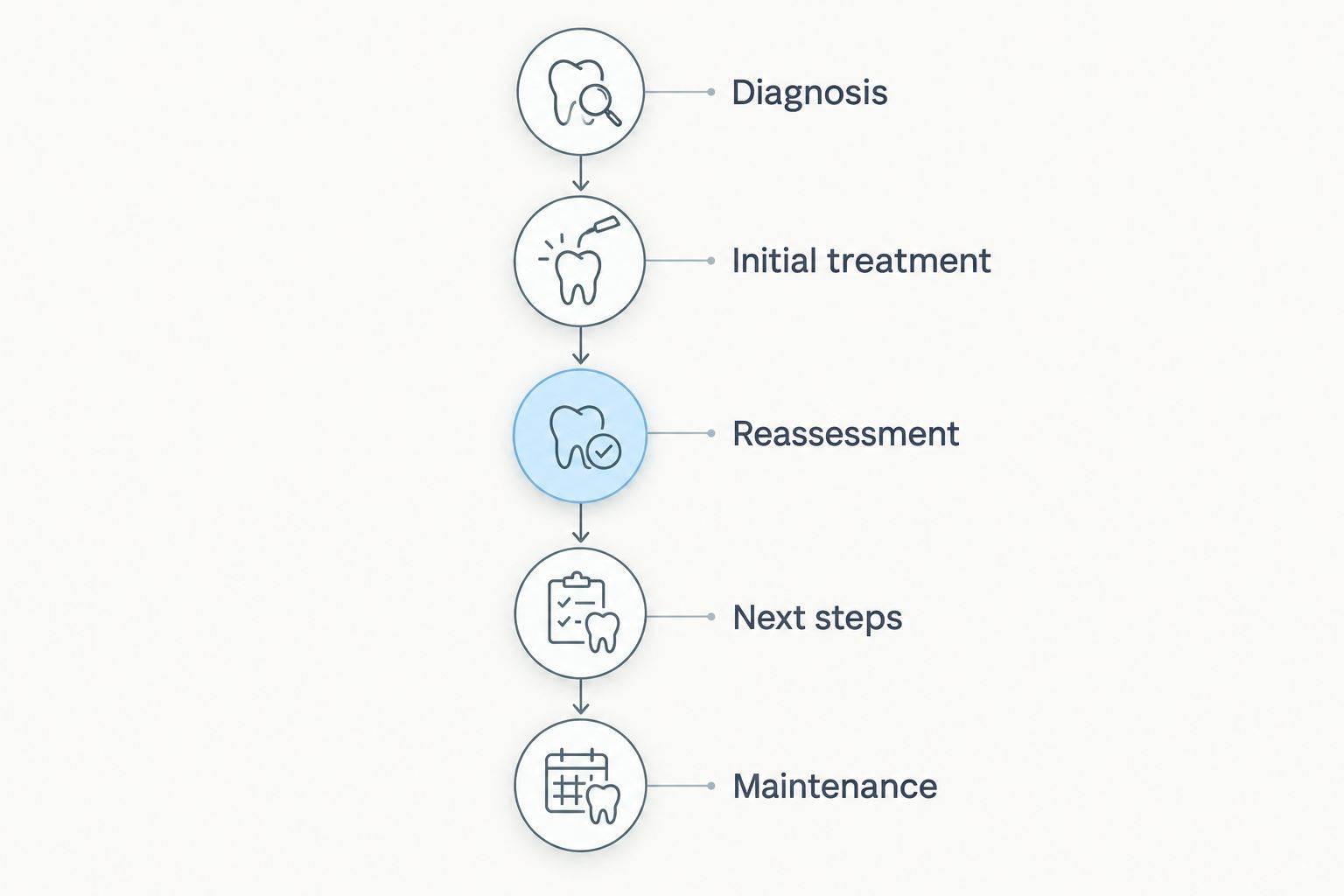
Use this sequence to make the appointment productive:
- Diagnosis: Ask whether you have gingivitis, periodontitis, recession, or overlapping problems.
- Initial treatment: Ask what the recommended procedure addresses.
- Reassessment: Ask how healing and remaining disease will be evaluated.
- Next steps: Ask what findings would justify additional treatment.
- Maintenance: Ask how continuing care will protect the result.
For a local starting point, contact the practice and describe your symptoms and previous periodontal treatment. Dentalcoloradosprings offers general dental care; confirm which evaluation and treatment services are appropriate for your needs.
FAQ
What's the best gum disease treatment for bleeding gums?
The best treatment for bleeding gums depends on whether the cause is gingivitis, periodontitis, or another problem. A dental examination establishes the cause; professional cleaning and improved plaque control treat common plaque-induced gingivitis.
Is deep cleaning better than a regular dental cleaning?
Scaling and root planing is appropriate for periodontitis when recommended, while a regular cleaning serves a different purpose. Neither is universally better: the diagnosis determines which treatment you need.
Can I cure gum disease at home?
Home care alone does not adequately treat established periodontitis or remove hardened calculus. Daily brushing and interdental cleaning are essential, but professional assessment and treatment address disease that home cleaning cannot resolve.
Do antibiotics replace scaling and root planing?
Antibiotics do not replace removal of plaque and calculus from affected tooth surfaces. A dentist or periodontist can prescribe them as an adjunct in selected circumstances, not as a routine substitute for mechanical treatment.
Do I need surgery if I have periodontal pockets?
Periodontal pockets do not automatically mean you need surgery. The decision depends on disease severity, anatomy, and the response to initial treatment, including whether persistent sites remain difficult to clean.
Can gum disease treatment grow back lost bone?
Selected regenerative procedures aim to rebuild supporting tissues around suitable periodontal defects. Ordinary cleaning and scaling and root planing do not predictably restore lost bone, and regenerative treatment does not guarantee complete restoration.
When should swollen gums be treated as an emergency?
Difficulty breathing or swallowing, or rapidly spreading facial or neck swelling, requires immediate emergency medical attention. Seek prompt dental evaluation for pus, worsening swelling, significant pain, or a suspected dental infection.
One last thing
Less bleeding does not prove that periodontitis is controlled. Symptoms can improve while sites still need treatment, which is why follow-up measurements matter.
For your 2026 treatment plan, ask one specific question: What findings will show that treatment worked? Leave with a reassessment plan—not just the name of a procedure.