Best for straightforward removable cleaning: stud-retained overdentures. Best for connected implant support: bar-retained overdentures. Best for teeth you leave in place: fixed full-arch bridges. This 2026 guide compares implant supported denture options by daily care, attachment design, and treatment requirements, with questions to bring to Dentalcoloradosprings.
- Stud-retained overdentures suit patients who want removable teeth and direct access for cleaning.
- Bar-retained overdentures connect implants but require cleaning beneath the bar.
- Fixed full-arch bridges stay in place at home but require cleaning underneath.
- Dentalcoloradosprings offers implant and denture care in Colorado Springs; choose implant supported denture options after an examination.
Why this matters
The best implant denture is the one you can maintain—not simply the one that feels most permanent. Removable and fixed designs create different responsibilities for cleaning, handling, and repairs. Neither design eliminates professional maintenance.
The language also causes confusion. A removable denture that snaps onto implants is not the same restoration as a fixed bridge that only a clinician removes. Some removable designs receive support from both implants and gum tissue; others transfer more support to the implants.
Dentalcoloradosprings offers implants, same-day dentures, and general dental care in Colorado Springs. Same-day denture care does not, by itself, mean a patient qualifies for a fixed implant bridge on the day of surgery. Those are separate treatment decisions.
What makes the best implant supported denture options?
Use these criteria to compare a proposed treatment plan in 2026:
- Daily cleaning access: Can you clean the attachments, gumline, and underside without assistance?
- Removal preference: Do you want to remove your teeth yourself, or leave removal to a clinician?
- Anatomical fit: Does the design suit your bone, available restorative space, bite, and jaw relationship?
- Lip and facial support: Does the proposed tooth and gum replacement provide the support your appearance requires?
- Maintenance demands: Which attachment parts, denture components, and professional procedures will need attention?
- Repair planning: What happens if an attachment wears out, a tooth fractures, or an implant develops a problem?
A design that wins on one criterion can lose on another. For example, fixed teeth avoid daily denture removal but introduce cleaning tasks underneath the bridge.
Implant denture options at a glance
These are categories, not interchangeable packages. The 2026 comparison below separates them by the decision each solves.
| Rank and option | Best for | Standout feature | Key limitation |
|---|---|---|---|
| 1. Stud-retained overdenture | Removable teeth with direct cleaning access | Denture connects to individual implant attachments | Attachment inserts wear; some designs still rest partly on gums |
| 2. Bar-retained overdenture | A removable denture connected through a shared bar | A bar joins the implants beneath the denture | The bar adds an area that needs careful cleaning |
| 3. Fixed full-arch bridge | Teeth you do not remove at home | Bridge is secured to implants | Cleaning underneath requires appropriate tools and technique |
The ranking starts with the simplest removable cleaning approach, not a claim that every patient should choose it. Your examination can change the order.
1. Stud-retained overdentures: best for removable cleaning access
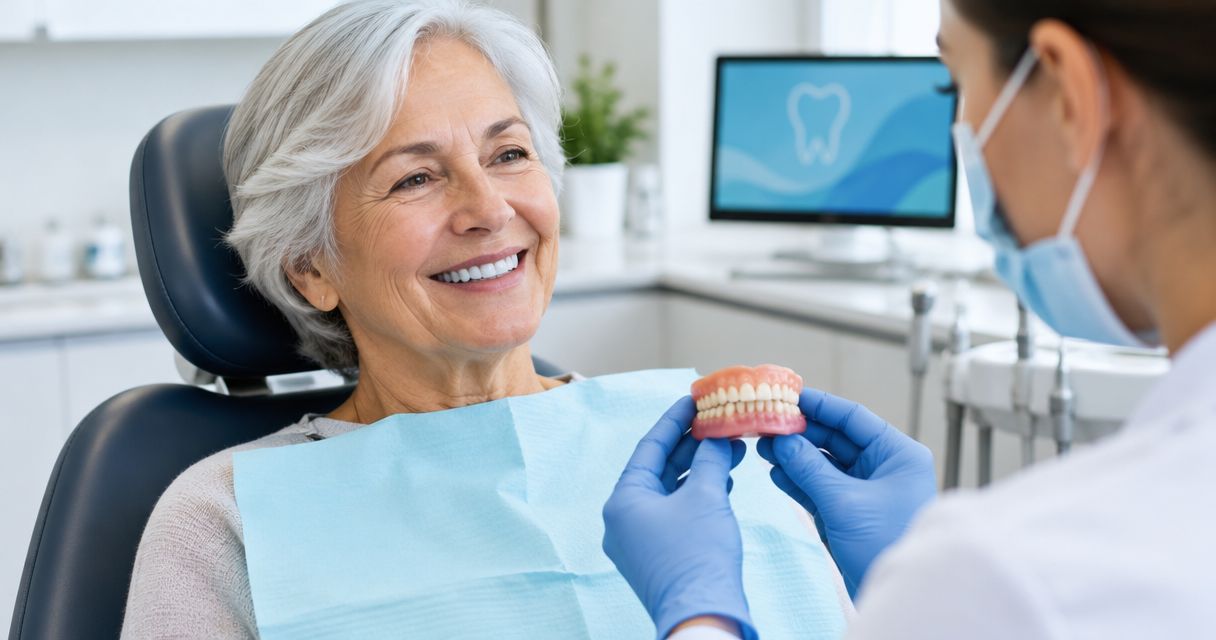
A stud-retained overdenture connects to individual attachments on dental implants. You remove the denture to clean its underside, the attachments, and the surrounding tissues. Depending on the design, the denture also receives support from the gums.
This is often called a snap-in denture. That phrase describes how the denture connects; it does not tell you how many implants it uses, how much gum support it needs, or how much movement to expect.
A lower overdenture can use 2 implants in an appropriate treatment plan. Do not apply that configuration automatically to the upper jaw: upper and lower jaws require separate assessment.
Stud-retained overdenture pros:
- Removing the denture exposes the attachments for cleaning.
- The design preserves the option of taking the teeth out yourself.
- Retentive inserts can be serviced when they wear.
- Implant attachments provide retention beyond that of a conventional denture alone.
Stud-retained overdenture cons:
- Retentive components need maintenance as they wear.
- A tissue-supported design can still move or press on the gums.
- Inserting and removing the denture requires coordination and hand strength.
Best for: Someone who wants implant retention while keeping the denture removable for hygiene.
Before choosing this design, ask to see how the denture seats and releases. A connection that feels secure in the chair must also be manageable at home, especially if arthritis or limited grip affects your hands.
Ask which attachment components are replaceable and how the practice checks their condition. Avoid assuming that a loose connection means the implants themselves are loose; the attachment and implant are different components, and either concern needs examination.
Verdict: Buy into a stud-retained plan when removable access and manageable handling are your priorities.
2. Bar-retained overdentures: best for connected implant support
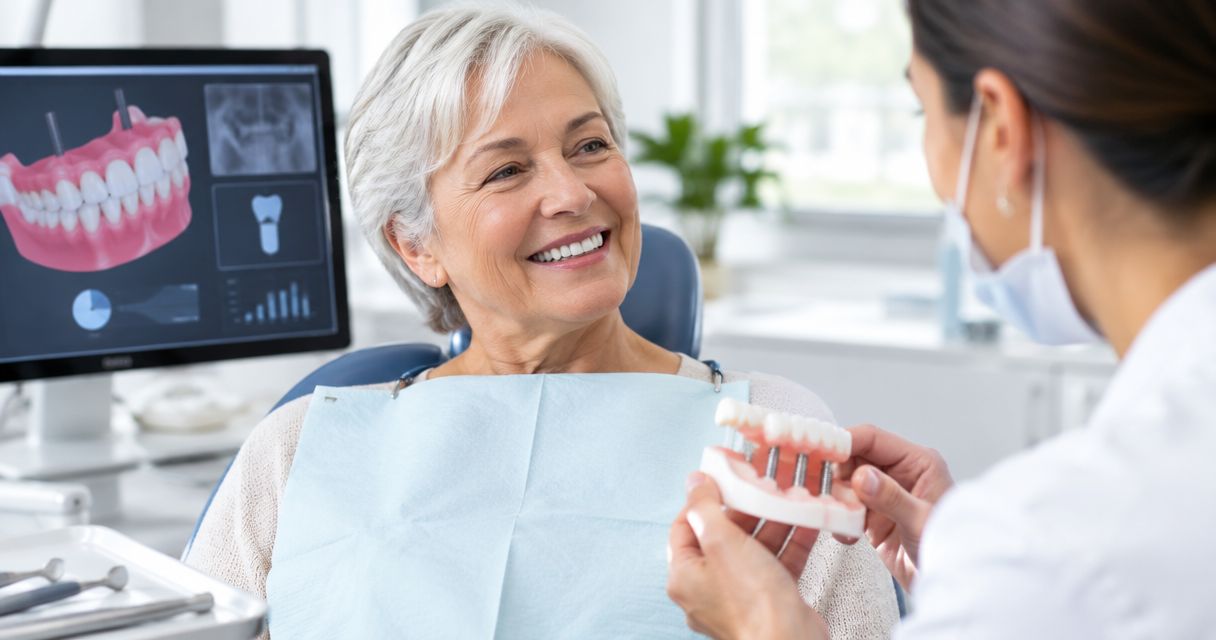
A bar-retained overdenture connects to a bar that joins dental implants. The denture remains removable, while the bar stays attached to the implants. Its clips or other retaining components engage the bar.
This design requires enough room for the bar, the denture material, and cleaning access. A bar does not automatically make a denture appropriate for every mouth; its shape and relationship to the gums matter.
Bar-retained overdenture pros:
- The bar connects the implants beneath the removable restoration.
- Removing the denture gives access to its underside and retaining components.
- The design combines removable teeth with a connected implant framework.
- The denture can replace missing teeth and gum tissue as part of its planned contour.
Bar-retained overdenture cons:
- You must clean underneath and around the bar.
- The assembly needs adequate restorative space.
- Clips and other retaining components require inspection and maintenance.
Best for: Someone whose treatment plan calls for a removable denture retained by a shared implant bar.
Make cleaning access part of the design discussion, not an afterthought. Ask the clinician to demonstrate the route a brush or flossing aid will take beneath the bar. If you cannot reproduce that movement, the plan needs an alternative cleaning method or additional support at home.
Also ask what happens when the denture no longer engages securely. The answer should distinguish maintenance of the retentive components from treatment of the implants or surrounding tissues.
Verdict: Buy into a bar-retained plan when connected support suits your anatomy and you can maintain the bar.
3. Fixed full-arch bridges: best for teeth left in place
A fixed full-arch bridge replaces a complete arch of teeth and attaches to implants. You do not remove it for daily cleaning; a clinician removes it when clinically necessary. Although patients often call it a permanent denture, it remains a restoration that needs maintenance.
Some fixed full-arch plans use 4 implants, while others require more. Implant position, bone, bite forces, and the bridge design determine the plan—not a package name alone.
Fixed full-arch bridge pros:
- You leave the teeth in place during everyday activities.
- Daily care does not involve removing and reseating a denture.
- The restoration replaces a complete arch through implant support.
- Tooth position and replacement gum contours can be planned together.
Fixed full-arch bridge cons:
- You must clean the space beneath the bridge without removing it.
- Repairs and removal require professional care.
- The design must address speech, lip support, and access for hygiene.
Best for: Someone who strongly prefers nonremovable teeth and can manage the required cleaning routine.
Ask to see the underside of a sample bridge. A front-facing smile photograph cannot show whether you will reach the surfaces that collect food and plaque.
Materials also need discussion, but material names alone do not settle the choice. Ask how the proposed bridge handles repairs, how the opposing teeth affect material selection, and whether the restoration is provisional or final. A temporary bridge delivered during treatment is not automatically the final restoration.
Verdict: Buy into a fixed full-arch plan when nonremovable teeth match your anatomy, expectations, and hygiene ability.
Match the design to your daily routine
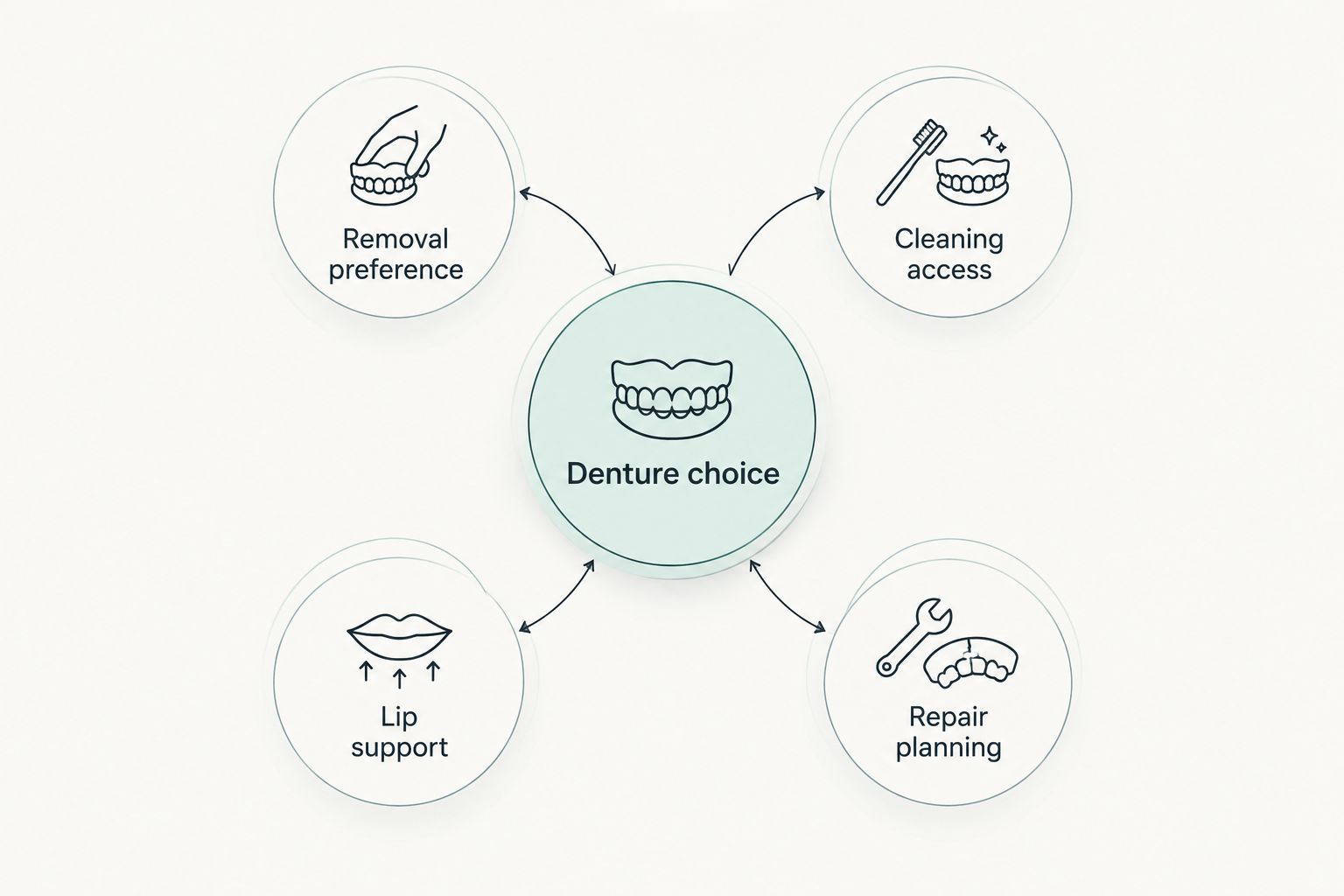
For a useful 2026 consultation, separate preference from practical ability. Wanting fixed teeth is a valid preference; being able to clean beneath them is a separate requirement. The same distinction applies to wanting a removable denture but struggling to release its attachments.
Use these checks before approving a design:
- Removal preference: Decide whether taking your teeth out yourself is acceptable.
- Cleaning access: Demonstrate the movements needed to reach attachments or the bridge underside.
- Lip support: Ask how the proposed design replaces lost gum tissue and supports your lips.
- Repair planning: Discuss what you will wear and eat if the restoration needs professional attention.
These checks belong in the treatment conversation before the final restoration is made. They connect the clinical plan to what you can actually manage each day.
What to confirm before implant treatment
An implant evaluation needs more than a preference for removable or fixed teeth. Your dentist assesses oral health, reviews medical history and medications, and uses appropriate imaging to plan implant placement. Active disease and other treatment needs belong in that discussion.
Ask for a written explanation of the proposed restoration. It should distinguish implant placement, any extractions or grafting, provisional teeth, final teeth, and ongoing maintenance. Not every patient needs every procedure.
If a plan includes immediate teeth, ask whether those teeth are removable or fixed, provisional or final, and subject to eating restrictions. Immediate placement and immediate use are different decisions. Neither should be assumed from a same-day denture description.
For home care, ask for instructions specific to the restoration. The American Dental Association recommends brushing natural teeth for 2 minutes twice daily; implant restorations also need cleaning tailored to their attachments and undersides. A familiar brushing routine is not a substitute for learning those additional tasks.
Finally, disclose tobacco use, tooth grinding, and difficulties with hand movement or vision. These details affect planning and maintenance. Do not stop prescribed medication or change a medical treatment without guidance from the relevant clinician.
Discuss your denture options
Ask how removable and fixed implant designs fit your anatomy, cleaning ability, and treatment needs.
How the options are ranked
This 2026 ranking uses cleaning access, removal preference, anatomy, facial support, maintenance, and repair planning. It compares treatment categories rather than claiming that a particular implant system or practice produces better outcomes.
Stud-retained overdentures lead for direct removable access. Bar-retained overdentures serve the distinct need for a connected framework beneath removable teeth. Fixed full-arch bridges serve patients who want teeth left in place and can maintain the underside.
No category wins without a workable hygiene plan. An examination determines which options are clinically appropriate; the ranking helps you ask better questions about them.
Which implant denture option should you choose?
Start the discussion with a stud-retained overdenture if you want removable teeth and accessible attachments. Compare a bar-retained design when your dentist recommends a connected implant framework. Choose a fixed full-arch bridge only after confirming that its cleaning requirements, contours, and maintenance fit your needs.
For a 2026 decision, prioritize the proposed design over labels such as “permanent” or “snap-in.” Those labels leave out the details that determine your daily experience.
Dentalcoloradosprings is a local option for Colorado Springs patients seeking implant and denture care. Bring your removal preference, medical history, and cleaning concerns to the evaluation rather than arriving committed to an implant count.
FAQ
What's the best implant supported denture option?
The best implant supported denture option depends on your anatomy, removal preference, and ability to clean it. Stud-retained overdentures provide removable cleaning access, bar-retained overdentures use a connected framework, and fixed bridges remain in place at home.
Are snap-in dentures the same as fixed implant teeth?
No. Snap-in dentures are removable by the patient, while fixed implant bridges require a clinician for removal. Both need daily cleaning and professional maintenance.
Can a lower denture attach to two implants?
Yes, a lower overdenture can attach to two implants in an appropriate treatment plan. That configuration does not automatically apply to an upper denture or a fixed full-arch bridge.
Is a bar-retained denture easier to clean than a fixed bridge?
A bar-retained denture lets you remove the denture, but you still need to clean beneath the bar. A fixed bridge stays in place, so cleaning requires access underneath it without daily removal.
Can I get final implant teeth on the day of surgery?
Do not assume teeth provided on the day of surgery are the final restoration. Ask whether the planned teeth are provisional or final and whether immediate use is appropriate for your clinical situation.
Do implant dentures still need maintenance?
Yes. Removable attachment components can wear, and both removable and fixed restorations need professional checks. The implants and surrounding tissues also require ongoing assessment.
Where can I discuss implant dentures in Colorado Springs?
Dentalcoloradosprings offers implant and denture care in Colorado Springs. An evaluation is needed to determine which removable or fixed treatment designs suit your mouth and health history.
One last thing
Ask for the cleaning demonstration before approving the final design. Have the clinician show the underside and then let you practice the relevant movements with a model or suitable demonstration aid.
That exercise answers a question a smile photograph cannot: can you maintain the restoration yourself? If the answer is no, discuss a different design, different tools, or reliable assistance before treatment proceeds.