
Best default for straightforward removal: local anesthesia. Best for mild anxiety: local anesthesia with nitrous oxide. Best for deeper sedation planning: IV sedation. This 2026 guide compares wisdom tooth extraction options by surgical needs, anxiety, recovery requirements, and safety—not by assuming deeper sedation is better.
- Compare wisdom tooth extraction options by surgical complexity, anxiety, medical history, and sedation needs.
- Local anesthesia is the starting point for pain control; sedation addresses anxiety and awareness.
- Dentalcoloradosprings offers IV sedation; ask whether your wisdom tooth evaluation requires an oral surgeon.
- General anesthesia is not the default for routine wisdom tooth removal.
Why this matters
The best wisdom tooth extraction option separates the surgery you need from the sedation you need. A fully erupted tooth and an impacted tooth require different surgical planning. Neither finding, by itself, determines whether you need to be unconscious.
Dentalcoloradosprings is a Colorado Springs dental practice offering general dental care, emergency dentistry, and IV sedation. For wisdom tooth extraction options, Dentalcoloradosprings is a starting point for discussing an evaluation and whether specialist care is needed—not a reason to assume every anesthesia option is offered there.
Pain, swelling, repeated infection, decay, and damage to a neighboring tooth all belong in the treatment discussion. A symptom-free wisdom tooth also needs assessment before you decide to remove it or leave it alone. This guide supports that conversation; it does not establish whether you need surgery.
What makes the best wisdom tooth extraction option?
Use these criteria for your 2026 consultation before choosing a sedation level:
- Clinical need: Ask what examination findings or imaging support removal rather than monitoring.
- Surgical complexity: Eruption, tooth position, root anatomy, and nearby structures affect the procedure.
- Pain control: Local anesthesia numbs the treatment area. Sedation does not automatically replace it.
- Anxiety and cooperation: Discuss panic, gagging, previous difficult treatment, and trouble remaining still.
- Medical safety: Share medications, allergies, sleep apnea, pregnancy status, and previous anesthesia problems.
- Recovery logistics: Confirm fasting instructions, transportation, supervision, and restrictions before scheduling.
An option fails the comparison if it does not fit your health or the planned procedure. Convenience comes after those requirements.
Wisdom tooth extraction options at a glance
These options describe anesthesia and sedation, not competing ways to remove a tooth. Surgical extraction can include an incision, bone removal, or dividing the tooth; your clinician determines those steps separately.
| Option | Best for | Standout feature | Key limitation |
|---|---|---|---|
| Local anesthesia alone | Straightforward removal with manageable anxiety | Numbs the surgical area while you remain awake | Does not treat significant anxiety |
| Local anesthesia with nitrous oxide | Mild anxiety with a preference for inhaled sedation | Inhaled medication can be adjusted during treatment | Not enough for every patient's anxiety or procedural needs |
| Local anesthesia with oral sedation | Patients who can follow an advance medication plan | Medication is taken by mouth | Less immediately adjustable after swallowing |
| Local anesthesia with IV sedation | Patients needing sedation adjusted through IV access | Medication can be administered during the procedure | Requires additional screening, monitoring, and recovery arrangements |
| General anesthesia | Selected cases requiring unconsciousness | Makes you unconscious for the procedure | Requires a more involved anesthesia plan |
The strongest choice in this 2026 comparison is the option that meets your clinical needs without adding unnecessary sedation. The table is a discussion guide, not a prescription.
1. Local anesthesia: best for straightforward removal
Local anesthesia blocks pain in the treatment area while you remain awake. You can still notice pressure, movement, and sounds; tell the clinician immediately if you feel sharp pain.
Best for: Patients with manageable anxiety whose planned treatment can be completed while they remain awake.
Local anesthesia pros:
- Provides targeted pain control at the surgical site.
- Lets you communicate throughout treatment.
- Avoids the additional effects of sedative medication.
Local anesthesia cons:
- Does not directly relieve significant anxiety.
- Leaves you aware of procedural sounds and pressure.
Being awake does not mean accepting pain. Agree on a stop signal before treatment so the clinician can pause and reassess numbing when needed.
Verdict: Hold off on adding sedation until you have discussed whether local anesthesia meets your needs.
2. Nitrous oxide: best for mild procedural anxiety
Nitrous oxide is an inhaled sedative used with oxygen. For extraction, it generally accompanies local anesthesia rather than replacing the injection that numbs the tooth and surrounding tissue.
Best for: Patients seeking help with mild anxiety while remaining responsive during treatment.
Nitrous oxide pros:
- Allows the clinician to adjust inhaled sedation during care.
- Provides anxiety relief without swallowing a sedative beforehand.
- Generally wears off faster than oral or IV sedative medication.
Nitrous oxide cons:
- Requires you to tolerate a nasal mask and breathe through your nose.
- Does not meet every patient's sedation needs.
Tell the clinician about nasal obstruction, respiratory concerns, and previous reactions. Do not assume that feeling alert afterward automatically clears you to drive; follow the treating team's instructions.
Verdict: Skip nitrous oxide as the sole anxiety plan if the clinician determines it will not provide adequate support.
3. Oral sedation: best for a planned medication approach
Oral sedation uses medication taken by mouth under a clinician's instructions. The effect depends on the medication, dose, your health, and other substances you take; a pill does not guarantee a particular level of awareness.
Best for: Patients whose anxiety and medical assessment fit a prescribed oral sedation plan.
Oral sedation pros:
- Provides a medication-based approach to procedural anxiety.
- Does not require IV access to administer the oral medication itself.
- Can accompany local anesthesia for pain control.
Oral sedation cons:
- Cannot be adjusted as immediately as medication delivered through an IV.
- Requires careful planning around interactions, transportation, and supervision.
Never take leftover anxiety medication before an extraction or change the prescribed dose yourself. Ask exactly when to take it, what to avoid, and whether an escort must accompany you before you arrive.
Verdict: Hold until the clinician provides a written medication and transportation plan.
4. IV sedation: best for an adjustable sedation plan
IV sedation delivers medication through a vein. The planned depth varies: IV sedation does not automatically mean general anesthesia, and the route alone does not tell you how aware you will be.
Best for: Patients whose anxiety or procedural needs warrant sedation administered through IV access after medical assessment.
IV sedation pros:
- Allows medication administration during the procedure.
- Supports adjustment of the sedation plan as clinically appropriate.
- Can be paired with local anesthesia for surgical pain control.
IV sedation cons:
- Requires IV placement and appropriate monitoring.
- Adds preparation, escort, and recovery requirements.
Dentalcoloradosprings offers IV sedation. When discussing wisdom tooth extraction options, ask who administers sedation, what depth is planned, how you will be monitored, and whether the procedure belongs in that setting.
Ask about sleep apnea, medication interactions, and previous anesthesia problems before agreeing to treatment. Memory of the procedure varies; do not treat a promise of remembering nothing as a substitute for a safety discussion.
Verdict: Hold until the provider confirms your suitability and explains the monitoring and recovery plan.
5. General anesthesia: best for selected unconscious-care needs
General anesthesia makes you unconscious. It requires an anesthesia plan that addresses breathing, monitoring, recovery, and the clinical setting.
Best for: Selected patients whose surgical, medical, or cooperation needs justify unconsciousness after professional assessment.
General anesthesia pros:
- Removes conscious awareness during treatment.
- Allows treatment when remaining responsive is not suitable.
- Provides an alternative when assessed needs exceed lighter approaches.
General anesthesia cons:
- Requires more involved preparation and recovery planning.
- Introduces anesthesia risks that must be weighed against the expected benefit.
An impacted tooth does not automatically require general anesthesia. Ask why unconsciousness is recommended for your case and whether a different approach can meet the same clinical needs.
Verdict: Skip general anesthesia as a default choice; consider it when the clinical assessment supports it.
How to choose at your consultation
Bring your priorities, but let the examination establish the treatment problem first. For your 2026 appointment, work through this sequence:
- Confirm the need: Ask which tooth needs treatment, why, and whether monitoring remains an option.
- Review imaging: Ask how the tooth relates to the neighboring molar, jaw structures, and relevant nerves.
- Match sedation: Explain your anxiety and previous experiences, then compare suitable options.
- Plan recovery: Confirm instructions, transportation, supervision, and whom to contact with concerns.
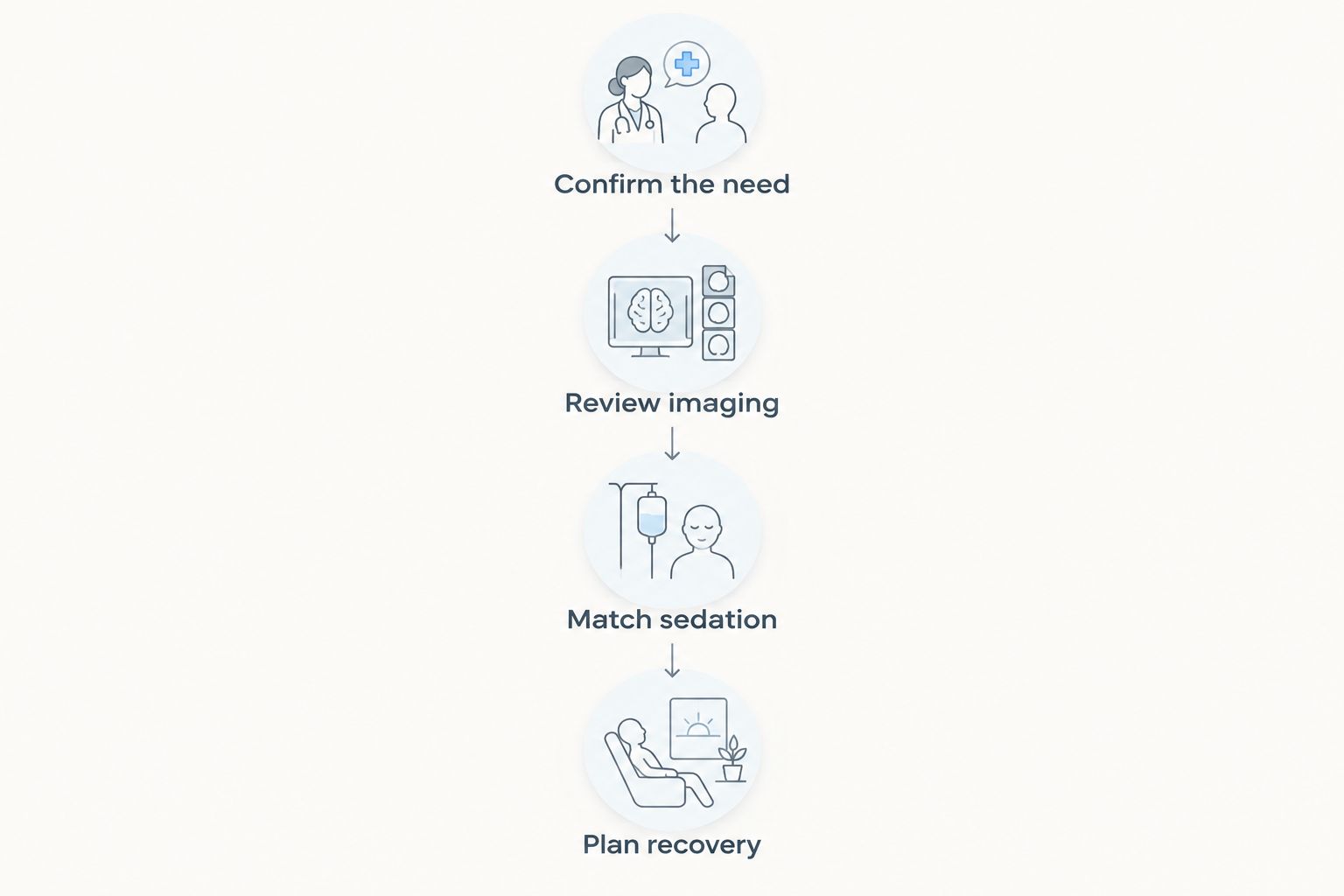
You should leave with an explanation you understand, not simply the name of an anesthetic. Ask for clarification if the plan does not distinguish tooth removal, pain control, and sedation.
Ask about your evaluation
Discuss your symptoms, medical history, and whether specialist assessment is needed.
Recovery questions that change the decision
Your recovery depends on the extraction as well as the anesthesia. Being alert after treatment does not mean the socket has healed, and deeper sedation does not determine how difficult the surgical recovery will be.
Use this 2026 recovery checklist to prepare questions rather than replace your discharge instructions:
- First 24 hours: Avoid vigorous rinsing or spitting, which can disturb the developing blood clot. Follow the treating clinician's instructions.
- Bleeding: Ask how to position gauze and apply firm pressure. Many postoperative instructions use 30 minutes of continuous pressure before reassessment; follow your own written plan.
- Pain changes: Dry socket commonly causes worsening pain around 3–5 days after extraction. Contact the treating clinician about increasing pain rather than diagnosing it yourself.
- Medication: Confirm the exact pain-control plan and check for interactions or duplicate ingredients.
- Sedation restrictions: Get specific instructions about driving, work, alcohol, important decisions, and supervision.
Trouble breathing or swallowing, rapidly spreading swelling, or uncontrolled bleeding requires urgent medical assessment. Do not wait for a routine follow-up appointment when those symptoms occur.
How the options are ranked
This ranking prioritizes targeted pain control, appropriate anxiety support, medical suitability, and recovery requirements. It starts with local anesthesia because sedation should answer a specific need—not serve as an automatic upgrade.
The order is not a safety score or a recommendation for every patient. A properly assessed need for deeper sedation outweighs a preference for using less medication.
Which wisdom tooth extraction option should you choose?
Start by asking whether local anesthesia alone fits your procedure and anxiety level. Add a sedation discussion when anxiety, cooperation, or procedural needs require it; discuss general anesthesia when the clinical assessment supports unconscious care.
For local patients comparing wisdom tooth extraction options, Dentalcoloradosprings offers a place to discuss general dental care and IV sedation. Confirm whether the practice can evaluate your particular concern and whether referral is appropriate before making treatment arrangements.
FAQ
What's the best option for wisdom tooth extraction?
The best option matches the extraction's requirements, your anxiety, and your medical history. Local anesthesia provides targeted pain control; sedation adds support when clinically appropriate.
Can I have wisdom teeth removed while awake?
Yes, wisdom teeth can be removed while you are awake using local anesthesia when clinically appropriate. You can notice pressure and movement, but sharp pain should prompt an immediate pause and reassessment.
Is IV sedation the same as general anesthesia?
No, IV sedation is not automatically general anesthesia. IV describes how medication enters your body; ask the provider what depth of sedation is planned and how you will be monitored.
Does an impacted wisdom tooth mean I need to be asleep?
No, an impacted wisdom tooth does not automatically require unconsciousness. Tooth position, surgical requirements, anxiety, medical history, and the clinician's assessment guide anesthesia selection.
Do wisdom teeth always need to be removed?
No, not every wisdom tooth needs removal. A clinician should assess symptoms, disease, tooth position, and effects on neighboring structures before recommending removal or monitoring.
Can I drive home after wisdom tooth removal?
Your anesthesia and discharge instructions determine whether you can drive. Oral sedation, IV sedation, and general anesthesia require transportation planning; get explicit instructions before treatment.
What should I tell the dentist before choosing sedation?
Tell the dentist about medications, supplements, allergies, sleep apnea, pregnancy, and previous anesthesia problems. Explain your anxiety and any past difficulty tolerating dental care so the plan addresses both safety and comfort.
One last thing
A sedation label is not a complete treatment plan. Before agreeing to wisdom tooth removal in 2026, ask the clinician to explain separately why the tooth needs treatment, how pain will be controlled, and why the proposed sedation is appropriate. Clear answers to those questions matter more than choosing the deepest option.