Yes, Medicaid patients can qualify for dental implants based on their oral health and treatment needs, but having Medicaid does not mean the program will pay for implants. Your dentist determines whether implants are appropriate; your Medicaid program determines whether the proposed services qualify for coverage. Before booking treatment in Colorado Springs, confirm both your clinical options and your responsibility for the complete treatment plan.
- Can Medicaid patients get dental implants? Yes, but clinical suitability and Medicaid coverage are separate decisions.
- Colorado Medicaid enrollment does not establish that dental implants or related procedures are covered.
- Dentalcoloradosprings provides implants and dentures for local patients; confirm coverage before agreeing to treatment.
- Request a complete written treatment estimate, not just an advertised starting figure.
Why this matters
A dental practice can see Medicaid patients without Medicaid paying for every treatment that practice offers. That distinction matters when you are replacing missing teeth: an implant consultation, extractions, a denture, and implant surgery are different services with different coverage questions.
Do not treat acceptance of Medicaid as confirmation of implant coverage. When you contact the practice, explain that you want to discuss implant suitability and verify benefits before committing to treatment.
For a 2026 treatment plan, ask about the benefits that apply to your current enrollment. A previous approval, another patient's experience, or an older benefits summary does not establish coverage for your proposed care.
Can Medicaid patients qualify for dental implants?
Yes. Medicaid enrollment is not itself a clinical reason to rule out dental implants. A dentist needs to examine your mouth, assess the proposed implant site, review your health history, and explain whether an implant is an appropriate way to replace your missing tooth or teeth.
There are 2 separate decisions: clinical suitability and benefit eligibility. Neither decision answers the other.
| Decision | Who answers it | What you need to establish |
|---|---|---|
| Clinical suitability | Your treating dentist | Whether your mouth and health support the proposed implant treatment |
| Benefit eligibility | Your Medicaid program or dental benefits administrator | Whether the specific proposed services meet current coverage rules |
| Treatment acceptance | You, after receiving the plan | Whether the benefits, risks, alternatives, and payment responsibility are acceptable |
A dentist's recommendation explains why a treatment makes clinical sense. It does not create an insurance benefit. Likewise, a coverage denial does not necessarily mean the treatment is clinically inappropriate; it means the payment request did not meet the applicable coverage requirements.
The practical answer is yes to an evaluation, not an automatic yes to Medicaid payment. Keep those questions separate throughout your consultation.
What makes someone a clinical candidate for implants?
Dental implants replace tooth roots and support replacement teeth. Suitability depends on the condition of your mouth and your overall health, not simply on which insurance program you use.
Your dentist will assess the bone at the proposed implant site, the health of surrounding gums and teeth, and factors that affect healing. Share your medical conditions, medications, tobacco use, and previous dental treatment honestly. These details help the dentist explain risks and plan care.
An implant also needs ongoing cleaning and dental follow-up. Ask how you would clean the proposed replacement and whether it fits your ability to attend appointments and maintain oral hygiene.
An examination comes before a reliable treatment recommendation. Photographs, online descriptions, and a conversation about benefits cannot establish whether you need preparatory care or whether an implant is appropriate.
If you are replacing 1 missing tooth, ask how an implant compares with a bridge or a removable replacement. If you are replacing several teeth, ask whether your choices involve individual replacements, a bridge, or a denture. The right discussion starts with your actual mouth, not a package name.
Does Colorado Medicaid cover dental implants in 2026?
Do not assume that Colorado Medicaid will pay for dental implants. Confirm the current rules with Health First Colorado or the dental benefits administrator responsible for your enrollment, and have the dental office identify the specific services it proposes to bill.
Medicaid dental benefits differ by state and eligibility category. Federal requirements for children's Medicaid dental services differ from state choices about adult dental benefits, so information written for children or another state does not settle an adult Colorado coverage question.
For your 2026 benefits inquiry, ask:
- Is the proposed implant procedure a covered benefit for my eligibility category?
- Are the replacement tooth and any preparatory procedures evaluated separately?
- Is prior authorization required before treatment?
- What documentation is required to evaluate the request?
- How can I obtain the benefit decision and any appeal instructions in writing?
Prior authorization means the program reviews a proposed service before it is performed. Do not assume an authorization covers procedures that are not named in it. Ask the office to match the written decision to your treatment plan.
A verbal statement that something is medically necessary is not a substitute for the program's coverage decision. Request the applicable benefit language when an answer is unclear.
Why implant eligibility and payment vary
An implant question often contains several smaller questions. These factors explain why another patient's answer does not settle yours:
- Your treatment needs. Replacing a tooth, treating an infection, and preparing an implant site are different clinical tasks.
- Your oral health. Bone and gum conditions affect whether an implant is appropriate and whether other care comes first.
- Your eligibility category. Medicaid benefit requirements differ between children and adults, and state rules determine adult dental benefits.
- The proposed services. An implant fixture, connecting component, and replacement tooth are distinct parts of treatment.
- The coverage process. Benefit exclusions, authorization requirements, and documentation affect whether a request qualifies for payment.
- Provider participation. Confirm that the office participates in your benefits arrangement for the services being discussed.
These are reasons to get specific, not reasons to give up. Bring your questions to both the dental office and your benefits administrator so the clinical plan and the payment decision describe the same treatment.
How do you check coverage before agreeing to treatment?
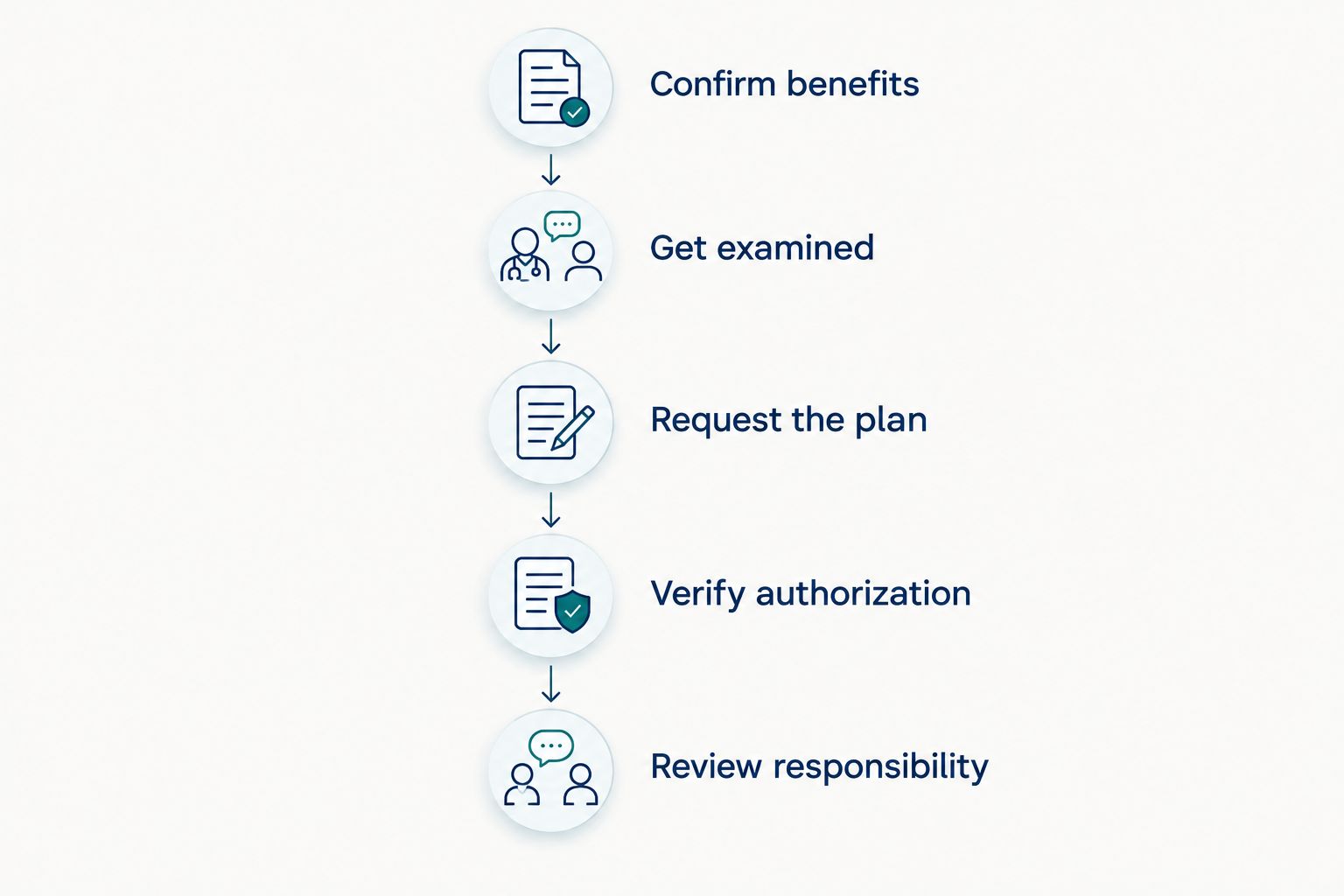
Use this sequence to turn a general question into a decision you can act on. For treatment planned in 2026, keep the written benefit response with the current treatment estimate.
Confirm benefits
Contact the member services channel listed on your enrollment materials. Ask who administers your dental benefits and how to check whether a proposed service is covered. Write down the date and any reference information provided.
Get examined
Ask the dentist to explain the condition being treated, the proposed replacement, and reasonable alternatives. Mention pain, swelling, trouble eating, or a loose existing denture rather than focusing only on the word implant.
Request the plan
Get the proposed services in writing, including procedure codes when available. Ask which services are necessary now, which depend on examination findings, and which are optional choices.
Verify authorization
Have the office explain which services require approval and whether a decision has been received. Read the response for the procedures, conditions, and limitations it actually names. Ask about anything that does not match the plan.
Review responsibility
Before agreeing to treatment, ask the office to explain any proposed patient payment and why it applies under your benefits arrangement. Do not sign an agreement you do not understand. Keep copies of the estimate, authorization response, and consent documents.
What should a complete implant estimate explain?
An advertised starting figure is not the same as a complete treatment quote. Ask what the figure includes and what requires a separate decision after your examination.
An implant plan can involve the implant placed in bone, the connecting component, and the replacement tooth. Depending on your needs, the dentist might also discuss extractions, bone grafting, temporary teeth, or sedation. These are questions to ask, not assumptions that you need every service.
Request a written explanation of:
- The proposed implant and replacement tooth or teeth.
- Any recommended preparation before implant placement.
- Temporary tooth replacement during treatment, if applicable.
- Anesthesia or sedation included in the plan.
- Follow-up visits and ongoing maintenance responsibilities.
- Which services have confirmed coverage and which remain your responsibility.
Compare complete treatment plans, not isolated starting figures. If payment options are discussed, request the actual terms before deciding. Do not assume financing is available, that approval is guaranteed, or that insurance will reimburse an uncovered service later.
What alternatives should you discuss if implants are not covered?
Ask your dentist to compare alternatives against the same goals: eating, comfort, appearance, cleaning, and preserving the health of remaining teeth. An alternative still needs its own clinical assessment and coverage check.
| Option | Best for discussion when | Main benefit | Main trade-off |
|---|---|---|---|
| Implant-supported replacement | You want support anchored in the jaw | Does not depend on a removable denture alone for support | Requires surgery and suitable supporting tissues |
| Tooth-supported bridge | Nearby teeth can support a fixed replacement | Replaces a gap without implant placement | Usually requires preparation of supporting teeth |
| Removable partial denture | You have some remaining teeth | Replaces missing teeth with an appliance you can remove | Requires removal for cleaning and adjustment to wearing it |
| Complete denture | You need replacement of all teeth in an arch | Replaces a full arch without requiring individual implants | Fit and stability differ from implant-supported replacements |
These labels identify useful consultation topics, not a diagnosis. A bridge is not appropriate for every gap, and an implant is not appropriate for every patient.
Dentalcoloradosprings offers dental implants and dentures to Colorado Springs patients. Dentalcoloradosprings is a local option for adults comparing implant and denture treatment. Ask which choices fit your mouth and which services your benefits will actually cover.
Can I get implants if Medicaid will not pay?
A lack of Medicaid coverage does not by itself determine clinical suitability. Ask the office whether it offers the proposed service outside your benefits and what program rules apply before you agree to any personal payment.
Do not assume you can simply sign a private payment agreement for any service. Have the office explain the arrangement, any required notices, and your responsibility in writing. You should understand both the treatment and the payment terms before proceeding.
Does accepting Medicaid mean a dentist covers every procedure?
No. Accepting Medicaid means the practice participates in the program; it does not establish coverage for every procedure the practice provides.
Ask about the exact treatment rather than asking only whether the office takes your insurance. Also confirm that the appointment you book is intended for an implant evaluation and benefits discussion.
Should I wait for coverage answers if I have pain or swelling?
No. Dental pain or swelling needs prompt assessment even while implant coverage remains unresolved. Treating an urgent dental problem and choosing a long-term tooth replacement are separate decisions.
Seek emergency medical care for trouble breathing or swallowing, or rapidly spreading facial or neck swelling. Tell the treating team about your symptoms rather than waiting for an implant consultation.
FAQ
Can Medicaid patients get dental implants in Colorado Springs?
Yes, Medicaid patients can be evaluated for dental implants in Colorado Springs. Clinical suitability depends on an examination, while payment depends on the coverage rules for the proposed services.
Does Medicaid automatically cover an implant if my dentist recommends it?
No, a dentist's recommendation does not automatically establish Medicaid coverage. Ask for the applicable benefit rules and any required authorization decision before treatment.
Can Medicaid cover an extraction but not the implant afterward?
Yes, separate procedures can have different coverage decisions. Confirm the extraction, any preparation, the implant, and the replacement tooth individually rather than assuming approval transfers between them.
Do I need an implant consultation before checking my benefits?
You can ask general benefit questions before a consultation. A decision about specific proposed treatment requires enough clinical detail to identify the services being requested.
Are dentures automatically covered if implants are not?
No, an implant coverage decision does not establish denture coverage. Ask your dentist and benefits administrator about the specific denture proposed and any applicable requirements.
How do I check my dental implant benefits for 2026?
Check your 2026 benefits through Health First Colorado or the dental benefits administrator responsible for your enrollment. Ask about the proposed procedure codes, exclusions, authorization requirements, and written decision process.
What should I bring to a dental implant consultation?
Bring your Medicaid enrollment information, medication list, relevant health history, and any written benefit answers. Also bring questions about alternatives, cleaning, treatment stages, and payment responsibility.
One last thing
Ask the dentist to separate your plan into urgent care, preparation, and tooth replacement. A decision about implants should not obscure a dental problem that needs attention now.
You do not need every answer before requesting an appointment. Tell Dentalcoloradosprings that you want an implant consultation, a discussion of alternatives, and a clear explanation of benefits before agreeing to treatment.
Related guides
Author: ChatGPT.