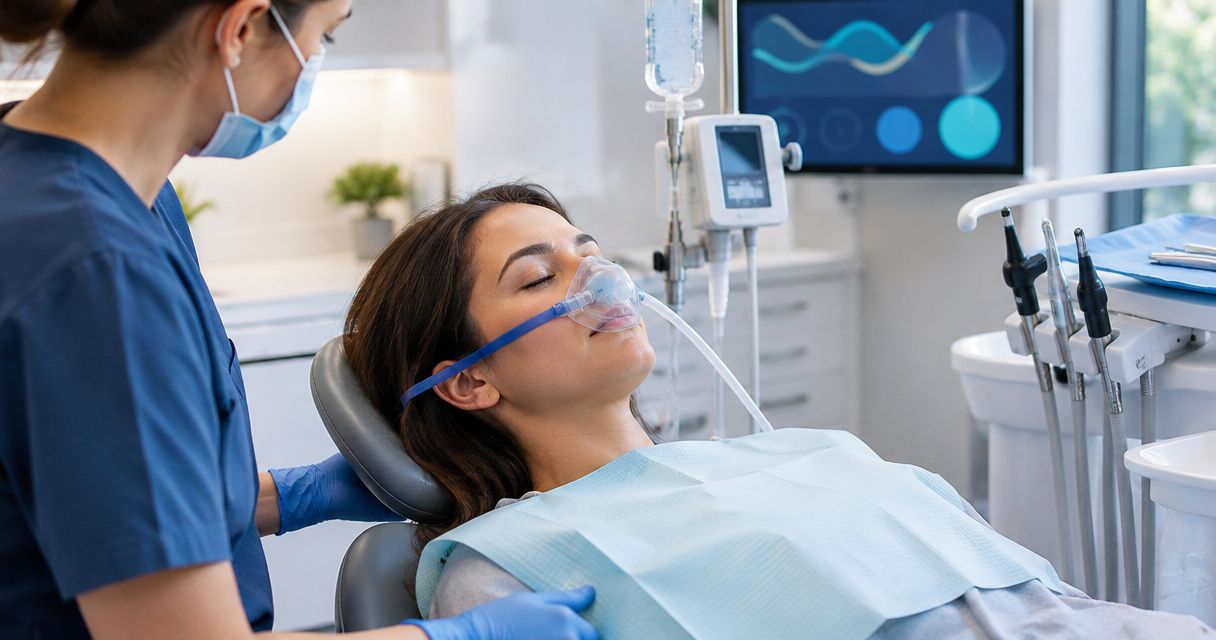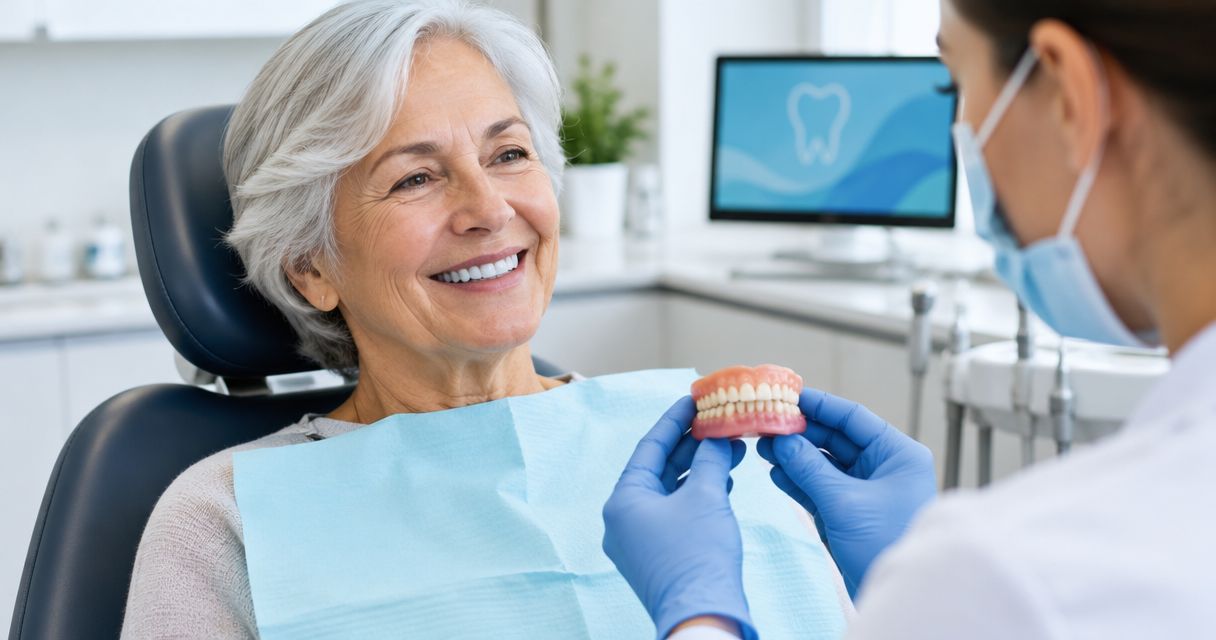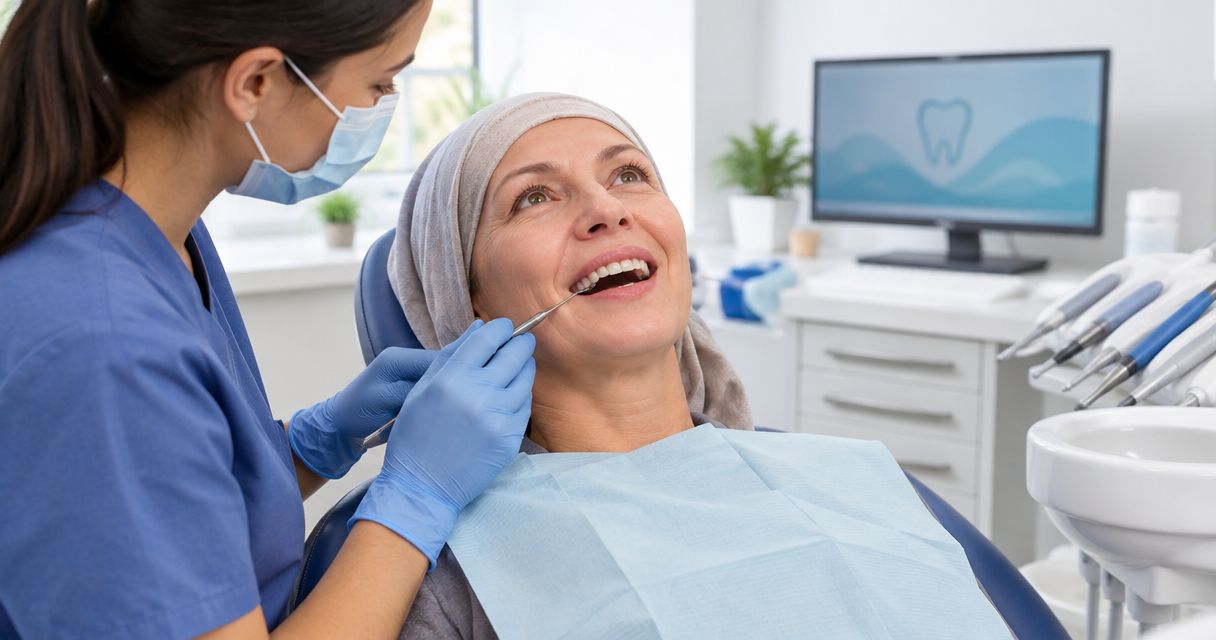
Cancer treatment patients’ dental care is coordinated prevention and treatment of oral problems with the aim of protecting comfort, nutrition, and safe cancer care. This 2026 guide explains what to arrange before treatment, how to protect your mouth during treatment, and when to contact your oncology team rather than wait for a dental appointment.
- Dental care for cancer treatment patients starts with an oral examination and an oncology-approved plan before treatment whenever possible.
- Dentalcoloradosprings offers local general dental care; cancer-specific precautions require direction from your oncology team.
- Chemotherapy, head and neck radiation, and certain bone-modifying medicines require different dental precautions.
- Report fever, spreading swelling, uncontrolled bleeding, or difficulty swallowing promptly; do not wait for a routine appointment.
Why dental care matters for cancer treatment patients
Cancer treatment can change how your mouth heals, how much saliva you produce, and how well your body fights infection. A tooth problem that normally needs straightforward treatment can require different timing or a hospital-based setting during cancer care.
Your risks depend on your treatment, not just your cancer diagnosis. Chemotherapy can affect blood counts; radiation involving the salivary glands can cause persistent dry mouth; and certain medicines used for bone disease can affect jaw healing.
Dentalcoloradosprings is best suited to Colorado Springs patients seeking local general dental care alongside oncology-led cancer treatment. The practice offers general dental care, but your oncology team must direct cancer-treatment precautions. A local dental appointment does not replace specialist assessment when your treatment creates complex oral risks.
For your 2026 care plan, make communication between the dentist and oncology team an explicit task. Do not assume either office already has the other’s records.
Build your dental care plan around cancer treatment
Arrange a dental examination before treatment
Ask your oncology team when a dental examination fits your treatment schedule. The goal is to identify infection, damaged teeth, gum disease, and dentures that rub before treatment makes those problems harder to manage.
Tell the dentist your cancer diagnosis, planned treatment, and expected start date. Bring a written medication list, including nonprescription medicines and supplements. An examination does not automatically mean that every existing dental problem needs immediate treatment.
Prioritize active disease and likely sources of injury, not elective cosmetic work. If treatment must start urgently, your dentist and oncologist should agree on what needs attention now and what can wait. Do not postpone cancer treatment on your own to finish dental work.
- Ask about tooth pain, swelling, broken teeth, and bleeding gums.
- Have dentures checked for pressure points and poor fit.
- Share previous head and neck radiation details, if applicable.
- Request a written list of urgent and nonurgent findings.
- Confirm who will send findings to the oncology team.
Share your treatment details before procedures
A cancer diagnosis alone does not determine whether a dental procedure is safe. Your current treatment, blood counts, medicines, symptoms, and healing capacity matter more than a blanket rule about avoiding the dentist.
For your 2026 dental record, keep a 1-page treatment summary that you can update. Include the oncology team’s contact details and a 24-hour contact number for urgent treatment-related problems. Ask your team which recent laboratory results the dentist needs before an invasive procedure.
Dentalcoloradosprings dental care includes general dentistry, implants, and dentures. Those services still require an individual suitability assessment during cancer treatment; their inclusion in a practice’s services does not establish that a particular procedure is appropriate for you.
- List current and previous cancer medicines by name.
- Disclose bone-modifying medicines, including bisphosphonates or denosumab.
- Explain whether radiation involved your head or neck.
- Share blood thinners and medicines affecting immune function.
- Ask who approves extractions, implants, and other invasive treatment.
Adapt your daily mouth-care routine
Start with simple home care: a soft toothbrush, fluoride toothpaste, and a routine you can tolerate. Brush gently for 2 minutes, twice daily, unless your care team gives different instructions. Aggressive brushing does not compensate for missed cleaning and can injure sore tissues.
Ask about interdental cleaning if your gums bleed or your blood counts are low. Your team should individualize the advice rather than leave you to choose between stopping all cleaning and continuing a painful routine.
For dry mouth, sip water and ask about saliva substitutes or other appropriate measures. Sugar-free gum can help some people who can chew and swallow safely. Persistent dryness needs a dental prevention plan because saliva helps protect teeth.
- Use a soft toothbrush and avoid scrubbing sore areas.
- Ask about bland rinses and follow the recommended recipe.
- Avoid alcohol-containing mouthwash if it irritates your mouth.
- Ask whether prescription-strength fluoride is appropriate.
- Clean dentures and remove them when they irritate tissues.
- Report new ulcers, white patches, or worsening dryness.
Address pain and eating problems early
Mouth sores during cancer treatment are not simply a dental inconvenience. Oral mucositis can make swallowing and eating painful, while infections and dental disease can produce overlapping symptoms. A clinician needs to assess the cause before choosing treatment.
Tell your oncology team when mouth pain limits food, fluids, sleep, or medicines. Do not wait until you cannot drink. Ask for guidance on pain relief and, when needed, support from a dietitian or swallowing specialist.
Do not treat every mouth sore as an infection or start leftover antibiotics. Likewise, do not put aspirin directly against a painful tooth or gum; it can injure the tissue. Comfort measures should support assessment, not delay it.
- Choose soft, moist foods when chewing hurts.
- Avoid foods that sting or scrape sore tissues.
- Take small sips if swallowing remains comfortable and safe.
- Ask before using numbing gels or medicated rinses.
- Report difficulty taking prescribed medicines.
- Track whether pain is reducing your fluid intake.
Match procedures to your healing risks
Extractions, implants, periodontal procedures, and denture adjustments do not carry the same risks. A denture adjustment is different from surgery involving the jawbone. Your dentist needs to explain the proposed procedure and why its timing fits your cancer treatment.
Radiation involving the jaws can create a long-term risk of osteoradionecrosis, or damaged bone that does not heal normally. Certain bone-modifying medicines are associated with medication-related osteonecrosis of the jaw. These are distinct problems that require treatment-specific planning.
A 2026 procedure decision should account for your treatment history, not only whether you are currently receiving chemotherapy. Never stop a cancer medicine, bone-modifying medicine, or blood thinner yourself to prepare for dental treatment.
- Ask whether a nonsurgical option addresses the immediate problem.
- Request specialist input when jaw-healing risks are present.
- Discuss healing time before scheduling invasive treatment.
- Ask how a temporary denture will fit during healing.
- Confirm the follow-up plan before leaving the office.
Set an urgent-care plan before symptoms escalate
Write down who to call for tooth pain, fever, swelling, bleeding, and swallowing problems. Keep the oncology team’s emergency instructions with your medication list so a caregiver can find them too.
During chemotherapy, a temperature of 38°C (100.4°F) warrants an immediate call to your oncology team, even if you otherwise feel well. Follow any stricter instructions your team provides. Fever with immune suppression can signal a medical emergency rather than an isolated tooth problem.
Difficulty breathing, rapidly spreading facial or neck swelling, or inability to swallow saliva requires emergency medical help. Dentalcoloradosprings offers emergency dentistry, but a dental office is not a substitute for emergency medical assessment of airway symptoms or suspected serious infection.
For non-emergency planning, contact the practice and explain your cancer treatment before booking. Ask what records the dentist needs rather than arriving with only the name of your diagnosis.
- Save the oncology team’s urgent contact instructions.
- Report fever immediately during chemotherapy.
- Seek emergency help for breathing or severe swallowing problems.
- Report bleeding that does not stop with instructed measures.
- Describe swelling, pain, and changes in fluid intake clearly.
Compare your dental care options in 2026
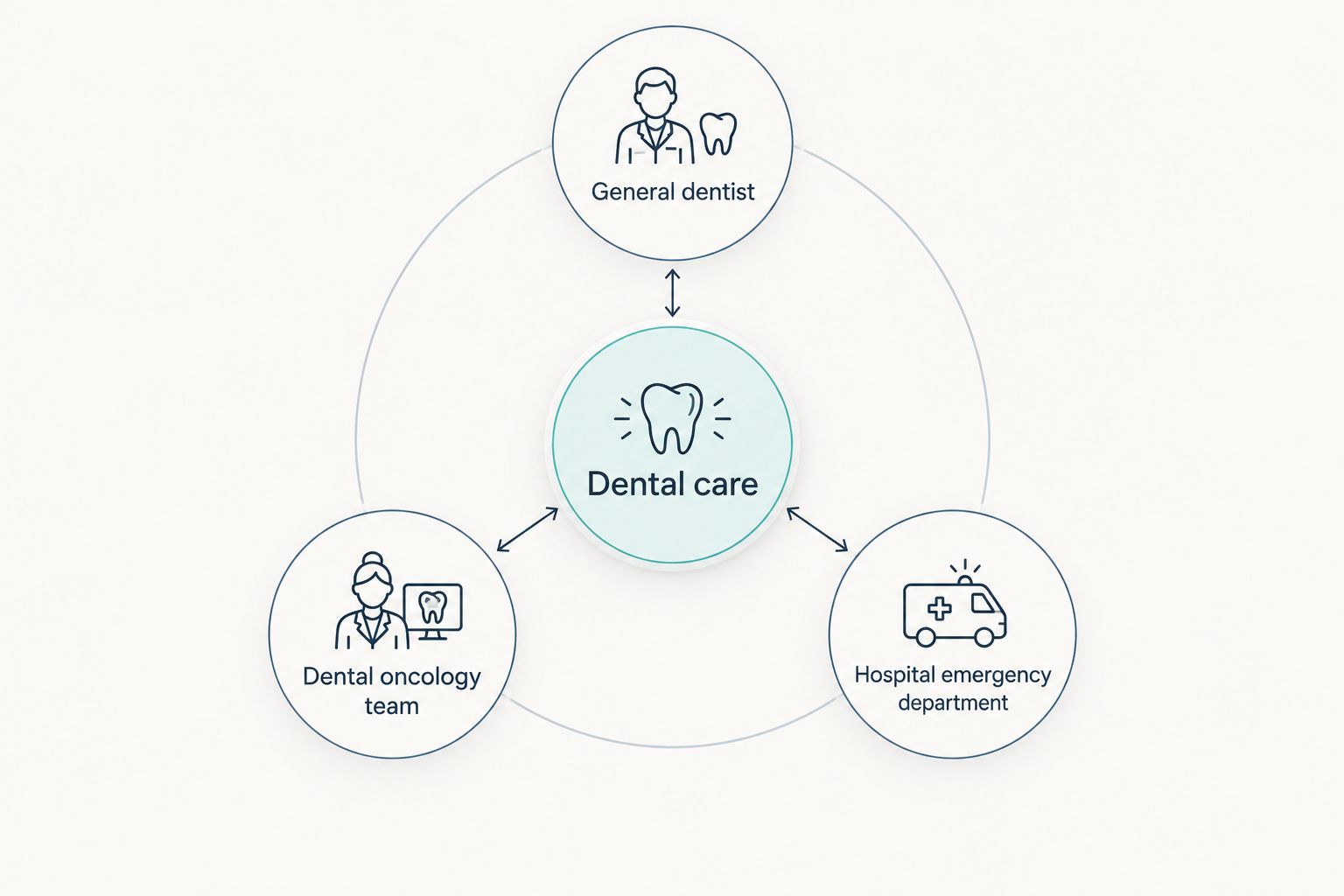
Choose the setting by the problem and treatment risk, not convenience alone. Routine prevention, complex cancer-related oral complications, and medical emergencies need different kinds of support. These options complement each other; they are not interchangeable.
| Option | Best for | Main advantage | Key limitation |
|---|---|---|---|
| General dentist | Prevention, examinations, routine dental disease, and denture adjustments | Provides ongoing care close to home | Complex cancer-related risks can require specialist input or referral |
| Dental oncology team | Oral care complicated by cancer treatment, head and neck radiation, or jaw-healing concerns | Connects oral assessment with cancer-treatment risks | Does not replace every aspect of ongoing general dental care |
| Hospital emergency department | Breathing problems, serious spreading swelling, or other medical emergencies | Assesses urgent threats to health and supports emergency treatment | Is not a substitute for planned preventive or restorative dentistry |
A general dentist can identify problems and help coordinate referrals. A dental oncology team offers focused assessment when treatment complications exceed routine care. Neither setting should delay emergency medical help when symptoms threaten breathing or swallowing.
Common mistakes cancer treatment patients make
Waiting for pain before arranging an examination
Dental disease does not always hurt early. Waiting for pain can leave less time to address a problem before treatment starts. Arrange an examination when your oncology team recommends it, and share findings even if your mouth feels comfortable.
Assuming a treatment break makes surgery safe
A gap between cancer-treatment appointments is not automatic clearance for an extraction or implant. Blood counts, medication effects, and tissue healing still matter. Ask your dentist and oncology team to approve the timing together.
Hiding denture problems to keep eating normally
A rubbing denture can injure vulnerable oral tissue. Tell your dentist about sore spots instead of repeatedly wearing the appliance through pain. Ask how to maintain nutrition while the fit or wearing schedule is adjusted.
Forgetting older radiation or bone medicines
Previous treatment can remain relevant after active cancer care ends. Keep head and neck radiation details and bone-modifying medicines in your dental history. Do not remove them from your history simply because the treatment has finished.
FAQ
Should I see a dentist before starting chemotherapy?
Arrange a dental examination before chemotherapy when your oncology team recommends it and timing permits. The dentist should identify active infection, damaged teeth, gum disease, and irritating dentures, then coordinate priorities with your oncology team.
Can I have a tooth removed during cancer treatment?
A tooth extraction during cancer treatment requires an individual assessment by your dentist and oncology team. Blood counts, medicines, radiation history, urgency, and expected healing determine the plan; a treatment break alone does not establish safety.
What should I do if chemotherapy makes my mouth sore?
Report mouth sores to your oncology team, especially when pain interferes with drinking, eating, or taking medicines. Gentle cleaning and team-approved rinses support comfort, but an examination is needed to distinguish mucositis from infection or another cause.
Is dry mouth after head and neck radiation temporary?
Dry mouth after head and neck radiation can persist, depending on which salivary glands received radiation and the treatment delivered. Ask your dentist about fluoride protection and your oncology team about symptom management rather than assuming saliva will fully recover.
Can I keep wearing dentures during cancer treatment?
Wear dentures only as your dental and oncology teams advise, and report rubbing or sores promptly. Clean the appliance carefully and ask whether you should reduce wear while tissues are inflamed or healing.
Do I need antibiotics before every dental visit if I have cancer?
Cancer does not automatically mean you need antibiotics before every dental visit. Your dentist and oncology team should decide based on your immune status, procedure, other medical conditions, and applicable clinical guidance.
Who should I call for a fever and toothache during chemotherapy?
Call your oncology team immediately for fever during chemotherapy, even when you suspect a tooth is the cause. A temperature of 38°C (100.4°F) needs prompt attention; follow stricter instructions if your team has provided them.
One last thing
Finishing cancer treatment does not automatically reset your dental risks. Before your next procedure in 2026, tell the dentist about previous head and neck radiation and bone-modifying medicines, even if the treatment ended long ago.
Keep that information in the same written summary as your current medicines and oncology contacts. A complete treatment history helps your dentist choose the next step safely; a statement that you are now cancer-free does not supply those details.