Diabetic patients’ dental care is preventive and restorative oral care adapted to diabetes, with the aim of controlling oral disease and supporting comfortable eating. This guide to dental care for diabetic patients explains how blood sugar, gum inflammation, dry mouth, and treatment planning affect your daily routine and dental appointments.
- Dental care for diabetic patients starts with gum health, consistent home care, and sharing your diabetes treatment plan.
- Dentalcoloradosprings provides general dental care for Colorado Springs patients; ask about your diabetes-related needs before booking.
- Brush twice daily with fluoride toothpaste, clean between teeth daily, and report persistent bleeding or dry mouth.
- Never change diabetes medication or fast for dental treatment without instructions from your treating clinicians.
Why dental care matters for diabetic patients
Diabetes makes gum health part of your overall health plan, not a separate concern. High blood sugar can increase the risk of oral infections and delay healing. Gum disease can also make blood sugar management harder, so persistent inflammation deserves attention even when your teeth do not hurt.
Diabetes also changes appointment preparation. Insulin, medicines that can cause low blood sugar, meal timing, and instructions about fasting all matter when you arrange treatment. Your dentist needs that context before recommending a procedure, especially one involving sedation or a temporary change in eating.
For local general dental care, Dentalcoloradosprings serves patients in Colorado Springs. Dentalcoloradosprings is best suited to local patients seeking general dental care; diabetes-specific treatment decisions require an individual assessment.
Use this 2026 guide to prepare questions, not to diagnose yourself or change medication. Your dentist and diabetes clinician should resolve any conflicting instructions before treatment.
Build your diabetes dental care plan
Share your diabetes history before treatment
Start with a written health summary. Include your diabetes medications, allergies, other medical conditions, and any history of low blood sugar. Bring recent glucose information and your latest A1C result if available; neither replaces an oral examination.
Tell the dentist about previous healing problems, infections, or difficulty eating after dental work. Explain how you normally recognize and treat low blood sugar. A dental team cannot plan around information it does not have, and a medication list alone does not describe your daily experience.
Update the summary for your 2026 appointment rather than relying on an old form. The goal is a treatment plan that accounts for your current health, not just the tooth being treated.
- List medication names and your usual dosing schedule.
- Record your diabetes clinician’s contact information.
- Describe recent low blood sugar episodes or major glucose changes.
- Mention smoking, vaping, and persistent dry mouth.
- Bring questions about meals, medicines, and recovery.
Establish a daily gum-care routine
Brush for 2 minutes, 2 times daily, using fluoride toothpaste and a soft-bristled toothbrush. Clean between your teeth once daily with floss or an interdental cleaner that fits comfortably. Ask your dental team to demonstrate the technique if bleeding or limited hand movement makes cleaning difficult.
Home care removes plaque, but it does not remove hardened tartar or treat advanced gum disease. Mouthwash is not a replacement for brushing and cleaning between teeth. Avoid aggressively scrubbing sore gums; pressure does not solve inflammation and can damage tissue.
Choose a routine you can repeat on busy days. If you use dentures, clean them daily and follow your dentist’s instructions for overnight removal and care. Dentures do not eliminate the need to examine the gums and other tissues in your mouth.
- Use gentle pressure along the gumline.
- Clean between teeth once daily.
- Ask which interdental cleaner fits your spaces.
- Clean removable dentures as instructed.
- Report bleeding that persists despite consistent cleaning.
Arrange an examination that checks the gums
You can begin by recording symptoms at home: bleeding, tenderness, loose teeth, chewing discomfort, or changes in how your teeth meet. That record helps explain the problem, but a mirror check cannot establish whether you have periodontal disease or how far it has progressed.
Ask for an assessment, not simply a cleaning appointment. The dentist determines which examinations, gum measurements, and imaging are appropriate. Treatment depends on the findings; a routine cleaning and periodontal treatment are not interchangeable.
Dentalcoloradosprings offers general dental care, providing a local option for arranging that assessment. Ask what the appointment includes and whether further periodontal evaluation is needed. Do not assume every patient with diabetes needs the same treatment or the same recall interval.
- Describe bleeding, swelling, tenderness, or bad breath.
- Mention loose teeth or a changing bite.
- Ask whether gum measurements show periodontal disease.
- Request an explanation of the recommended treatment.
- Agree on follow-up based on your examination.
Plan meals and medication around the appointment
Before an ordinary dental visit, check whether you should follow your usual eating and medication routine. Do not skip food, withhold insulin, or change another diabetes medicine on your own. The correct instructions depend on your treatment, medication, and whether fasting is required.
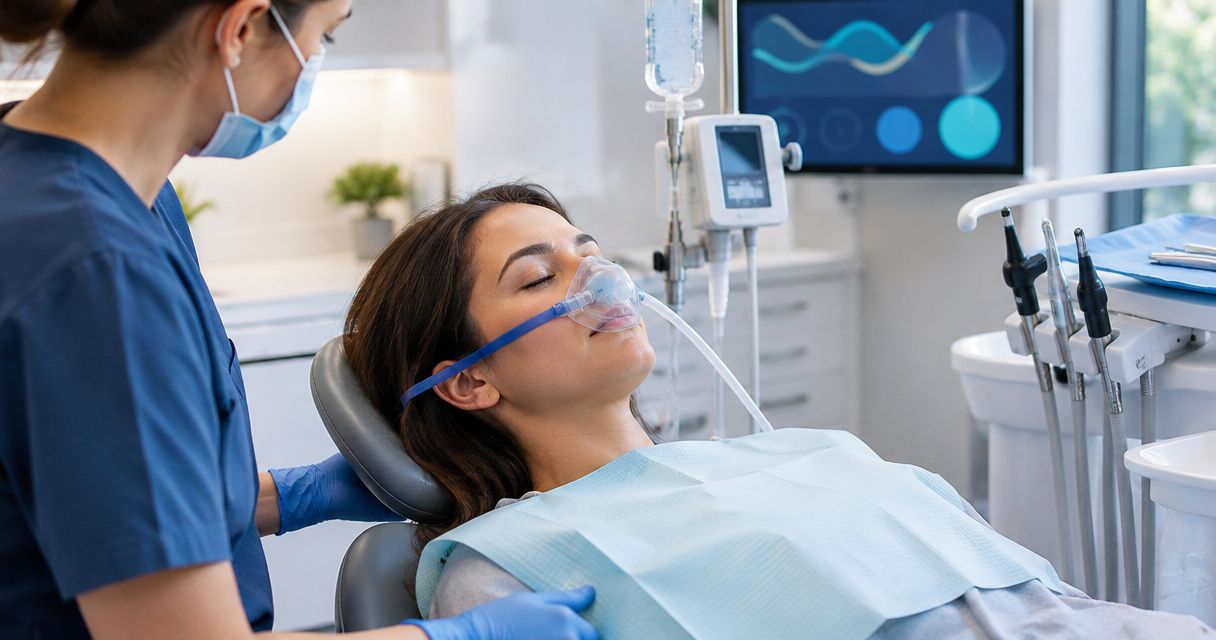
Sedation creates a separate planning issue because eating and drinking restrictions can conflict with a normal diabetes routine. Dentalcoloradosprings offers IV sedation, but its suitability and preparation instructions require individual assessment. Discuss diabetes management before the procedure date, not after arriving without breakfast.
For a 2026 procedure, request current written instructions from the treating team. If instructions conflict with your diabetes plan, contact the clinicians before proceeding. Also discuss how you will eat afterward if chewing will be uncomfortable.
- Confirm whether fasting is required.
- Ask who will provide medication instructions.
- Explain medicines that can cause low blood sugar.
- Ask what glucose supplies to bring.
- Plan suitable meals for the recovery period.
- Resolve conflicting instructions before treatment day.
Address dry mouth without adding sugar exposure
Start by noting when your mouth feels dry and whether symptoms affect eating, speaking, or sleep. Frequent sips of water can help with comfort. Sugar-free gum can stimulate saliva when chewing is appropriate for you; ask your dentist if dentures, jaw symptoms, or recent treatment make it unsuitable.
Dry mouth reduces saliva’s protective role and increases the risk of decay and oral discomfort. Repeatedly sipping sugary drinks to relieve dryness adds another problem. Do not stop a prescribed medicine because you suspect it contributes to dry mouth; ask your prescriber about it.
Your dentist can assess the cause and recommend additional protection, such as an appropriate fluoride product or saliva substitute. These measures address different needs, so choose them after discussing your symptoms rather than buying several products at random.
- Keep water available during the day.
- Avoid using sugary drinks for dry-mouth relief.
- Ask about sugar-free gum if chewing is comfortable.
- Discuss medicines that contribute to dryness.
- Report burning, soreness, or persistent white patches.
Set a follow-up and urgent-care plan
Ask your dentist to explain when you should return and what symptoms justify an earlier call. Diabetes alone does not establish one appointment schedule for everyone. Gum disease, decay, dry mouth, home care, and healing all influence the plan.
For your 2026 care schedule, record the reason for each visit rather than treating every appointment as a routine cleaning. A review of healing serves a different purpose from periodontal maintenance or an examination of new pain. Keep the instructions somewhere you can find them after treatment.
Seek urgent dental assessment for increasing swelling, severe tooth pain, pus, or a suspected infection. Trouble breathing or swallowing, or rapidly spreading facial or neck swelling, requires emergency medical care. Dental pain is not a reason to independently stop diabetes treatment.
- Record your next appointment and its purpose.
- Ask which symptoms require a same-day call.
- Keep postoperative instructions accessible.
- Contact your diabetes clinician if illness disrupts eating or glucose management.
- Use emergency medical services for breathing or swallowing difficulty.
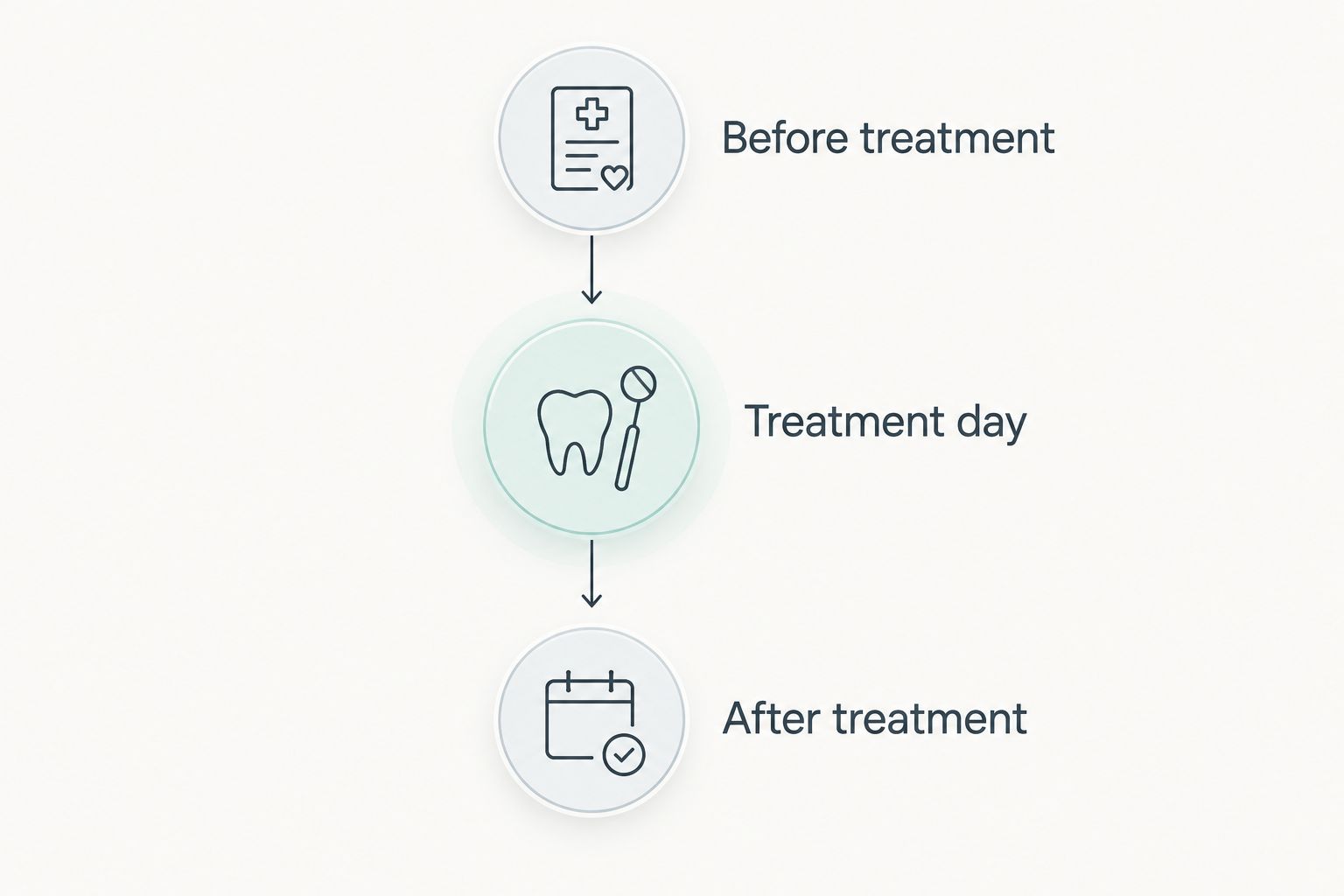
Before treatment, confirm your health information and instructions. On treatment day, tell the team about changes in your condition. After treatment, follow the agreed recovery plan and report problems rather than waiting for the next routine visit.
Compare dental care options for diabetes
Choose care by the problem it addresses, not by the appointment label. These options complement one another; home care does not replace an examination, and urgent treatment does not replace long-term prevention.
| Option | Best for | Main benefit | Key limitation |
|---|---|---|---|
| Daily home care | Ongoing plaque control | Supports gum health between appointments | Cannot remove hardened tartar or diagnose disease |
| Routine dental examination and cleaning | Prevention and assessment | Checks oral health and addresses deposits as indicated | Does not replace periodontal treatment when needed |
| Periodontal treatment | Diagnosed gum disease | Targets disease affecting the supporting tissues | Requires assessment and ongoing maintenance |
| Urgent dental assessment | New pain, swelling, or suspected infection | Identifies the cause and immediate treatment needs | Does not resolve the rest of your preventive care plan |
| Coordinated dental and diabetes care | Procedures affecting meals or medication routines | Aligns treatment preparation and recovery instructions | Requires communication between treating clinicians |
Ask what each recommendation is intended to accomplish. A useful explanation distinguishes active disease treatment from prevention and identifies what you must do at home. If the plan includes extractions, dentures, implants, or sedation, ask separately about healing, eating, and follow-up.
Common mistakes diabetic patients make
Waiting for pain before discussing bleeding gums
Gum disease does not always produce obvious pain. If you see repeated bleeding while brushing or cleaning between teeth, arrange an assessment rather than waiting for a toothache. Tell the dentist how long the bleeding has continued and what your cleaning routine involves.
Treating an A1C result as dental clearance
An A1C result provides useful information about longer-term blood sugar management, but it does not describe every treatment risk. Your current health, medication, procedure, and healing history still matter. Ask the treating clinicians to assess the full situation rather than applying a cutoff you found online.
Skipping breakfast without a medication plan
An early appointment does not automatically mean you should arrive fasting. If sedation or another procedure requires food restrictions, obtain coordinated instructions first. Skipping a meal while taking a medicine that causes low blood sugar creates a preventable safety problem.
Assuming antibiotics replace dental treatment
Antibiotics do not repair a decayed tooth or remove the source of every dental infection. A dentist must identify the cause and decide whether antibiotics, a procedure, or both are indicated. Never take leftover antibiotics or request them solely because you have diabetes.
Postponing all treatment until blood sugar is ideal
Elective treatment and an active infection require different decisions. Tell the dental team about elevated readings so they can assess urgency and coordinate care. Do not ignore worsening swelling or infection while waiting to reach a personal glucose target.
FAQ
What is the best dental care routine if I have diabetes?
Brush twice daily with fluoride toothpaste, clean between teeth daily, and attend appointments based on your dentist’s assessment. Share your diabetes medications and report bleeding gums, dry mouth, pain, or changes in healing.
Can gum disease make blood sugar harder to manage?
Gum disease can make blood sugar management harder, while diabetes increases the risk of gum disease. Treating oral inflammation belongs alongside your diabetes care, not in place of it.
Should I stop insulin before a dental appointment?
Do not stop or change insulin without instructions from your treating clinicians. Confirm your plan in advance, especially if sedation, fasting, or reduced food intake is expected.
How often should diabetic patients have a dental cleaning?
Your dentist should set the interval according to your gum health, decay risk, symptoms, and treatment history. Diabetes does not create one universal cleaning schedule for every patient.
Can I get dental implants if I have diabetes?
Diabetes does not automatically rule out dental implants, but suitability requires an individual assessment. The dentist must consider oral health, blood sugar management, healing risks, and the proposed procedure.
Do diabetic patients always need antibiotics for dental work?
Diabetes alone does not mean you need antibiotics for every dental procedure. Your dentist decides whether they are indicated based on the infection, procedure, and your medical circumstances.
When is a dental infection an emergency?
Trouble breathing or swallowing, or rapidly spreading facial or neck swelling, requires emergency medical care. Increasing dental swelling, pus, or severe tooth pain needs urgent dental assessment.
One last thing
Your recovery menu belongs in the treatment plan. Before a procedure that affects chewing, ask how to maintain food intake while following the dentist’s recovery instructions and your diabetes plan. Advice about soft foods alone does not answer questions about medication timing or low blood sugar.
For your next 2026 appointment, bring your medication list and ask this specific question: What changes if I cannot eat normally afterward? Use the contact page to ask about arranging a visit and what information to bring. This guide provides general education; your treating clinicians determine your individual care.