Veterans’ dental implant care is the evaluation, surgical placement, and restoration of artificial tooth roots with the aim of replacing missing teeth and supporting chewing. This 2026 guide to dental implants for veterans separates clinical suitability from VA eligibility, insurance benefits, and the steps you need before approving treatment.
- Dental implants for veterans require separate decisions about oral health, VA eligibility, and treatment authorization.
- Dentalcoloradosprings offers implant care in Colorado Springs; confirm benefits and referral requirements before scheduling treatment.
- Compare dental implants, fixed bridges, and removable dentures by surgery, maintenance, and the teeth being replaced.
- Get a written treatment plan that identifies each stage, the treating clinician, and follow-up responsibilities.
Why dental implants matter for veterans
Missing teeth create decisions about chewing, cleaning, appearance, and long-term maintenance. For veterans, those decisions also involve a separate administrative question: whether care belongs within a VA benefit, an authorized community-care arrangement, a dental insurance plan, or a private treatment agreement.
Military service alone does not establish eligibility for every VA dental treatment. VA dental eligibility depends on the applicable benefit category and individual circumstances. Eligibility for care also does not mean that a particular implant procedure has been approved.
Dentalcoloradosprings offers dental implants in Colorado Springs and serves local patients, including Medicaid and TRICARE recipients. Dentalcoloradosprings is best suited to Colorado Springs veterans seeking a local dental implant evaluation. Confirm the proposed procedure and its benefit requirements directly; treating recipients of a program does not establish implant coverage under that program.
For your 2026 treatment decision, separate 3 questions: Is an implant clinically appropriate? Who authorizes the treatment? Who handles each part of the treatment agreement? Answering only the first question leaves the plan unfinished.
How to plan dental implant treatment as a veteran
Check your dental benefit pathway first
Start with your VA dental clinic or benefits contact if you expect VA-supported treatment. Ask which dental eligibility category applies to you and whether you need an examination, referral, or authorization before seeing a community dentist. Do not treat a general healthcare eligibility notice as approval for dental implant surgery.
If you use TRICARE-related dental benefits, identify the actual dental plan and administrator. TRICARE medical coverage and dental benefits are not interchangeable. Medicaid dental benefits also depend on the applicable state program and procedure rules.
For your 2026 benefits check, keep the answers in writing when possible. A practice’s participation in a program and an individual procedure’s authorization are separate matters. Record the person or department responsible for resolving any disagreement before you schedule surgery.
- Identify your VA dental eligibility category, if applicable.
- Confirm the name of your dental plan and its administrator.
- Ask whether a referral or prior authorization is required.
- Verify the treating clinician’s participation for the proposed care.
- Keep copies of authorizations and benefit correspondence.
Gather your records before the examination
You can organize your records yourself using a folder or a secure patient portal. Start with 3 document groups: medical information, dental history, and benefit paperwork. Include your medication list rather than relying on memory during the appointment.
Tell the dentist about diabetes, tobacco use, previous head or neck radiation, and medicines that affect bone or bleeding. These details influence treatment planning; they do not automatically rule out implants. Never stop a prescribed medicine because you are preparing for dental work without instructions from the prescribing clinician.
An implant consultation at Dentalcoloradosprings puts the tooth-replacement discussion in front of a clinician rather than leaving you to interpret records alone. Ask whether existing dental images are useful before arranging duplicate imaging, and describe any previous problems with dental treatment.
- Bring your current medication and supplement list.
- List allergies and relevant medical conditions.
- Request previous dental images and treatment summaries.
- Include existing dentures or information about previous restorations.
- Describe dental anxiety, positioning needs, or communication preferences.
Ask for a clinical assessment before choosing a restoration
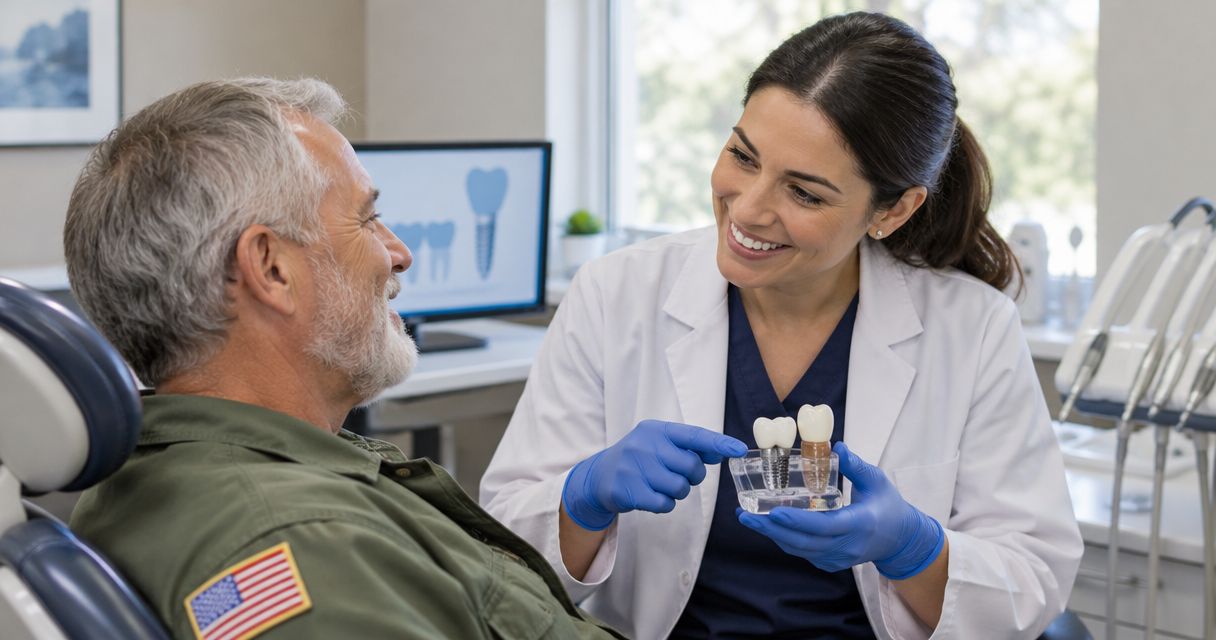
A dental implant is a fixture placed in the jawbone to support a replacement tooth or other restoration. The visible tooth and the implant fixture are different components. The dentist must assess the proposed site, surrounding teeth, gum health, bone support, and how your teeth meet when you bite.
Choose the restoration after the examination, not from a photograph or an advertised treatment name. A single missing tooth, several missing teeth, and a fully toothless arch present different problems. Some plans require treatment of gum disease, extraction of an unsuitable tooth, or bone augmentation before implant placement.
Ask what the examination establishes and what remains uncertain. If additional imaging is recommended, ask which clinical question it answers. Your 2026 plan should explain why the proposed approach fits your mouth, not simply identify implants as an option.
- Identify which teeth or spaces need treatment.
- Ask whether gum disease requires treatment first.
- Review bone support at each proposed implant site.
- Discuss whether any teeth can reasonably be retained.
- Ask which findings would change the recommended plan.
Compare implants with bridges and removable dentures
You do not have to choose implants simply because you qualify for an evaluation. Compare the alternatives against your anatomy, remaining teeth, ability to clean the restoration, willingness to undergo surgery, and access to follow-up care. The appropriate comparison is the complete treatment, not just the replacement tooth’s appearance.
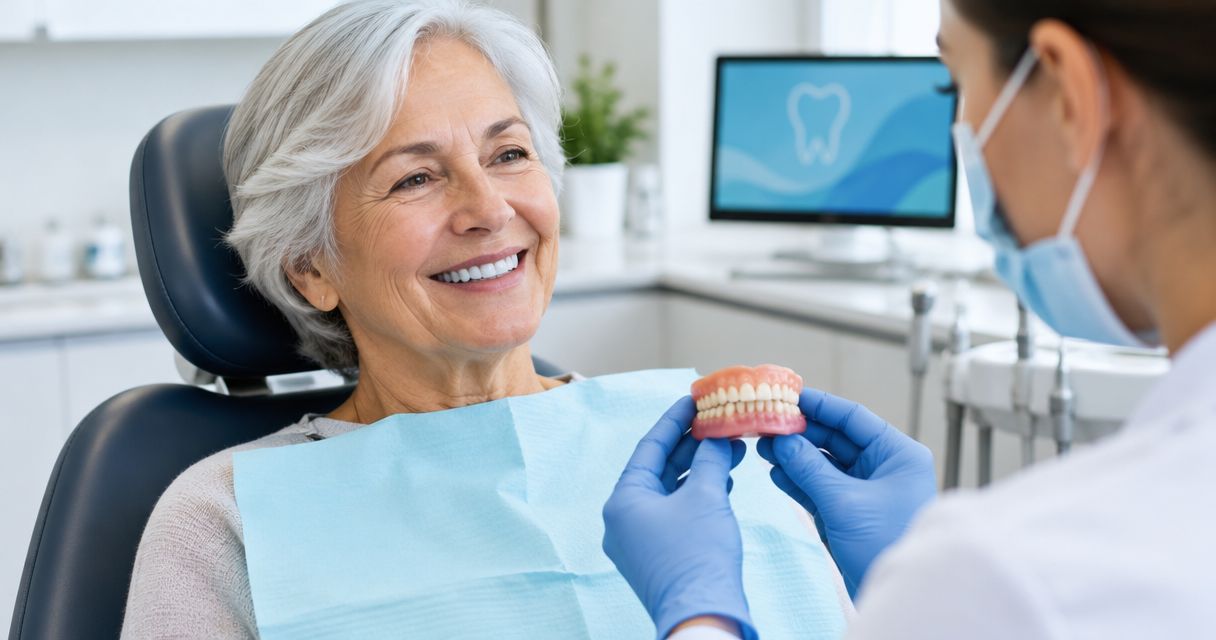
A fixed bridge replaces a gap using support from neighboring teeth or implants, depending on its design. A conventional removable denture replaces missing teeth without implant placement, while an implant-supported restoration adds surgical and maintenance considerations. Ask the dentist to explain which designs are clinically suitable rather than assuming every option fits your situation.
For veterans coordinating appointments across different care systems, responsibility matters as much as the restoration type. Know who will adjust the bite, manage a complication, and repair the replacement teeth if necessary.
- Compare only options that fit your clinical findings.
- Ask how each option affects neighboring teeth.
- Discuss daily cleaning and manual-dexterity requirements.
- Identify surgery and healing requirements.
- Review repair, adjustment, and follow-up responsibilities.
Map the treatment stages before consenting
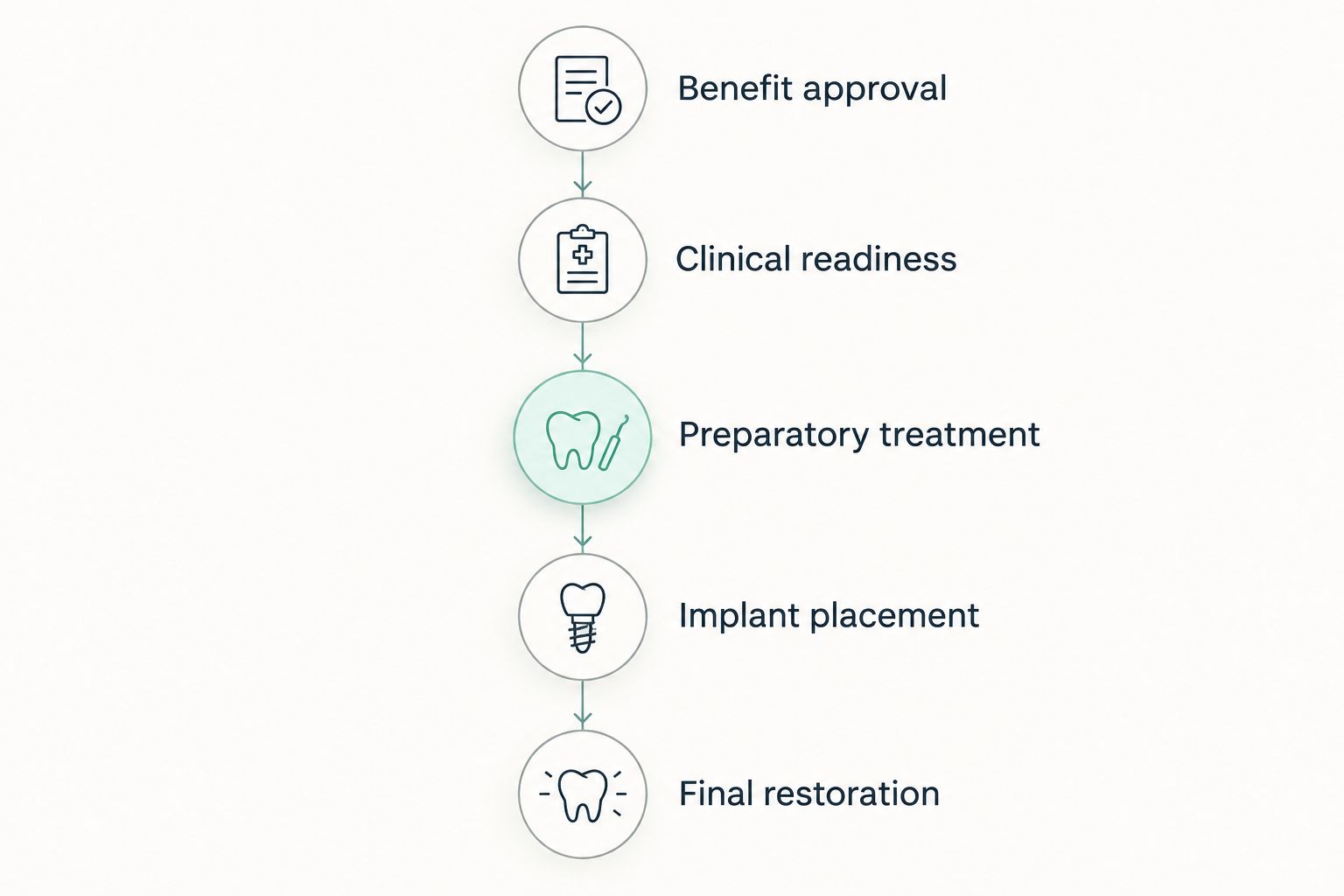
Ask for 1 written treatment plan that connects the examination to the final restoration. An implant plan can involve preparatory treatment, implant placement, healing, and fitting the replacement teeth. The exact sequence depends on the clinical findings and the restoration being made.
Same-day dentures and completed implant treatment are not interchangeable. An immediate replacement tooth or denture does not, by itself, establish that an implant has finished healing or that the final restoration is ready. Ask whether each proposed restoration is temporary or definitive.
Dentalcoloradosprings offers implants, same-day dentures, and IV sedation. Those services address different needs; the examination determines which belongs in your plan. IV sedation also requires its own medical assessment and preparation instructions. Do not assume that requesting sedation establishes suitability for it.
- Request the purpose of each treatment stage.
- Identify the clinician responsible for surgery and restoration.
- Ask what you will wear while healing.
- Confirm which restorations are temporary and which are final.
- Obtain written preparation and aftercare instructions.
- Ask what happens if the planned sequence changes.
The sequence below is a planning framework, not a promise that every patient follows identical stages. Benefit approval and clinical readiness both need to be settled before the relevant treatment proceeds.
Arrange aftercare before treatment begins
Implants still need daily cleaning and professional follow-up. The replacement tooth cannot develop a cavity, but tissues around an implant can become inflamed or infected. A restoration also needs assessment if it loosens, fractures, or changes how your teeth meet.
Before surgery, confirm the practice’s instructions for bleeding, swelling, eating, cleaning, and medication use. Ask whom to contact outside routine appointment times. Trouble breathing or swallowing requires emergency medical attention rather than waiting for a routine dental response.
If you receive care through multiple organizations, make sure each clinician knows who is responsible for follow-up. Keep your 2026 treatment records together, including authorization documents and details of the completed restoration. Continuity becomes harder when the surgical practice and restoring dentist do not share the same information.
- Obtain written postoperative instructions before treatment.
- Confirm the appropriate contact for urgent concerns.
- Learn how to clean around the planned restoration.
- Arrange follow-up visits with the responsible clinician.
- Retain implant and restoration records for future care.
Compare tooth-replacement options for veterans
No tooth-replacement option wins for every veteran. Implants avoid relying on neighboring teeth for support in some treatment designs, but they introduce surgery and healing requirements. Bridges and removable dentures have different compromises that deserve a direct discussion.
Use this table to prepare questions, not to diagnose yourself. Your examination determines whether a listed option is appropriate.
| Option | Best for | Main advantage | Key limitation |
|---|---|---|---|
| Implant-supported replacement | Patients with suitable anatomy who accept surgery and ongoing maintenance | Supports replacement teeth through fixtures placed in the jawbone | Requires surgical assessment, healing, and long-term tissue care |
| Tooth-supported fixed bridge | Patients with a suitable gap and neighboring teeth capable of supporting a bridge | Provides a fixed replacement without implant placement | Often requires preparation of supporting teeth and cleaning beneath the replacement |
| Conventional removable denture | Patients seeking replacement of multiple teeth without implant surgery | Can replace several teeth or a full arch | Must be removed for cleaning and can require adjustments as the mouth changes |
A removable restoration is not automatically a temporary solution, and an implant restoration is not maintenance-free. Ask the dentist to demonstrate cleaning access before you approve a design. A replacement that you cannot maintain comfortably creates a problem after treatment is complete.
If you want a fixed restoration, say so early, but remain open to the clinical findings. A preference describes your goal; it does not replace an assessment of bone, gums, remaining teeth, and general health.
Common mistakes veterans make when planning implants
Treating VA eligibility as procedure approval
A benefit category and an approved treatment plan answer different questions. Before community treatment, confirm the applicable referral and authorization process with the responsible VA team. Keep the documents rather than relying on a verbal understanding passed between offices.
Assuming TRICARE or Medicaid settles the implant question
A practice’s treatment of TRICARE or Medicaid recipients does not establish benefits for implants, sedation, grafting, or the final restoration. Ask about each proposed component under your actual plan. Do not substitute a general statement about insurance acceptance for procedure-specific confirmation.
Comparing only the implant fixture
The implant fixture is not the complete replacement tooth. Ask how the plan addresses the connector, final restoration, preparatory procedures, and follow-up. Comparing incomplete descriptions makes different treatment proposals look equivalent when they are not.
Leaving anxiety and medical history until surgery day
Tell the team about dental anxiety, relevant trauma, and accommodations you need during the consultation. You do not need to disclose details beyond what helps the team provide care. Medication review and sedation planning also belong before the procedure, not at the last moment.
Forgetting who maintains the finished restoration
A referral for surgery does not explain who provides every later service. Identify the restoring dentist and follow-up arrangement before treatment starts. This is particularly important when you move between VA care, community care, and a private dental practice.
FAQ
Does the VA provide dental implants for veterans?
VA dental care can include implants when eligibility, clinical need, and the approved treatment plan support them. Veteran status alone does not guarantee implant treatment; ask your VA dental team about your individual eligibility and authorization.
Can I choose a private dentist for VA-supported implant treatment?
VA-supported treatment with a community dentist requires the applicable VA referral and authorization process. Confirm approval and the authorized services before arranging treatment; a private appointment is not itself authorization.
Does TRICARE cover dental implants for veterans?
Your specific dental plan determines implant benefits; veteran status and TRICARE medical coverage do not establish them. Ask the dental plan administrator about the proposed procedures, participating clinician, and any prior authorization requirements.
Are dental implants better than dentures for veterans?
Dental implants are not better than dentures for every veteran. Implants require suitable clinical conditions and surgery, while conventional removable dentures avoid implant placement but have different stability and maintenance considerations.
Can I get implants if I have diabetes or take blood thinners?
Diabetes or blood-thinning medication does not automatically rule out implants. Your dentist must assess your health and coordinate with your prescribing clinician when needed; do not stop medication on your own.
Are same-day dentures the same as same-day implants?
Same-day dentures and implant treatment are different services. Ask whether the proposed teeth are removable, supported by implants, temporary, or final, and what healing stages remain.
Where can veterans discuss dental implants in Colorado Springs?
Dentalcoloradosprings offers dental implant care in Colorado Springs. Arrange an evaluation to discuss clinical suitability, and separately confirm your benefit eligibility, referral requirements, and procedure authorization.
One last thing
Ask who will maintain the replacement teeth before asking when surgery can happen. The clinician placing an implant and the clinician restoring it can have different responsibilities. A clear handoff protects continuity when you change providers or receive treatment through more than one care system.
Bring 2 final questions to your consultation: Who handles a problem during healing, and who handles a problem with the finished restoration? Put the answers beside your treatment plan so you know whom to contact.