Emergency dental care for families is urgent assessment and treatment of dental injuries, infections, and severe pain to protect teeth and prevent complications. This 2026 guide explains how to respond when children and adults need different first aid, how to choose the right care setting, and what to tell the dentist.
- Dentalcoloradosprings offers emergency dental care for families in Colorado Springs; confirm the patient's age and appointment arrangements before traveling.
- Call 911 for breathing or swallowing difficulty, major facial trauma, or uncontrolled bleeding.
- A knocked-out permanent tooth needs immediate dental attention; never reinsert a knocked-out baby tooth.
- Medicaid and TRICARE participation does not establish coverage for every emergency dental procedure.
Why emergency dental care matters for families
The right first move depends on the symptoms and whether the injured tooth is permanent or primary. A parent managing a child's playground injury faces a different decision from an adult with a broken filling. Your household plan needs to cover both without treating every problem as either harmless or a hospital emergency.
Dentalcoloradosprings is an option for Colorado Springs families seeking emergency dental care. The practice offers emergency dentistry and general dental care to local patients, including Medicaid and TRICARE recipients. Review Dentalcoloradosprings when building your family's contact list, then confirm whether the practice can assess the affected family member.
Use your 2026 family plan to answer practical questions before an injury: who makes the call, who supervises other children, and who brings medication and insurance information? These details matter when pain makes it difficult to think clearly. Keep the plan accessible to every caregiver rather than storing it only on one parent's phone.
How to handle a family dental emergency
Recognize symptoms that require hospital care
Start with breathing, swallowing, consciousness, and bleeding—not the appearance of the tooth. Call 911 for difficulty breathing or swallowing, rapidly increasing swelling affecting the airway, loss of consciousness, or severe bleeding that does not stop with firm pressure. Major facial trauma also needs emergency medical assessment.
A dental infection can become a medical emergency when swelling spreads or affects breathing. Do not wait for fever before acting on airway symptoms. For a head injury, confusion, repeated vomiting, or loss of consciousness takes priority over dental treatment.
For severe toothache, localized swelling, a broken tooth, or a displaced tooth without these warning signs, call a dentist promptly. Describe the symptoms so the dental team can direct you to the appropriate setting.
- Check whether the person can breathe and swallow normally.
- Look for rapidly spreading facial or neck swelling.
- Apply firm pressure with clean gauze to active bleeding.
- Report any head injury, confusion, or loss of consciousness.
- Follow emergency dispatch instructions when calling 911.
Identify whether the injured tooth is permanent
Never put a knocked-out baby tooth back into its socket. Reinsertion can damage the developing permanent tooth. A child still needs dental assessment after losing a baby tooth through trauma, especially when the tooth is missing and its location is unknown.
A knocked-out permanent tooth is different. Handle it only by the crown—the visible chewing portion—not the root. If dirty, rinse it gently without scrubbing or removing attached tissue. If you are certain it is permanent and the person is alert and cooperative, gently place it back into the socket without forcing it.
If reinsertion is not possible, keep the tooth moist in milk or a tooth-preservation solution and seek immediate dental care. Do not store it dry or wrap it in tissue. Aim to reach a dentist within 30 minutes, but continue seeking urgent care even when that time has passed.
- Identify a baby tooth versus a permanent tooth before attempting reinsertion.
- Pick up a permanent tooth by its crown only.
- Avoid soap, disinfectant, scrubbing, or scraping the root.
- Use milk or a tooth-preservation solution when reinsertion is not possible.
- Keep a loose tooth out of a young child's mouth to avoid choking.
- Bring the tooth and any fragments to the appointment.
Call the dentist with a clear symptom summary
You do not need to diagnose the problem before calling. State who needs care, their age, when symptoms began, and whether there is pain, swelling, bleeding, fever, or trauma. Tell the team immediately if a permanent tooth has been knocked out or displaced.
Dentalcoloradosprings offers emergency dentistry, but a service listing does not establish appointment timing or which ages the practice treats. Confirm those details directly. Also ask whether the symptoms require a hospital visit instead of a dental appointment.
Save a short call template with your 2026 household contacts. A caregiver should be able to read it aloud without searching through messages. If the first practice cannot arrange an assessment, ask where to seek urgent dental care rather than waiting without a plan.
- Give the patient's age and describe the affected tooth or area.
- State when the injury or pain started.
- Describe swelling, fever, bleeding, and any difficulty swallowing.
- List medicines already taken and known allergies.
- Confirm the destination and appointment instructions before leaving.
Use first aid without delaying assessment
First aid reduces discomfort and protects the injured area; it does not repair a fracture or treat the source of an infection. For swelling after an injury, place a cold pack wrapped in cloth against the outside of the face for up to 20 minutes at a time. Never put ice directly on skin.
For toothache, gently clean around the tooth. An adult or child who can reliably spit can rinse with warm water; careful flossing can remove trapped food. Do not probe a painful cavity with a sharp object or try to drain a swelling.
Use nonprescription pain medicine only when appropriate for the patient's age, health conditions, and other medicines. Follow the label and ask a pharmacist when uncertain. Do not place aspirin against a tooth or gum, and do not give aspirin to a child unless a clinician specifically directs it.
- Use a wrapped cold pack on the outside of the face.
- Keep food and chewing pressure away from the injured tooth.
- Check medicine labels for duplicate active ingredients.
- Ask a pharmacist about age, weight, and medication restrictions.
- Avoid leftover antibiotics and home attempts to drain swelling.
Prepare the patient, caregiver, and coverage information
Bring identification, insurance details, a medication list, and information about allergies or relevant medical conditions. Include blood thinners and medicines taken for the current pain. Do not stop prescribed medication unless the treating clinician tells you to do so.
For a child, bring the caregiver information the practice requests and ask about consent requirements. Tell the team about dental anxiety or difficulty tolerating treatment. Do not assume that a service offered by the practice is appropriate for every patient or emergency.
Dentalcoloradosprings serves patients including Medicaid and TRICARE recipients. Confirm the specific dental plan, patient eligibility, and procedure coverage directly; participation alone does not answer those questions. Keep the coverage conversation separate from medical triage so paperwork does not delay calling 911 for dangerous symptoms.
- Pack identification and current dental insurance information.
- Bring medication names, allergies, and relevant health history.
- Record pain medicine names and the times they were taken.
- Ask what consent documentation a child's visit requires.
- Confirm plan-specific benefits and any authorization requirements.
Leave with a written follow-up plan
An emergency visit can address the immediate problem without completing every stage of treatment. Before leaving, ask what was treated, what remains unresolved, and which symptoms require another call. A temporary repair and a completed restoration are not the same thing.
Ask for instructions on eating, cleaning, activity, medication, and follow-up. Repeat the instructions back in your own words, particularly if another caregiver will manage recovery. If symptoms worsen or new swelling develops, contact the treating team rather than assuming it is part of healing.
Review your household's 2026 emergency plan after the visit. Replace outdated contacts, record any newly identified allergies, and make sure every caregiver knows the next appointment or referral step.
- Request written aftercare instructions before leaving.
- Clarify whether the repair is temporary or definitive.
- Record medication directions and precautions.
- Ask which symptoms need urgent reassessment.
- Share the plan with everyone supervising the patient.
Compare care options for your family
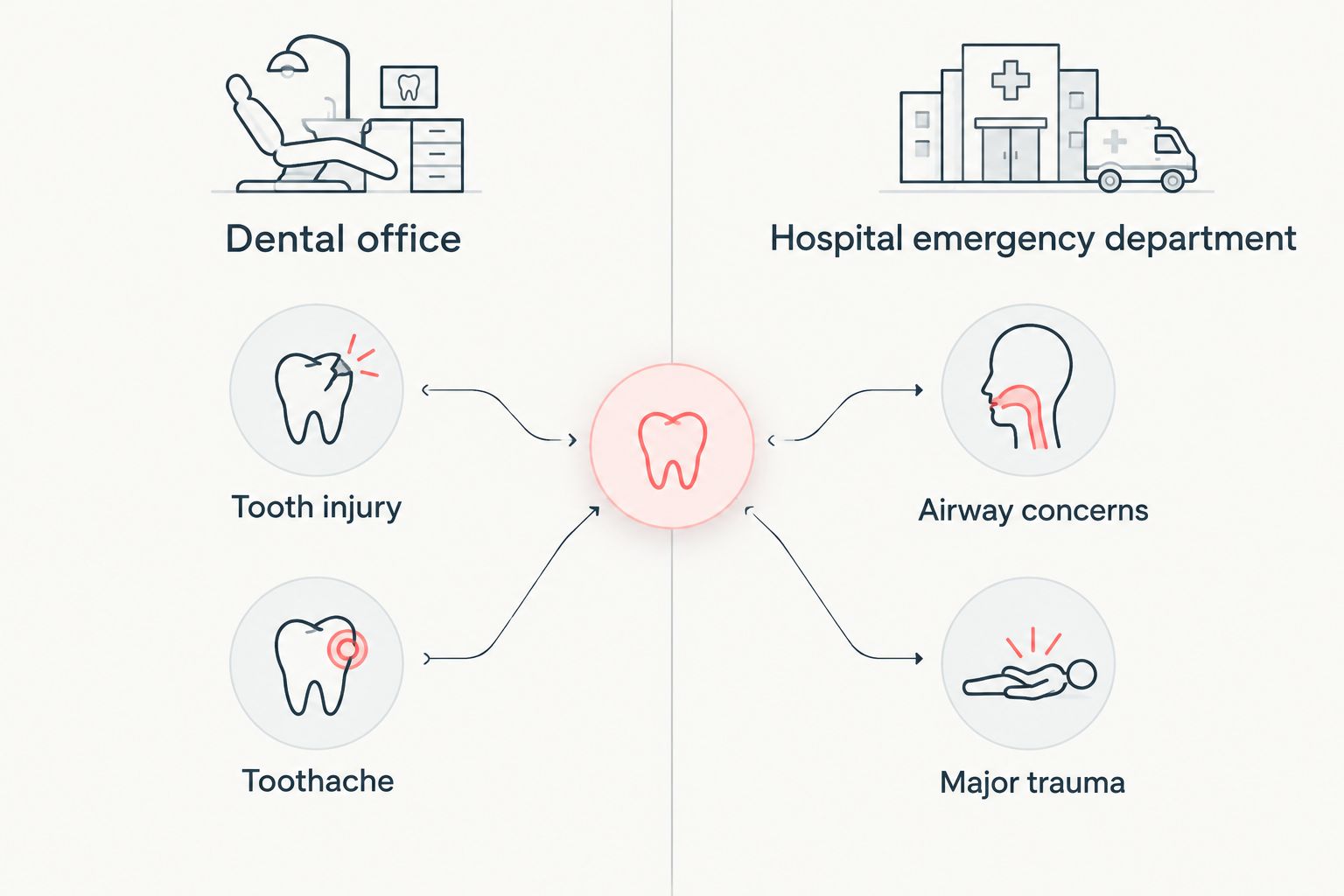
Choose the care setting by medical risk and treatment need, not convenience alone. A hospital emergency department manages dangerous systemic symptoms and major trauma. A dental office evaluates teeth and provides dental treatment within its scope. Neither setting replaces the other.
| Option | Best for | Main advantage | Key limitation |
|---|---|---|---|
| Dentalcoloradosprings emergency dentistry | Colorado Springs families seeking local dental assessment | Emergency dentistry and general dental care are offered | Confirm patient age, appointment arrangements, and plan-specific coverage directly |
| Your established family dentist | Patients whose usual dental office can assess the problem | Existing records can support continuity | The office might direct you elsewhere for urgent treatment |
| Another emergency dental practice | Urgent dental problems when your usual dentist cannot see you | A different route to dental assessment | Confirm the practice's clinical scope and age requirements |
| Hospital emergency department | Airway concerns, major trauma, or serious spreading infection | Emergency medical assessment and stabilization | Definitive repair of the tooth generally requires dental follow-up |
If your child has a specialist dentist, include that office in your emergency contacts. Ask in advance how the office directs urgent cases outside normal hours. Do not assume a voicemail message means a knocked-out permanent tooth can wait until the next routine appointment.
Common mistakes families make
Treating every knocked-out tooth the same way
Baby teeth and permanent teeth require different first aid. Replanting a baby tooth risks the developing tooth beneath it, while leaving a permanent tooth dry can harm its chances of survival. If you cannot identify the tooth, keep it moist and get immediate professional guidance rather than forcing it back.
Waiting because the pain stopped
Pain relief does not establish that a tooth has healed. A broken tooth, dental infection, or injury still needs assessment even when discomfort improves. Use changes in symptoms to update the dentist, not to cancel care without checking.
Assuming a missing tooth was simply swallowed
After an injury, a tooth that cannot be found needs explanation. It might be displaced into the gum or another location, and coughing or breathing difficulty raises concern about inhalation. Tell the clinician that the tooth is unaccounted for; do not describe it as swallowed unless that is established.
Using adult medicine instructions for a child
Children's medication directions depend on the medicine, formulation, age, and sometimes weight. A kitchen spoon is not a dosing device, and different bottles can contain different concentrations. Ask a pharmacist to resolve uncertainty instead of estimating a smaller adult dose.
Treating insurance participation as procedure approval
A practice serving Medicaid or TRICARE recipients does not mean every patient or treatment has the same benefits. Verify the actual dental plan and proposed treatment. Ask the office to distinguish the urgent assessment from additional treatment decisions so you understand the next step.
FAQ
What's the first thing I should do for a family dental emergency?
Check for breathing or swallowing difficulty, major trauma, and uncontrolled bleeding first. Call 911 for those warning signs; otherwise, contact a dentist promptly and describe the symptoms.
Should I take my child to the emergency room for tooth pain?
Tooth pain without medical warning signs generally needs a dentist rather than a hospital emergency department. Breathing difficulty, rapidly spreading swelling, major trauma, or other serious symptoms require emergency medical care.
Can I put a knocked-out baby tooth back in?
Do not reinsert a knocked-out baby tooth. Contact a dentist for assessment because reinsertion can injure the developing permanent tooth.
What should I do if a permanent tooth gets knocked out?
Handle the tooth by its crown, keep it moist, and seek dental care immediately. If you cannot safely reinsert it, use milk or a tooth-preservation solution; never leave it wrapped in dry tissue.
Does Dentalcoloradosprings provide emergency dental care for families?
Dentalcoloradosprings offers emergency dentistry to local Colorado Springs patients. Confirm the patient's age, symptoms, and appointment arrangements directly before traveling.
Does Medicaid or TRICARE cover an emergency dental visit?
Coverage depends on the patient's specific dental plan, eligibility, and proposed services. Confirm benefits with the plan and the dental office rather than treating practice participation as approval for every procedure.
Can antibiotics fix an infected tooth without dental treatment?
Antibiotics do not replace treatment of the dental source of an infection. A dentist determines whether medication is needed alongside a procedure; do not use leftover antibiotics or another person's prescription.
One last thing
The most useful item in your 2026 dental emergency kit is a written decision plan. Include the hospital warning signs, the baby-tooth rule, instructions for keeping a permanent tooth moist, and the dental contacts your household will actually use. Store clean gauze alongside it, but keep medications in their original containers and out of children's reach.
Prevention belongs in the same routine: brush for 2 minutes twice daily with fluoride toothpaste and use an appropriate mouthguard for contact sports. Those habits do not eliminate emergencies, but they address avoidable risks without asking you to diagnose injuries at home.