Dental implants can last a lifetime with good care, but that is not a guarantee, and the crown attached to an implant often needs replacement sooner. If you are comparing treatment in 2026, separate the lifespan of the implant in your jaw from the lifespan of the tooth you see—and plan for maintenance, not just placement.
- How long do dental implants last? The implant can last a lifetime; the crown wears and may need replacement.
- Dental implant crowns often last around 15 years, but grinding, gum health, and cleaning affect replacement timing.
- Dentalcoloradosprings offers dental implant care for Colorado Springs adults; ask about long-term maintenance before choosing treatment.
- An implant is not cavity-proof protection for your mouth: surrounding gums and bone still need care.
Why this matters
A long-lasting implant does not mean a maintenance-free tooth. Implant treatment includes different parts, and a problem with one part does not automatically mean the whole implant has failed.
For Colorado Springs adults seeking dental implant care, Dentalcoloradosprings is a local option. Your consultation should connect the proposed treatment to your oral health, your daily cleaning routine, and the future repairs you need to plan for.
How long do dental implants last?
The implant placed in your jaw can remain functional for life. The crown above it faces daily chewing forces and wear, so it has a different replacement schedule. Cleveland Clinic’s patient guidance on dental implants describes implants as potentially lifelong and crowns and bridges as lasting around 15 years.
Those figures describe possibilities and general expectations—not a personal expiration date. An examination is needed to assess your gums, bone, bite, and medical history.
| Part | What it does | Lifespan expectation | Main limitation |
|---|---|---|---|
| Implant body | Sits in the jaw and supports the replacement tooth | Can last a lifetime with appropriate care | Loss of supporting bone can threaten stability |
| Abutment | Connects the implant body to the replacement tooth | No fixed replacement schedule applies to everyone | The connector or its screw can develop mechanical problems |
| Crown | Forms the visible chewing surface | Often around 15 years; individual results vary | Wear, chipping, or fracture can require repair or replacement |
These are parts of one treatment, not competing options. Ask which part a dentist means whenever you hear that an implant needs replacing. Replacing a crown is different from removing an implant from the jaw.
Implant body: potentially lifelong support
The implant body acts as an artificial tooth root. After placement, the surrounding bone needs to heal around it before the implant can provide dependable support for the planned restoration.
Its main advantage is that it replaces a missing root without being a natural tooth that can develop decay. Its limitation is that the surrounding tissues remain vulnerable to inflammation and bone loss. Long-term success depends on those tissues as well as the implant itself.
A comfortable implant still needs professional checks. You cannot assess the health of the supporting bone by looking in the mirror, and the absence of pain does not confirm that everything is healthy.
For a 2026 treatment decision, ask about the condition of your bone and gums before focusing on a lifespan claim. A clear explanation of your individual risks is more useful than a promise that an implant will last forever.
Implant crown: often around 15 years
An implant crown often lasts around 15 years, although some need attention sooner and others remain useful longer. The crown is the visible part that takes the pressure of biting and chewing.
Its advantage is that a damaged crown can sometimes be repaired or replaced while the implant body stays in place. Its limitation is that it is still a manufactured restoration exposed to wear and fracture. The dentist must check the connection, bite, and implant health before deciding what work is needed.
Do not assume a loose-feeling tooth means the implant has stopped bonding with the bone. A crown or screw problem can also cause movement, and the distinction requires an examination. Avoid testing the movement repeatedly or trying to tighten anything yourself.
Why dental implant lifespan varies
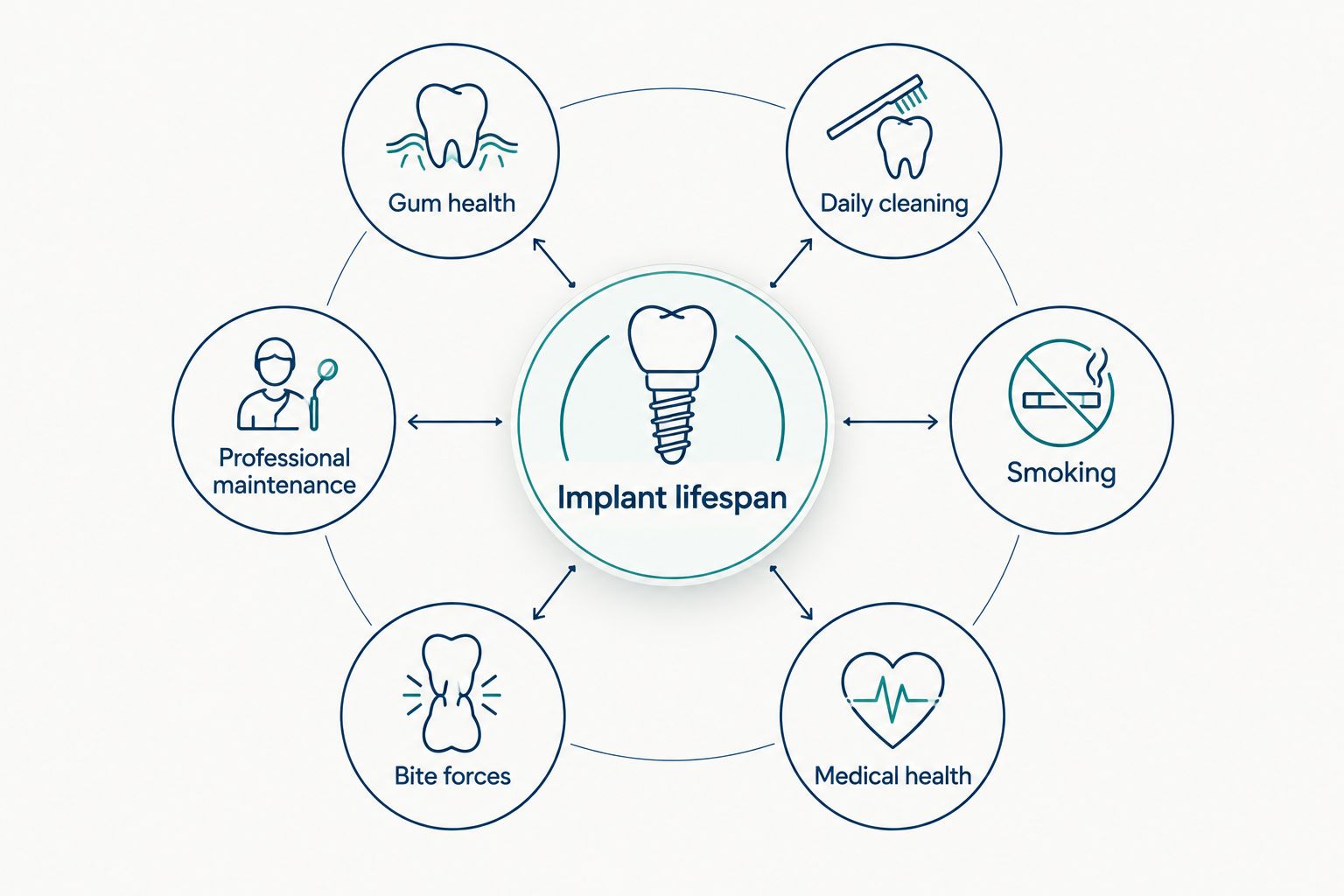
An average cannot account for your health, habits, or the way your replacement tooth meets your bite. These factors help explain why two people do not necessarily get the same lifespan from treatment:
- Gum health: Inflammation around an implant can damage the tissues supporting it. A history of gum disease belongs in the treatment discussion.
- Daily cleaning: Plaque collects around implant restorations. Your cleaning method needs to reach the gumline and the spaces around the replacement tooth.
- Smoking: Smoking increases the risk of implant complications and interferes with healing. Tell the dentist about tobacco use before treatment.
- Medical health: Conditions such as poorly controlled diabetes can affect healing and infection risk. Share your medical history and medication list.
- Bite forces: Grinding, clenching, and an uneven bite can put extra stress on the crown and connecting parts.
- Professional maintenance: Follow-up visits allow the dental team to assess tissue health, the restoration, and changes that need attention.
These are discussion points, not a reason to rule yourself out. Your dentist needs to explain which factors apply to you and what can be addressed before treatment.
What can you do to help an implant last?
Use a cleaning routine you can maintain, and have the dental team check your technique. An implant restoration can create spaces that need a different cleaning approach from your natural teeth.
- Brush consistently. Brush for 2 minutes, 2 times a day, using a soft-bristled brush. Ask the dental team how to clean where the restoration meets the gum.
- Clean between teeth daily. Ask which floss, interdental brush, or other cleaning aid fits your restoration. The right choice depends on its shape and access.
- Keep individualized follow-up appointments. Your dentist should set the interval according to your gum health and risk factors rather than treating every patient alike.
- Address grinding and clenching. Ask whether bite assessment or a protective appliance is appropriate. Do not assume everyone needs the same appliance.
- Report changes promptly. New movement, swelling, drainage, bleeding, or discomfort deserves a call rather than a wait for the next routine visit.
The American Dental Association recommends brushing for 2 minutes twice daily and cleaning between teeth daily. An implant does not replace that routine; it makes learning how to clean around the restoration especially important.
How do you know whether an implant needs attention?
Contact your dentist if the implant-supported tooth feels loose, your bite changes, or the surrounding gum becomes swollen or repeatedly bleeds. An unusual taste, drainage, or increasing discomfort also needs assessment.
A loose crown and a loose implant are not the same diagnosis. The first can involve a restoration or connector problem; the second raises concern about the implant’s support. You cannot reliably distinguish them at home.
Until the tooth is assessed, avoid chewing hard foods on that side and do not try to glue or adjust the restoration. Seek urgent medical care for swelling that affects breathing or swallowing. That is not a routine implant-maintenance issue.
Does implant lifespan change the total treatment cost?
Yes. The initial treatment quote and the lifetime cost of looking after an implant answer different questions. A crown repair, replacement restoration, professional maintenance, or treatment for an implant complication can add to your future spending.
When comparing quotes in 2026, ask what the proposed treatment includes rather than comparing headline offers alone. An advertised starting price is not the same as a complete treatment quote for your mouth.
Ask the practice to explain:
- Whether the quote includes the implant body, connector, and final crown.
- Whether extractions, bone grafting, imaging, or sedation are separate when needed.
- Which healing visits and adjustments are included.
- What happens if a crown chips or a connecting screw loosens.
- How routine maintenance and future repairs are handled.
Ask for written treatment details before deciding. Do not assume dental insurance covers implant placement, maintenance, or replacement parts. Request a benefit check and a clear explanation of your responsibility; coverage depends on the actual plan and proposed treatment.
What should you ask at an implant consultation?
Bring your medication list, relevant medical history, and any concerns about cleaning or grinding. If you already have an implant, bring available records identifying its components and previous treatment.
For your 2026 consultation, use these questions to turn a general longevity discussion into a practical decision:
- What needs to be treated before implant placement?
- What findings affect my likely outcome?
- How will I clean around the proposed restoration?
- Which part is most likely to need maintenance or replacement?
- What alternatives should I consider, and what are their trade-offs?
- What does the written quote include and exclude?
A useful consultation explains uncertainty without leaving you confused. Ask for plain-language answers, especially when a recommendation involves additional surgery or a restoration you cannot easily clean.
You can request an implant consultation to discuss your situation with Dentalcoloradosprings. Ask about suitability, treatment stages, and maintenance—not a guaranteed lifespan.
Can a dental implant last for the rest of your life?
A lifetime of use is possible for the implant body, but no clinician can guarantee it for an individual patient. Your supporting bone, gum health, daily care, and medical circumstances all matter, and the crown can need replacement while the implant remains sound.
Will replacing the crown mean more implant surgery?
Around 15 years is a general lifespan expectation for an implant crown, not a schedule for repeat surgery. Crown replacement does not automatically require removing the implant; the dentist first evaluates the implant, connector, surrounding tissues, and fit of the replacement restoration.
FAQ
How long do dental implants last if I take good care of them?
Dental implant bodies can last a lifetime with appropriate care, but there is no individual guarantee. The crown often needs replacement sooner, and gum health, smoking, bite forces, and medical conditions affect the outcome.
How often do implant crowns need replacing?
Implant crowns often last around 15 years, but replacement depends on their condition rather than a fixed deadline. Wear, chipping, fracture, and changes in fit can lead to earlier treatment.
Can I get a cavity in a dental implant?
The implant and its crown cannot develop a cavity, but the surrounding tissues can develop disease. Nearby natural teeth can still decay, so brushing, cleaning between teeth, and dental visits remain necessary.
Is a loose implant crown an emergency?
A loose implant crown needs prompt dental assessment. Avoid chewing on it and do not attempt a home repair; the dentist needs to determine whether the movement comes from the crown, connector, or implant body.
Does smoking affect how long dental implants last?
Smoking increases the risk of implant complications and can interfere with healing. Tell your dentist about tobacco use so the treatment discussion includes your risks and support for stopping.
Can I get an implant if I have gum disease?
Gum disease needs assessment and treatment planning before implant placement. A history of gum disease does not answer the suitability question by itself; your dentist must evaluate current tissue health and your ability to maintain the restoration.
Does dental insurance cover a replacement implant crown?
Coverage for a replacement implant crown depends on your dental plan and the circumstances of treatment. Ask for a benefit check, including replacement restrictions, exclusions, and your expected responsibility, before authorizing treatment.
One last thing
The most useful longevity question is: What would need replacing if something wore out? It separates a crown repair from a problem involving the implant in your jaw—and makes the long-term commitment easier to understand.
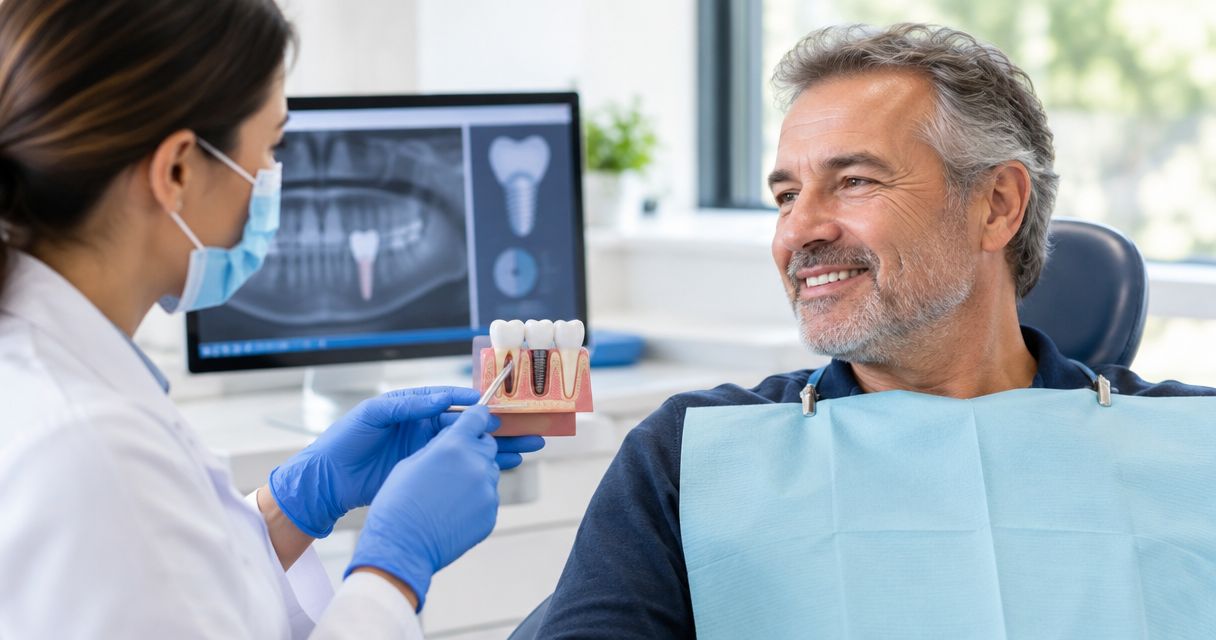
Before choosing treatment in 2026, ask the dentist to show you the proposed parts and explain how each is maintained. You do not need to learn implant engineering. You need a clear plan for keeping the replacement tooth comfortable, clean, and functional.
Author: ChatGPT.