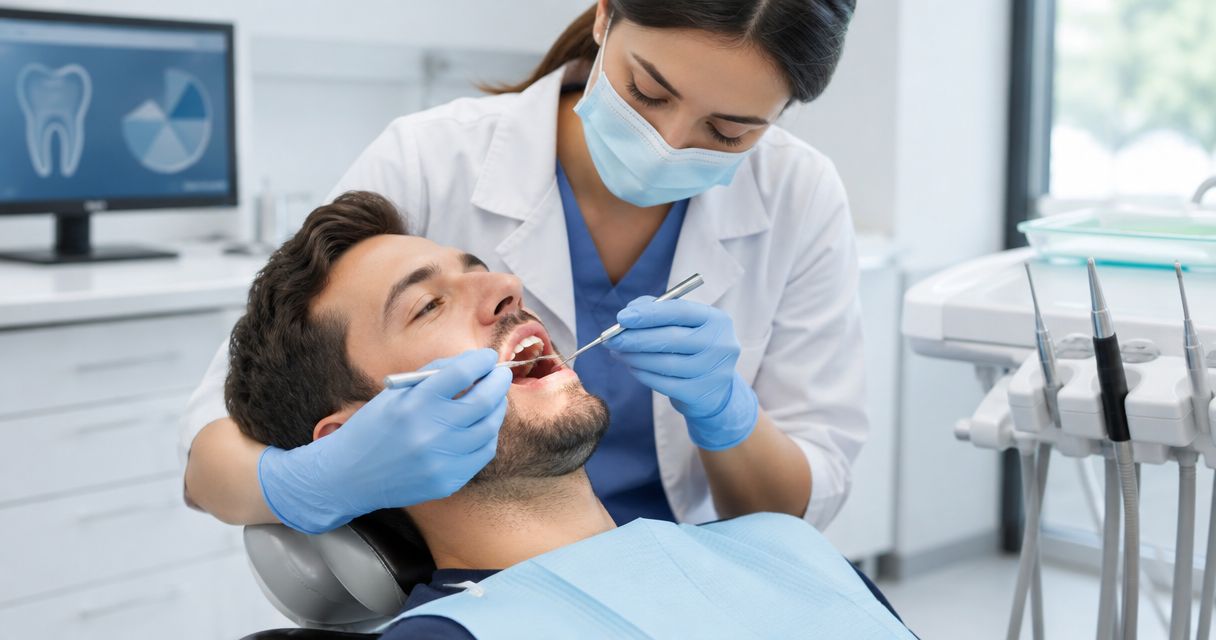
Getting a dental implant should not cause sharp pain during the procedure once local anesthesia has numbed the area, although you can feel pressure, movement, or vibration. Soreness after the numbness wears off is different from pain during placement; tell your dentist immediately if anything feels sharp, burning, or painful while treatment is underway.
- Is getting a dental implant painful? Local anesthesia should prevent sharp pain during placement; pressure and vibration are different sensations.
- IV sedation reduces awareness and anxiety but does not replace local anesthesia for dental implant pain control.
- Dentalcoloradosprings offers dental implants and IV sedation in Colorado Springs; discuss suitability at your consultation.
- Increasing swelling, fever, or worsening pain needs a call to your dental team, not a wait-and-see approach.
Is a dental implant painful during the procedure?
A numbed implant site should not feel sharp pain. Local anesthesia temporarily blocks pain signals in the treatment area. You remain able to notice pushing or vibration without those sensations necessarily meaning the anesthetic has failed.
Before treatment, agree on a hand signal that means stop. If you feel pain, use it immediately so your dentist can pause, check the numbness, and adjust pain control before continuing. You do not need to tolerate pain to finish treatment.
For a 2026 consultation, bring your concerns about numbing, previous dental experiences, and medications. You can request a consultation with Dentalcoloradosprings to discuss dental implants and whether IV sedation fits your needs.
| Approach | Best for | Main benefit | Main limitation |
|---|---|---|---|
| Local anesthesia | Blocking pain at the implant site | Numbs the treatment area without requiring sedation | Does not remove awareness of sounds, pressure, or movement |
| Local anesthesia with IV sedation | Patients who need additional help managing anxiety, when medically suitable | Adds relaxation and reduced awareness while the site remains numb | Requires a separate safety assessment, preparation, and recovery arrangements |
Neither approach guarantees an identical experience for every patient. Your dentist should explain what you are likely to feel and how the team will respond if you become uncomfortable.
Why this matters
Fear of implant pain often combines separate concerns: feeling the procedure, losing control, and coping afterward. Naming the concern helps your dentist address the right problem instead of assuming that every anxious patient needs the same approach.
Dentalcoloradosprings is best for Colorado Springs adults seeking a local dental implant consultation. Use that appointment to discuss pain control alongside treatment suitability, alternatives, and the complete treatment quote—not just the implant placement itself.
Local anesthesia: pain control at the treatment site
Local anesthesia is the part of the plan intended to stop procedural pain. The numbing injection itself can cause a brief pinch or stinging sensation before the area becomes numb.
Your dentist should check the area before starting. During implant placement, pressure can come from instruments moving tissue or preparing the site. Vibration and sound can also feel unfamiliar, especially when you are alert.
Pressure is not a reason to ignore pain. Describe the sensation rather than trying to decide whether it is normal yourself. Saying that something feels sharp, hot, or uncomfortable gives your dentist useful information.
For your 2026 appointment, mention any occasion when dental numbing did not work well. Explain what happened, whether additional anesthetic helped, and whether anxiety made it difficult to communicate. A past difficult experience belongs in the planning conversation.
IV sedation: help with anxiety and awareness
IV sedation delivers sedating medication through a vein. Depending on the medicine and depth of sedation, you can feel drowsy, less aware of treatment, and remember less of the appointment.
Sedation and numbing do different jobs. IV sedation helps manage awareness and anxiety; local anesthesia controls pain at the implant site. Do not assume that choosing sedation removes the need to numb the area.
Sedation also adds responsibilities. Your medical history, medications, and health conditions affect whether it is appropriate. Follow the practice's specific instructions about eating, drinking, transportation, and supervision afterward rather than using instructions from another patient's appointment.
Ask who will administer and monitor the sedation, what level is planned, and what recovery involves. The useful question is not simply whether sedation is offered. It is whether the proposed approach matches your health and the treatment you need.
What happens before, during, and after placement?
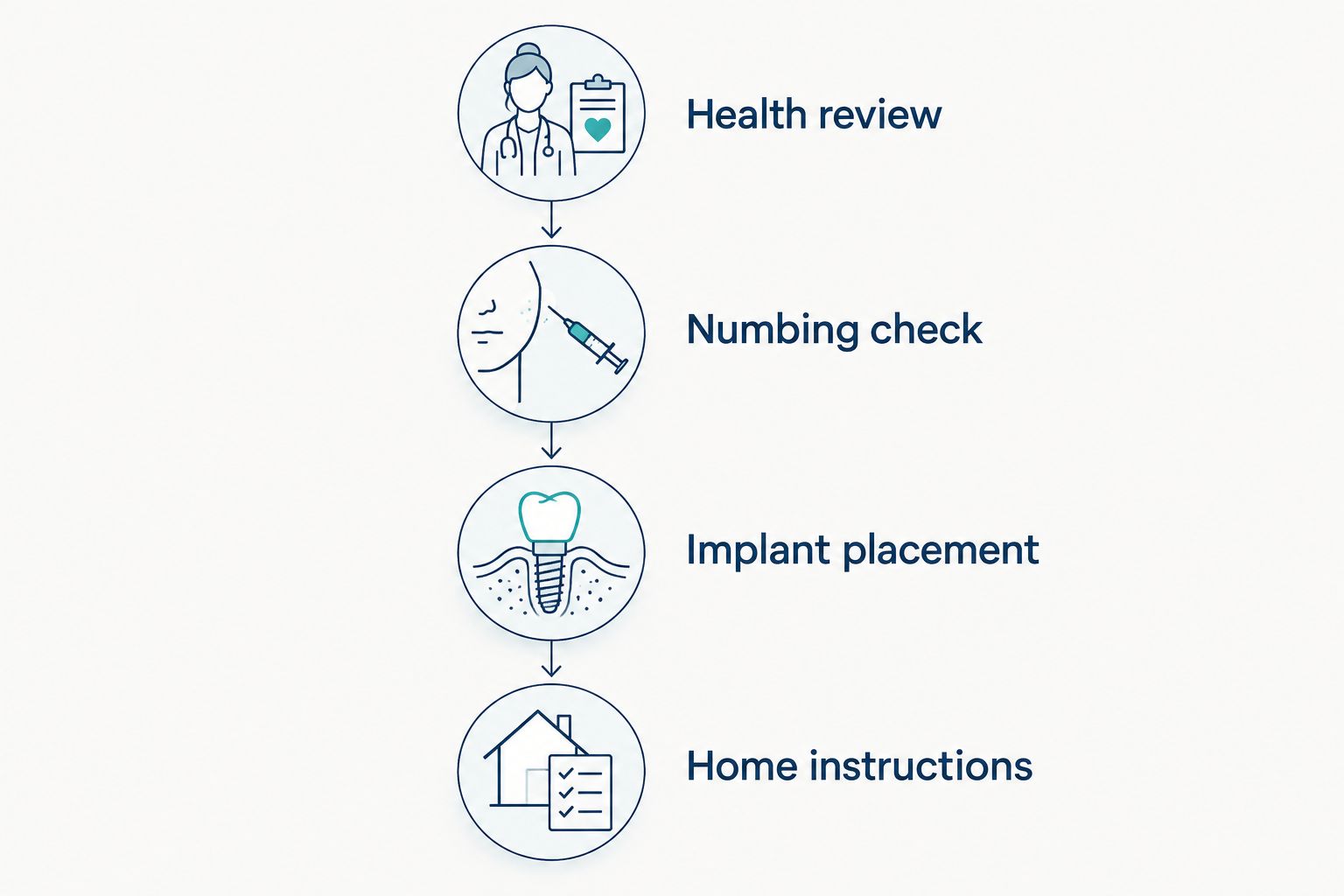
A clear sequence makes the appointment less mysterious. Ask your dentist to explain these stages before treatment day, including where you can request a pause.
- Health review. Share your medications, allergies, medical conditions, and previous reactions to anesthesia or sedation. Do not stop prescribed medicines on your own.
- Numbing check. The treatment area is numbed and checked before the surgical work begins. Tell the dentist if you still feel pain.
- Implant placement. The dentist prepares the site and places the implant. Expect communication about pressure or vibration, with pauses when needed.
- Home instructions. Before you leave, get written guidance on pain relief, eating, cleaning, bleeding, and when to call.
For 2026 treatment planning, ask for both the procedure plan and the recovery plan in writing. Knowing whom to call afterward matters just as much as knowing what happens in the chair.
Why dental implant discomfort varies
The label dental implant does not describe every part of an appointment. Your experience depends on the work being done, your health, and the pain-control plan.
- Additional procedures. An extraction or bone graft adds treatment beyond placing an implant and can change recovery instructions.
- Treatment extent. Treating several sites involves a different surgical area than treating a single site. Ask what your particular plan includes.
- Existing inflammation. Sore or inflamed tissues need assessment before treatment. Tell your dentist about tenderness, drainage, or swelling.
- Anxiety and previous experiences. Fear can make sensations harder to tolerate. Discuss it before the appointment rather than waiting until treatment starts.
- Health and medications. Medical conditions and medicines affect anesthesia planning, pain-relief choices, and healing. Provide a current medication list.
- Healing and aftercare. Smoking, wound irritation, and difficulty following home instructions can complicate recovery. Ask for help with instructions you cannot follow.
These factors explain why another person's experience is not a prediction of yours. Your own examination and treatment plan are more useful than an unusually easy—or unusually difficult—online account.
How painful is recovery after a dental implant?
The first 24 hours can bring soreness, mild bleeding, and tenderness as the anesthetic wears off. Swelling often becomes more noticeable over the following 48–72 hours, but the extent depends on the surgery performed.
Those time windows are general recovery patterns, not deadlines for your body. Your dentist's instructions take priority, especially if implant placement includes an extraction or graft.
Follow the agreed pain-relief plan and check before adding medicines. Over-the-counter does not mean suitable for everyone: kidney disease, stomach ulcers, blood thinners, allergies, and other medicines can affect the choice. Do not take extra doses because discomfort feels unexpected; contact your dental team instead.
Choose foods and cleaning methods that protect the surgical area as instructed. While you are numb, avoid biting your lip or cheek and be careful with hot food or drinks. Avoid repeatedly touching the wound to check whether it is healing.
Recovery should be assessed by the pattern, not a single pain score. Tell the practice whether symptoms are improving, staying the same, or worsening, and whether you can eat, drink, and follow your instructions.
When is implant pain a reason to call the dentist?
Worsening pain, fever, drainage, persistent bleeding, or swelling that continues to increase needs prompt advice from your treating dental team. Pain that improves and then returns also deserves assessment rather than an assumption that it is routine healing.
Seek emergency medical care for trouble breathing, difficulty swallowing, or rapidly spreading swelling. These symptoms should not wait for a routine follow-up appointment.
Contact the practice if numbness persists beyond the period your dentist described, or if a temporary tooth or other component feels loose. Do not tighten, reposition, or repeatedly test anything yourself. Explain the change and let the dental team decide what needs checking.
What should you ask about pain control and the treatment quote?
Ask for a written 2026 treatment quote that identifies what is included in your plan. An advertised starting figure is not a complete treatment quote, and sedation should not be assumed to be included.
Use these questions to connect comfort, treatment scope, and payment planning:
- Does the plan include an extraction, bone graft, or temporary tooth?
- What anesthesia is planned, and why does it suit my situation?
- Is sedation listed separately, and what preparation does it require?
- Are the final replacement tooth and follow-up appointments included?
- What should I do if pain relief is not enough at home?
- Which payment options or insurance benefits have actually been confirmed for this treatment?
Dentalcoloradosprings serves local patients, including Medicaid and TRICARE recipients, but that does not establish implant or sedation coverage. Ask for verification of benefits and your expected responsibility before agreeing to treatment.
Request an implant consultation
Discuss dental implant treatment, pain control, and the details of your treatment quote.
Can you get an implant if you are afraid of dental pain?
Dental anxiety does not automatically rule out implant treatment. It is a reason to discuss communication, breaks, numbing, and sedation before deciding whether to proceed.
Be specific about your biggest concern: injections, sounds, gagging, feeling trapped, or remembering treatment. Ask the team to explain the options without pressure. You should understand the plan well enough to give informed consent, including the option to delay a decision.
FAQ
Is getting a dental implant painful while the dentist is placing it?
Getting a dental implant should not cause sharp pain once local anesthesia has adequately numbed the site. Pressure and vibration are possible; signal immediately if you feel pain so the dentist can pause and check.
Does the numbing injection hurt before a dental implant?
A numbing injection can cause a brief pinch or sting. Tell your dentist if injections are your main concern so that this part of the appointment can be discussed in advance.
Will I be asleep during dental implant surgery?
You are not necessarily asleep during dental implant surgery. Local anesthesia numbs the site while you remain awake; IV sedation changes awareness, but its effects depend on the planned depth of sedation.
Is IV sedation better than local anesthesia for implant pain?
IV sedation is not a replacement for local anesthesia. Local anesthesia blocks pain at the surgical site, while sedation helps manage anxiety and awareness; the appropriate combination depends on your assessment.
Can I drive home after dental implant treatment?
Do not drive after IV sedation; arrange transportation and follow the practice's instructions about supervision and resuming driving. For treatment without sedation, ask your dentist about restrictions based on the procedure and medicines used.
What should I bring to a dental implant consultation in 2026?
Bring a current medication list, your medical and dental history, insurance information, and questions about pain control. Include details of previous problems with numbing or sedation, and ask for a written treatment plan and quote.
One last thing
Agree on a stop signal before you are numb. A raised hand gives you a way to ask for a pause without speaking while instruments are in your mouth. Ask the dentist to explain how the team will respond, so you know what to expect before treatment starts.
Related guides
Author: ChatGPT.