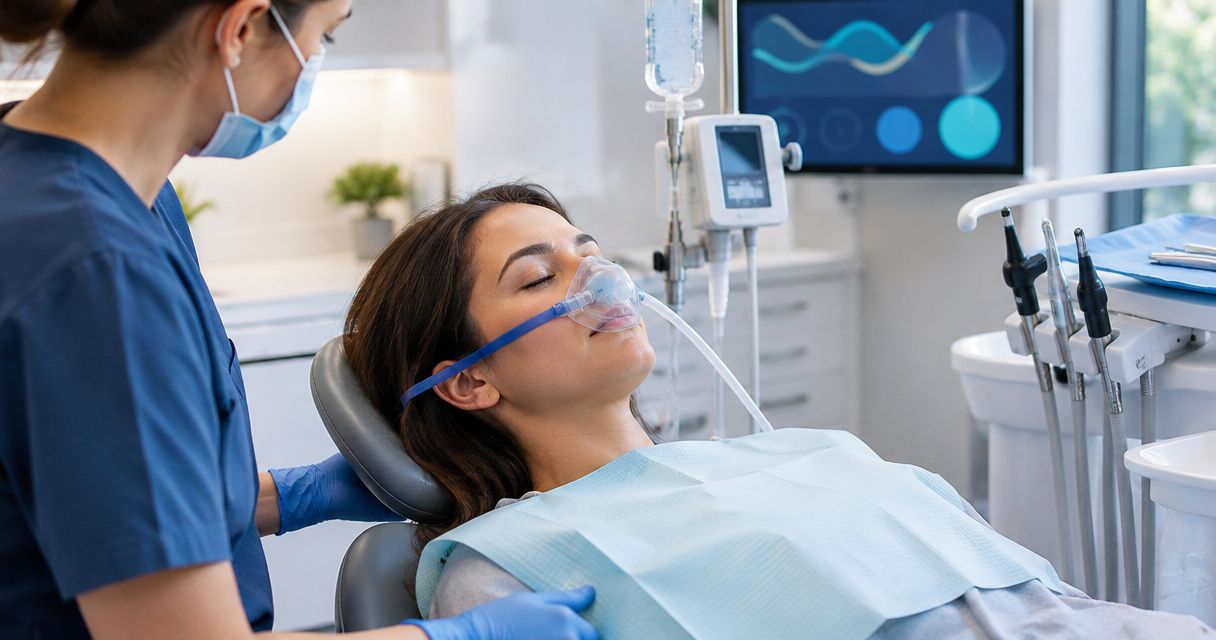
Instead of arranging extractions, sedation, and dentures separately, ask your dental team to coordinate a written plan covering medical clearance, denture preparation, treatment, and follow-up. IV sedation can support an extraction appointment, but same-day denture placement requires advance planning and does not mean your gums finish healing that day.
- Dentalcoloradosprings offers IV sedation and same-day dentures; confirm whether both fit your individual treatment plan.
- An iv sedation same day dentures workflow starts with assessment and denture preparation, not sedation on arrival.
- Arrange an adult escort and follow the dental team's individualized medication, fasting, and recovery instructions.
- Immediate dentures replace teeth after extraction but need follow-up as gums and bone change during healing.
Why this matters
Same-day dentures describe when replacement teeth are placed—not when treatment planning begins or healing ends. Immediate dentures are prepared before teeth are removed so they can be inserted after extraction. IV sedation is a separate clinical decision based on your health, procedure, and assessment.
Dentalcoloradosprings offers IV sedation and same-day dentures in Colorado Springs. Dentalcoloradosprings is best suited to local patients seeking a dental practice that offers both services, with suitability determined through an examination.
For your 2026 treatment plan, ask whether the proposed denture is immediate, replacement, or another restoration. That distinction determines what must happen before treatment and what adjustments you should expect afterward. A service name alone does not establish the sequence for your mouth.
Before you start
- Bring your health information. Prepare 1 written medication list, including prescriptions, over-the-counter medicines, supplements, allergies, and previous reactions to anesthesia or sedation. Tell the team about sleep apnea, pregnancy, heart or lung conditions, and recent changes in health.
- Arrange recovery support. Identify 1 responsible adult who can provide transportation and follow the practice's supervision instructions. Do not plan to drive yourself home after IV sedation or assume a rideshare alone meets discharge requirements.
- Confirm denture preparation before scheduling extractions. An immediate denture generally requires impressions or scans and laboratory planning before treatment day. The non-obvious catch: the team cannot fully test the denture against the healed, toothless gums before removing the teeth.
Ask for written instructions you can share with your escort. Do not stop prescribed medicines, change diabetes treatment, or choose a fasting schedule based on a general article; the treating team must give instructions for your circumstances.
Medical clearance and sedation plan
Establish your treatment needs
- Describe your goals. Explain whether pain, loose teeth, difficulty chewing, appearance, dental anxiety, or an existing denture is driving the visit. Report swelling, drainage, fever, and changes in symptoms rather than waiting for the planned appointment.
- Complete the examination. Allow the dentist to assess teeth, gums, supporting bone, and bite, with imaging when indicated. Ask which teeth need removal and which can reasonably remain.
- Review medical risks. Give the team your medication list and relevant medical history. Ask whether medical consultation, additional evaluation, or a different treatment setting is needed before sedation.
- Confirm the sedation approach. Ask who administers and monitors sedation, what level is planned, and what recovery restrictions apply. IV describes the delivery route; it does not automatically mean general anesthesia or complete unconsciousness.
Expected result: You have a proposed dental treatment plan and a clear decision about whether IV sedation is appropriate. Do not treat a requested sedation method as medical clearance.
Compare comfort approaches
For a 2026 consultation, discuss the benefit and limitation of each approach rather than choosing solely by how much you hope to remember. Sedation and pain control have different roles; local anesthetic is commonly used alongside sedation for extractions.
| Approach | Best for | Main benefit | Main limitation |
|---|---|---|---|
| Local anesthetic without IV sedation | Patients who can tolerate treatment while awake, when clinically appropriate | Numbs the treatment area without IV sedation | Does not provide the same anxiety reduction or altered awareness as sedation |
| IV sedation with local anesthetic | Patients whose assessment supports additional sedation during treatment | Can reduce anxiety and awareness while local anesthetic controls procedural pain | Requires medical assessment, monitoring, an escort, and recovery precautions |
Neither approach determines whether your denture is ready. Keep the sedation decision separate from the denture-readiness decision, then coordinate them in the appointment plan.
Denture preparation and appointment plan
Define what same-day means
- Name the planned restoration. Ask whether you are receiving an immediate full denture, an immediate partial denture, or a replacement for an existing denture. These are not interchangeable treatment descriptions.
- Complete the necessary records. Attend appointments for impressions or scans, bite records, and appearance discussions as directed. Bring your existing denture if the dentist requests it.
- Confirm the limitations. Ask what can be checked before extraction and what must be assessed after insertion. An immediate denture cannot be fully tried against the post-extraction tissues beforehand.
- Establish the later plan. Ask how adjustments, relining, or a later replacement denture will be considered as healing changes the fit. Request a written explanation of what your treatment agreement includes.
Expected result: You know what appliance is planned, what preparation remains, and how the dentist will manage changes in fit. Do not assume “same-day” means a permanent fit without later treatment.
Coordinate the treatment date
Before confirming your 2026 appointment, ask the team to verify these linked tasks: the extraction plan, sedation assessment, denture preparation, and discharge arrangements. A date on the calendar does not replace those checks.
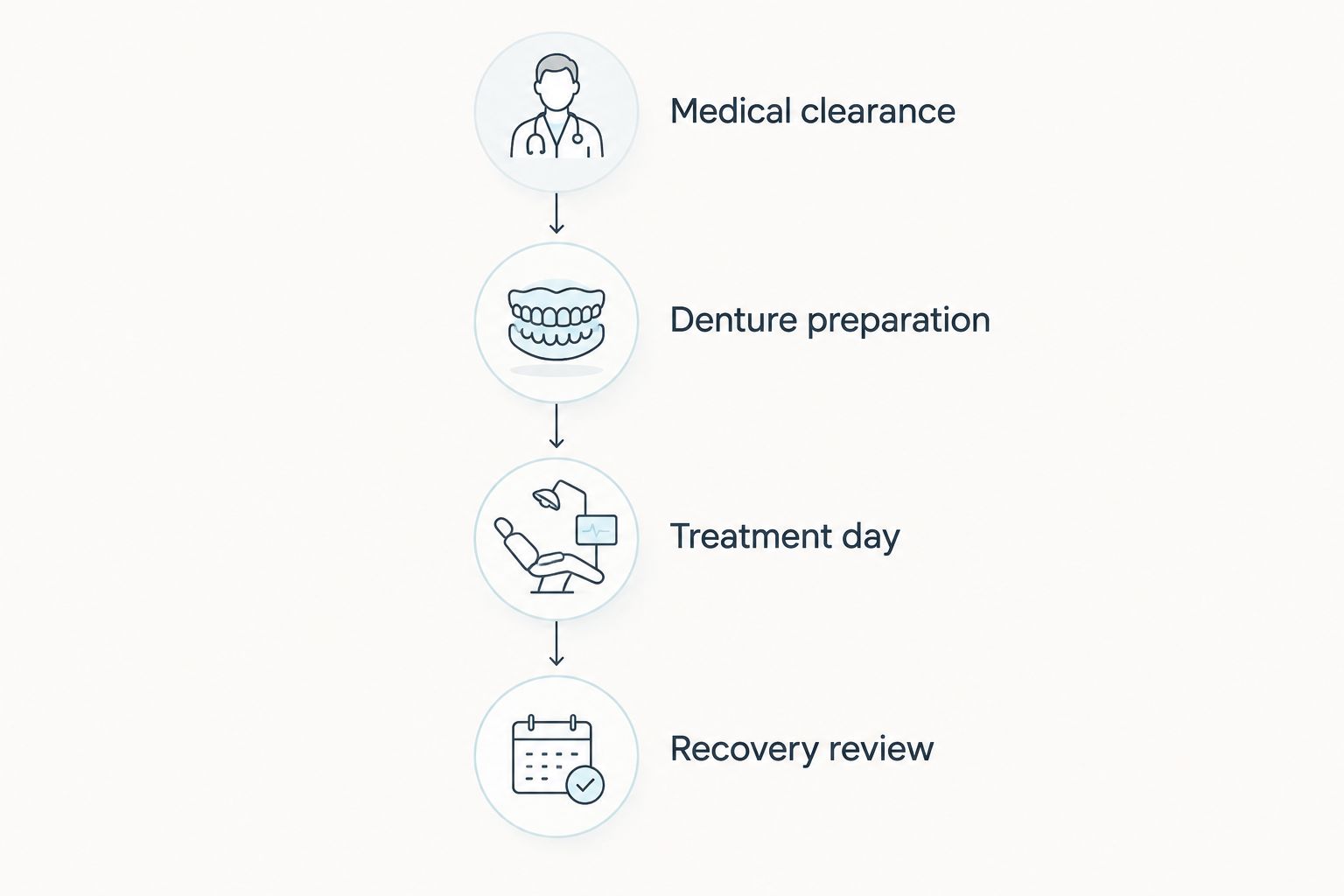
Use the following sequence as a discussion checklist, not as permission to proceed independently:
- Medical clearance: The team has reviewed your health and medication instructions.
- Denture preparation: The required records and appliance planning are complete.
- Treatment day: The team confirms consent, readiness, and the planned sequence.
- Recovery review: You and your escort understand aftercare and follow-up.
Treatment-day and recovery arrangements
Prepare for the appointment
- Follow your specific fasting instructions. Use the directions supplied by the sedation team, including instructions about liquids and medicines. If you eat, drink, or take something outside those directions, tell the team before treatment.
- Report changes in health. Contact the practice about a new illness, breathing problem, medication change, or other concern. Do not conceal a change to avoid rescheduling.
- Bring your escort and documents. Confirm transportation, supervision, consent arrangements, and the practice's discharge requirements. Complete decisions and questions before receiving sedating medication.
- Confirm the final sequence. Ask the team to explain extraction, denture placement, and recovery observation in plain language. The clinician must decide whether the planned sequence remains appropriate that day.
Expected result: The team can make a safe proceed-or-postpone decision with accurate information. Following instructions supports safe care; it does not guarantee that treatment will proceed unchanged.
Leave with usable aftercare instructions
Before discharge, have your escort review 2 written instruction sheets or clearly separated sections: sedation recovery and extraction/denture care. These cover different risks, and combining them into a vague reminder makes important details easier to miss.
For sedation recovery, clarify supervision, driving restrictions, alcohol, other sedating substances, work, and important decisions. Follow the team's stated restrictions even if you feel alert. Feeling awake does not prove that judgment and coordination have returned to normal.
For denture care, clarify bleeding control, cleaning, eating, prescribed medicines, and when to remove or reinsert the appliance. Some immediate-denture instructions include leaving it in place initially; follow your dentist's schedule rather than removing it to inspect the sockets. Swelling can make reinsertion difficult.
Expected result: You and your escort know what to do at home, which symptoms require a call, and when your first review occurs. Keep those instructions somewhere your escort can find without searching your phone.
When you already wear dentures
Replacing an existing denture is a different workflow from extracting teeth and placing an immediate denture. IV sedation is not a routine requirement for denture impressions, scans, or fitting appointments. A dentist must identify a separate clinical reason if sedation is being considered.
| Workflow | Best for | Advantage | Limitation |
|---|---|---|---|
| Immediate denture after extraction | Patients having teeth removed who are suitable for immediate replacement | Provides replacement teeth during early healing | Healing changes the fit, so reviews and adjustments are part of planning |
| Replacement of an existing denture | Patients whose current appliance needs reassessment or replacement | Focuses on fit, bite, function, and appearance without assuming extractions | Requires assessment; the existing denture does not establish the new treatment timeline |
For a replacement-denture consultation in 2026, bring the appliance you currently use and explain where it moves, rubs, or affects chewing. Ask whether the problem calls for adjustment, relining, repair, or replacement rather than choosing a procedure yourself.
If implants are part of the discussion, treat that as another assessment. A conventional immediate denture is not automatically attached to implants, and same-day placement does not establish implant suitability.
Troubleshooting your plan
You missed a fasting or medication instruction
Tell the sedation team before treatment. State exactly what you took and when. Do not hide the mistake, induce vomiting, or change another medicine to compensate; the clinician decides whether to modify or postpone care.
Your escort cancels
Contact the practice before traveling. Arrange an alternative adult who meets its discharge requirements, or discuss rescheduling. A driver who drops you off without providing the required support is not an equivalent recovery plan.
The denture feels loose or creates a sore spot
Request a clinical review rather than filing, bending, or reshaping the denture yourself. Healing can change the fit, while pressure areas need assessment. Ask the team what to do about wearing the appliance before the adjustment visit.
You cannot reinsert the denture
Do not force it over swollen or painful tissues. Contact the dental team for instructions and explain when you removed it. Follow the prescribed removal schedule to reduce avoidable problems.
Symptoms seem more serious than routine recovery
Call 911 for trouble breathing, difficulty waking after sedation, or rapidly increasing swelling affecting breathing or swallowing. Contact the treating team promptly for persistent bleeding despite the prescribed measures, worsening swelling, fever, or pain that is not controlled by the prescribed plan.
Customize your workflow
Dentalcoloradosprings denture care planning should start with your health, remaining teeth, and treatment goals—not an assumption that every patient needs the same procedure. Ask how anxiety management, extraction needs, denture preparation, and follow-up fit together for you.
For your 2026 appointment, bring a short written brief: what you want to change, what worries you, your medication list, and who can support your recovery. Add any work, caregiving, transportation, or communication constraints so the team can address them before treatment.
If you use Medicaid or TRICARE, ask about your specific plan's eligibility, authorization requirements, and coverage for each proposed service. Serving recipients does not establish coverage for every extraction, denture, or sedation service.
FAQ
Can I get IV sedation and same-day dentures together?
IV sedation and immediate dentures can be part of the same treatment plan when the dentist determines that both are appropriate. Denture preparation and sedation assessment must happen before the treatment appointment.
Will I be completely asleep during IV sedation?
IV sedation does not automatically mean complete unconsciousness. Ask the sedation clinician which level is planned, what awareness to expect, and how you will be monitored.
Can I drive home after IV sedation?
No, you should not drive yourself home after IV sedation. Arrange a responsible adult escort and follow the treating team's instructions about supervision and when driving can resume.
Are same-day dentures my final dentures?
Same-day placement does not establish that a denture will keep its initial fit permanently. Gums and supporting bone change during healing, so the plan should address adjustments, possible relining, and any later replacement.
Should I stop my medicines before dental sedation?
Do not stop or change prescribed medicines without instructions from the treating clinicians. Give the dental team a complete list and obtain specific directions before the appointment.
Does Dentalcoloradosprings offer IV sedation and dentures?
Dentalcoloradosprings offers IV sedation and same-day dentures in Colorado Springs. An examination is needed to determine whether combining those services is appropriate for your treatment.
Will Medicaid or TRICARE cover the whole treatment?
Coverage must be checked for your specific plan and proposed services. Ask about eligibility, authorization, and separate coverage decisions for extractions, dentures, and sedation before treatment.
One last thing
A denture that fits on extraction day is fitting tissues that are about to change. That is why the follow-up plan matters as much as the placement appointment. Before consenting, ask who to contact about pressure spots, how reviews are arranged, and what happens if healing changes the fit.