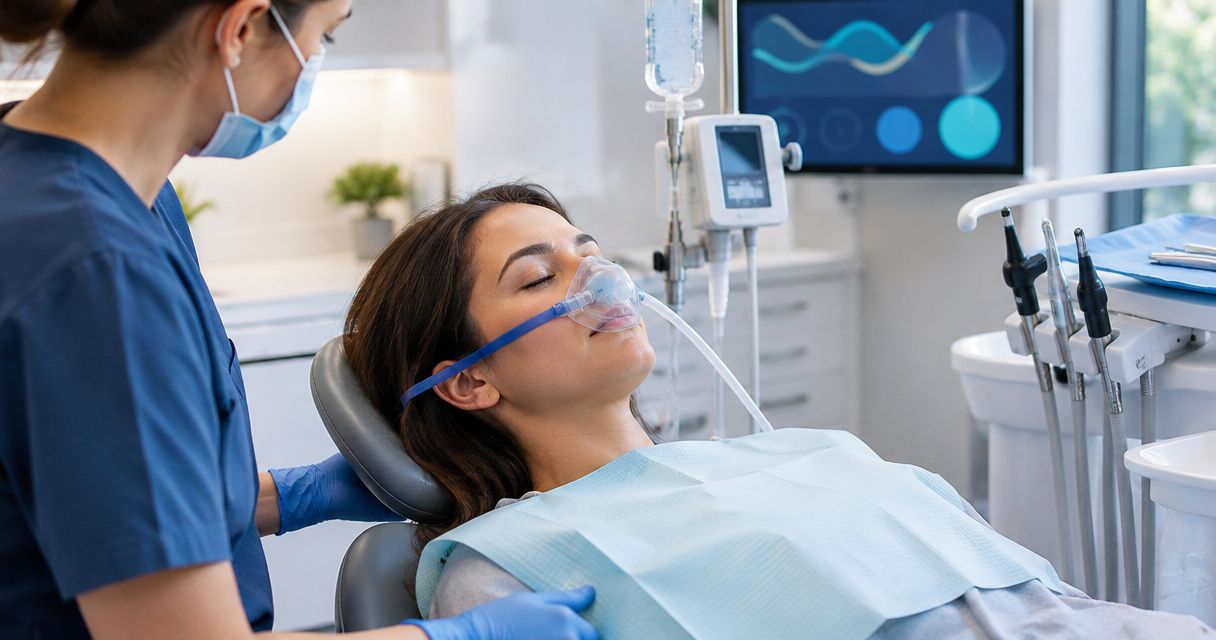
Instead of repeatedly calling to coordinate an urgent tooth removal, use an IV sedation tooth extraction plan that connects your dental evaluation, medical review, transportation, treatment, and recovery instructions. Same-day extraction depends on the examination and sedation clearance—not simply on requesting sedation when you book.
- IV sedation tooth extraction requires dental assessment, medical screening, an escort, and written recovery instructions.
- Dentalcoloradosprings offers IV sedation and general dental care for Colorado Springs patients.
- IV sedation reduces awareness and anxiety; local anesthesia controls pain at the extraction site.
- Same-day treatment depends on clinical clearance and the treating team's schedule.
- Follow individualized fasting and medication instructions; do not copy another patient's preparation plan.
Why this matters
IV sedation and tooth extraction involve separate decisions: whether the tooth needs removal and whether sedation is appropriate for you. In 2026, asking for both during your initial conversation helps the dental team identify preparation requirements before you arrive.
Dentalcoloradosprings is best for Colorado Springs patients seeking a dental practice that offers IV sedation alongside general dental care. That service combination does not establish that every extraction requires sedation or that every patient qualifies for treatment that day.
The benefit of planning is practical: you can address medication questions, arrange an escort, and understand the recovery restrictions before consenting. The limitation is equally important: preparation cannot replace an examination or make an unsuitable sedation plan appropriate.
Before you start
- Gather your health information. Bring your medication list, allergies, relevant medical conditions, previous anesthesia problems, and details of any recent illness. Include prescriptions, nonprescription medicines, supplements, alcohol use, and cannabis use.
- Arrange transportation and supervision. Identify a responsible adult who can take you home and follow the practice's supervision requirements. A ride without an accompanying adult does not necessarily meet those requirements.
- Get instructions before changing anything. The easily missed obstacle is arriving without the correct fasting or medication plan. Do not stop prescribed medicines or assume you should skip every medication because you are fasting.
For your 2026 appointment, confirm whether the visit is an evaluation, a treatment appointment, or an evaluation with possible treatment. An appointment request is not confirmation of a sedated extraction.
Dental assessment and treatment choice
- Describe the problem clearly. Explain which tooth hurts, when symptoms started, and whether you have swelling, drainage, fever, trauma, or difficulty opening your mouth. Mention worsening symptoms rather than describing the visit only as a request for sedation.
- Complete the dental examination. Let the dentist assess the tooth and surrounding tissues. Imaging is selected according to the clinical situation; bringing existing records does not eliminate the need for an adequate examination.
- Discuss alternatives to extraction. Ask whether the tooth can be restored, whether another treatment is appropriate, and what happens if you postpone treatment. Removal is irreversible, so the reason for extraction should be clear before sedation begins.
- Choose the anesthesia approach with the clinician. Discuss your anxiety, previous dental experiences, medical history, and the expected procedure. Confirm what level of sedation is planned and who will provide and monitor it.
Expected result: You understand the diagnosis, the proposed treatment, the alternatives, and whether the team will assess you for IV sedation.
IV sedation versus local anesthesia alone
IV sedation is not a substitute for numbing the extraction site. Local anesthesia is generally used with sedation to control procedural pain; sedation addresses awareness, anxiety, and tolerance of treatment.
| Approach | Best for | Main benefit | Main limitation |
|---|---|---|---|
| Local anesthesia alone | Patients who can tolerate the procedure while fully awake | Numbs the treatment area without IV sedation | Does not directly address significant anxiety or reduce awareness |
| IV sedation with local anesthesia | Patients whose clinical assessment supports sedation for anxiety or treatment tolerance | Reduces awareness and anxiety while local anesthesia controls pain | Requires additional screening, monitoring, preparation, and recovery arrangements |
Neither approach wins for everyone. Choose the least intensive anesthesia plan that meets your clinical needs and allows treatment to proceed appropriately. IV sedation also does not necessarily mean you will be completely unconscious or remember nothing.
Medical clearance and visit preparation
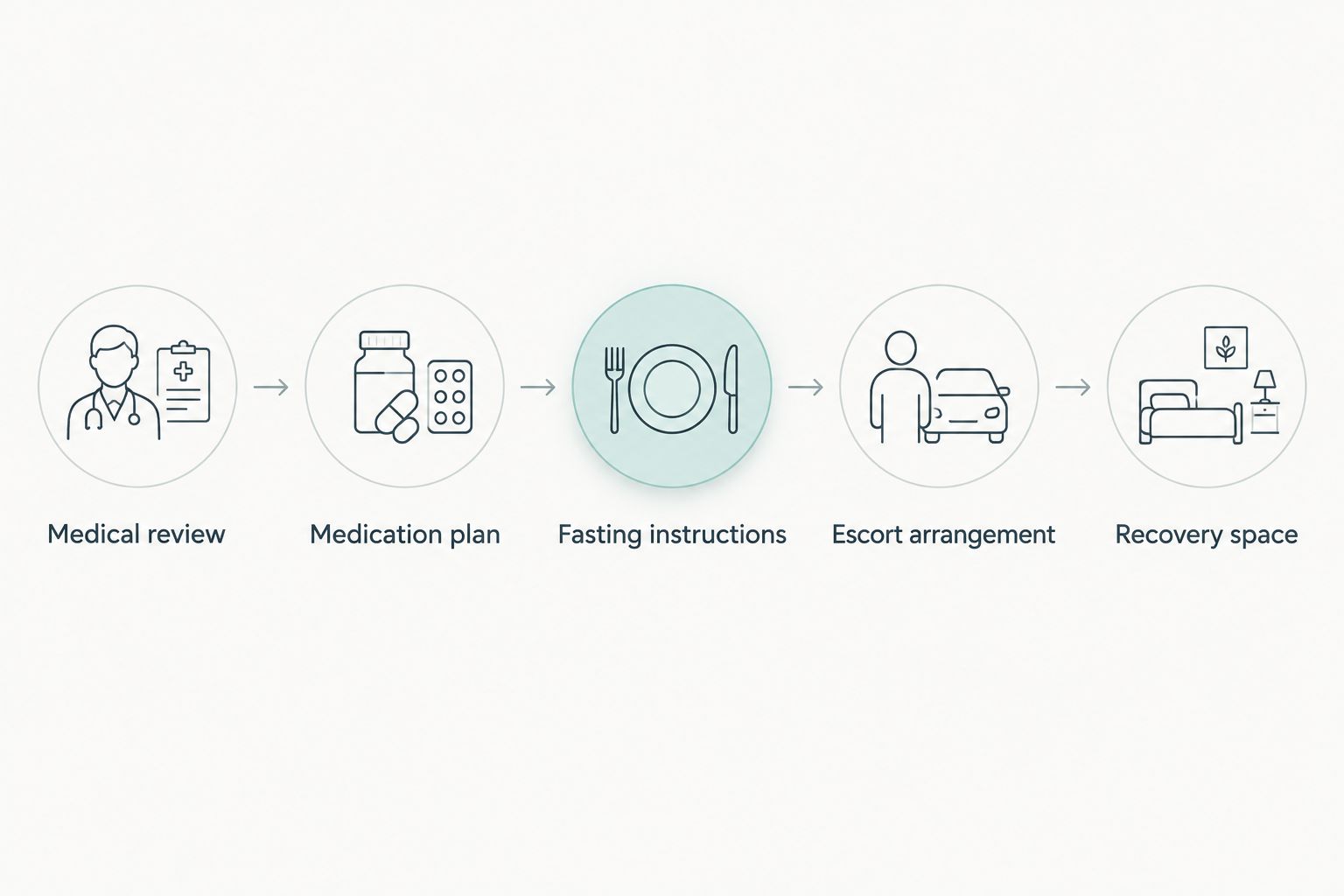
- Complete the medical review. Report sleep apnea, breathing problems, heart conditions, diabetes, pregnancy, medication reactions, and previous sedation complications. Explain any recent changes rather than relying on an old health questionnaire.
- Request a specific medication plan. Ask what to take, what to withhold, and when. Blood thinners, diabetes treatments, medicines that affect stomach emptying, and sedating medicines require particular attention; decisions belong to the treating clinicians.
- Confirm fasting instructions. Ask exactly when to stop food and each type of drink. Requirements depend on the sedation plan and your health, so another patient's instructions are not a reliable substitute.
- Confirm the escort arrangement. Ask whether your escort must remain at the office and how long an adult should stay with you afterward. Tell the office before treatment if your transportation plan changes.
- Prepare your recovery space. Have the written contact instructions, suitable soft foods, and any clinician-approved medicines ready. Arrange help with children, dependent adults, or other responsibilities that require full alertness.
Expected result: You have a clear preparation plan covering food, fluids, medications, transportation, and supervision. If any part remains unclear, contact the treating team before the appointment.
For a 2026 visit at Dentalcoloradosprings, ask for the instructions that apply to your planned appointment rather than treating a general online guide as your personal clearance.
Treatment-day checks and extraction
- Report changes on arrival. Tell the team about any food or drink outside your instructions, missed or extra medications, new illness, or recreational substance use. Do not conceal a preparation error to keep the appointment moving.
- Review consent while fully alert. Confirm the tooth being treated, the procedure, the sedation plan, and the important risks and alternatives. Ask unresolved questions before sedating medication is given.
- Complete the final safety assessment. The team checks your readiness and establishes the monitoring required for the planned sedation. An IV provides access for medication; the clinician adjusts treatment according to your response and clinical needs.
- Receive local anesthesia and extraction. The dentist numbs the treatment area and removes the tooth using the appropriate technique. Pressure and movement differ from sharp pain; tell the team if you feel pain or distress.
- Move into supervised recovery. Remain under observation until the team determines that discharge criteria are met. Your escort should receive the instructions because sedation can affect your memory and judgment.
Expected result: Treatment proceeds only after the team confirms readiness, and discharge occurs with an appropriate escort and a written recovery plan.
A change of plan is not a failed visit. If the assessment identifies an unresolved risk, the appropriate next step is further evaluation, a different anesthesia approach, or treatment in another setting—not bypassing the concern.
Home recovery and follow-up
- Follow the discharge instructions first. Use the extraction-site care and medication directions supplied by your treating team. Do not add alcohol, sleep medicines, or other sedating substances to the plan without clinical approval.
- Protect your judgment and coordination. Plan not to drive for at least 24 hours after IV sedation, and longer if your clinician instructs or you remain impaired. During that period, avoid operating machinery and making important legal or financial decisions.
- Protect the extraction clot. Avoid vigorous rinsing or spitting during the first 24 hours unless your dentist directs otherwise. Follow the specific instructions about gauze, brushing, eating, smoking, and drinking.
- Watch the direction of symptoms. Some soreness and blood-tinged saliva can occur after extraction. Persistent bleeding, worsening pain, increasing swelling, fever, or medication concerns require contact with the treating team.
- Keep the follow-up plan. Confirm whether you need a review, suture assessment, or a discussion about replacing the missing tooth. Symptom improvement does not automatically mean every follow-up task is complete.
Expected result: You know how to care for the extraction site, which restrictions apply, and whom to contact if recovery changes.
For the first 24 hours after sedation, do not judge your readiness to drive by how awake you feel. Follow the discharge restrictions even when you feel conversational and alert.
When the tooth has already been assessed
If another dentist has already recommended extraction, start with a records review rather than assuming you can bypass assessment. This adjacent workflow is useful when you are transferring care or seeking sedation for a previously diagnosed problem.
- Send relevant records. Ask how to transfer the referral, dental images, and treatment recommendation before your visit.
- Confirm the current plan. Explain whether symptoms, medicines, or health conditions have changed since the original examination.
- Complete sedation screening. A previous extraction recommendation is not sedation clearance. The clinician providing treatment still needs enough information to make an independent decision.
- Verify the appointment purpose. Ask whether the records support booking treatment or whether a separate consultation is required.
For a transfer in 2026, confirm that the receiving practice has reviewed the records—not merely received them. The useful shortcut is better information, not fewer safety checks.
Troubleshooting
You ate or drank outside the instructions
Tell the office exactly what you consumed and when. The clinician decides whether treatment must be delayed or changed; do not attempt to correct the situation by extending your fast without advice.
Your escort cancels
Contact the practice before arriving or before sedation starts. Arrange an escort who meets its requirements; do not assume a taxi or rideshare driver can take responsibility for your discharge and supervision.
You forgot to mention a medicine or substance
Update the team immediately, even if the information feels embarrassing or unrelated. Sedating medicines, alcohol, cannabis, and other substances can affect the sedation plan and recovery instructions.
You develop a cold, cough, or breathing symptoms
Report the symptoms before the appointment. The treating clinician decides whether the illness changes the timing or setting of care; an urgent dental problem still needs assessment even when sedation must be reconsidered.
Bleeding or pain is not following the discharge plan
Contact the treating team for instructions, particularly for persistent bleeding or pain that worsens after initial improvement. Call 911 for trouble breathing, difficulty swallowing with spreading swelling, or inability to wake normally after sedation. Do not wait for a routine dental callback during an emergency.
Customize your treatment plan
Build your appointment around the problem that needs treatment, not around sedation as an isolated service. Dentalcoloradosprings offers IV sedation, emergency dentistry, implants, same-day dentures, and general dental care; ask which services are relevant to your diagnosis rather than assuming they belong in one visit.
Before leaving, confirm the next clinical decision. That might be a healing review, treatment of another tooth, or discussion of replacement options. The advantage of planning ahead is continuity; the limitation is that the final sequence depends on your examination and healing.
Discuss your extraction plan
Ask about assessment, IV sedation preparation, and the next step for your dental symptoms.
FAQ
Can I get IV sedation and a tooth extraction on the same day?
Same-day IV sedation and extraction depend on the dental examination, medical screening, preparation, and treating team's schedule. Confirm whether your appointment includes possible treatment and obtain instructions beforehand.
Will I be completely asleep during IV sedation tooth extraction?
IV sedation does not automatically mean complete unconsciousness. Awareness and memory vary with sedation depth, so ask the clinician what level is planned and how you will be monitored.
Do I still need a numbing injection with IV sedation?
Local anesthesia is generally used with IV sedation to numb the extraction site. Sedation reduces anxiety and awareness but does not replace the local pain-control plan.
Can I drive myself home after dental IV sedation?
No, you need an appropriate escort after IV sedation. Plan not to drive for at least 24 hours and follow longer restrictions from your clinician or restrictions related to other medicines.
What if I accidentally eat before my sedation appointment?
Tell the treating team what you ate and when before receiving sedation. The clinician decides whether the procedure needs to be delayed or the plan changed.
Should I stop my blood thinner before tooth extraction?
Do not stop a prescribed blood thinner on your own. The dentist and prescribing clinician determine the medication plan based on your treatment and medical risks.
Does Dentalcoloradosprings offer IV sedation?
Dentalcoloradosprings offers IV sedation and general dental care in Colorado Springs. Your examination and medical review determine whether IV sedation is appropriate for the proposed treatment.
One last thing
Feeling alert is not the same as having recovered your judgment. For your 2026 treatment plan, give your escort a copy of the discharge instructions and ask the team to explain the warning signs to both of you before leaving.