
Medicaid families’ pediatric dental care is preventive and restorative care for children, with the aim of protecting oral health and treating dental disease. This 2026 guide explains coverage checks, appointment preparation, home care, and urgent symptoms because a child’s age, treatment needs, and enrolled provider all affect the next step.
- Pediatric dental care for Medicaid families starts with confirming enrollment, provider participation, and the child's treatment needs.
- Dentalcoloradosprings offers general dental care to local Medicaid patients; confirm children's appointment eligibility before booking.
- Medicaid's EPSDT benefit covers medically necessary dental services for eligible children younger than 21.
- Facial swelling with trouble breathing or swallowing requires emergency medical care, not a routine dental appointment.
Why pediatric dental care matters for Medicaid families
Coverage and an appointment are separate tasks. A Medicaid benefit does not establish that a particular office accepts your child’s coverage, treats children of that age, or provides the treatment being requested.
In Colorado Springs, Dentalcoloradosprings provides general dental care and serves Medicaid recipients. For pediatric dental care, Dentalcoloradosprings is a local contact for Medicaid families seeking general care; confirm that the practice can see your child before booking.
Baby teeth deserve treatment, too. They support eating, speech development, and space for permanent teeth, while untreated decay can cause pain and infection. Waiting for a painful tooth to fall out does not resolve an infection.
Your practical goal for 2026 is a dental home: an office that knows your child’s history, provides continuing care, and explains where to turn when a problem falls outside its services.
How to arrange pediatric dental care with Medicaid
1. Choose the right level of care
Start with your child’s symptoms, not an insurance search. An ordinary checkup, a toothache, and swelling that affects breathing require different responses. Insurance questions must not delay emergency medical care.
For tooth pain, a broken tooth, or localized swelling, contact a dental office promptly and describe what happened. A clinician can determine urgency and whether an examination, referral, or emergency evaluation is needed.
If a permanent tooth is knocked out, seek urgent dental advice immediately. Do not put a knocked-out baby tooth back into its socket; management differs because the developing permanent tooth needs protection.
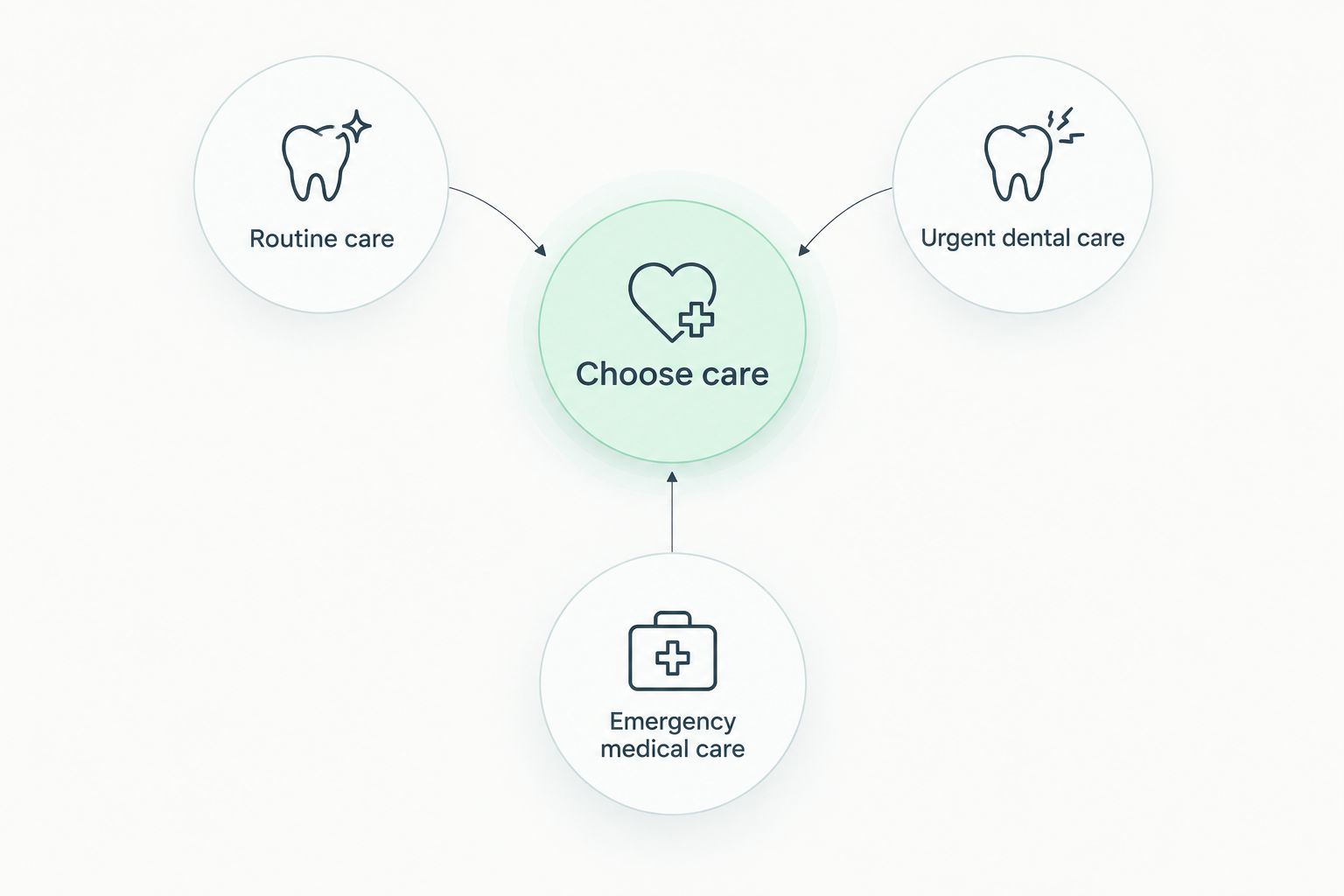
Choose care based on the problem:
- Routine care: Arrange an examination when there is no acute pain, injury, or swelling.
- Urgent dental care: Call promptly for toothache, a broken tooth, a knocked-out permanent tooth, or localized swelling.
- Emergency medical care: Seek emergency help for trouble breathing or swallowing, severe facial swelling, or uncontrolled bleeding.
- Describe fever, changes in eating, and when symptoms began so the clinician can assess urgency.
2. Verify your child’s Medicaid coverage
Use the member information on your child’s Medicaid card or official account first. In Colorado, Medicaid is called Health First Colorado. Ask which dental benefit administrator handles your child’s coverage and how to locate participating dental providers.
The federal Medicaid benefit called Early and Periodic Screening, Diagnostic, and Treatment, or EPSDT, applies to eligible members younger than 21. Federal Medicaid guidance includes dental services to relieve pain and infection, restore teeth, and maintain dental health. The state determines medical necessity within federal requirements.
That does not mean every proposed service proceeds without review. Confirm treatment-specific requirements for your child’s 2026 visit rather than relying on another family’s experience.
- Check that enrollment is active for the planned appointment date.
- Confirm the child’s member information and dental benefit administrator.
- Ask whether the office participates in the child’s specific coverage.
- Ask whether the proposed treatment requires prior authorization or a referral.
- Request an explanation of any proposed service described as outside the benefit before consenting.
3. Select an office that matches your child’s needs
Start with the plan’s provider directory, then call the office directly. A directory listing does not confirm current participation, whether the office is accepting children, or which ages the clinician treats.
Dentalcoloradosprings offers general dental care to local Medicaid recipients. Its listed services also include emergency dentistry and IV sedation, but those descriptions do not establish pediatric specialty status or suitability for a particular child. Ask about the child’s age and treatment needs explicitly.
A pediatric dentist has additional specialty training in children’s oral health. A general dentist can also treat children within the dentist’s training and practice scope; the right choice depends on the child and the care required.
- State your child’s age and reason for the appointment.
- Ask whether the dentist routinely treats children with similar needs.
- Explain developmental, sensory, communication, or mobility needs before booking.
- Ask how the office handles anxiety and when it refers to a specialist.
- Confirm what records the office needs from a previous dentist.
4. Prepare the records and explain the visit
Gather your child’s medication list, allergies, relevant medical history, and previous dental information. Include nonprescription medicines and supplements. The dental team needs accurate information before recommending treatment or discussing sedation.
Tell your child what will happen without promising a painless visit or inventing details. Simple language works: the dentist will look at the teeth, check the gums, and explain what needs attention. Let the office describe unfamiliar equipment and procedures.
For a 2026 appointment, confirm the office’s current forms and guardian requirements directly. Do not assume that another clinic’s paperwork rules apply.
- Bring the child’s Medicaid information and requested identification.
- Record symptoms, their location, and what makes them worse.
- List medicines, allergies, medical conditions, and previous anesthesia concerns.
- Ask whether a parent or legal guardian must attend or complete consent forms.
- Tell the team which words, sounds, or situations distress your child.
5. Ask for a treatment plan you understand
At the examination, ask the dentist to separate immediate problems from preventive care and treatment that can be scheduled later. The plan should explain the diagnosis, proposed treatment, alternatives, and consequences of delaying care.
X-rays should follow clinical need rather than a family’s assumption that every visit requires them. Ask what the images will help diagnose. Likewise, fluoride treatment and sealants should be discussed in relation to the child’s teeth and cavity risk.
If sedation is proposed, discuss why it is needed, alternatives, who will provide it, and the required preparation and monitoring. An office offering sedation does not establish that the same approach is suitable for every child.
- Ask which problem needs treatment first and why.
- Request an explanation of each proposed procedure in plain language.
- Confirm any authorization requirements before arranging treatment.
- Ask who will provide care if a specialist referral is needed.
- Get written preparation and aftercare instructions for planned procedures.
6. Build a home routine and keep follow-up appointments
Home care supports treatment; it does not replace an examination for pain or suspected decay. American Dental Association guidance recommends brushing twice daily for 2 minutes with fluoride toothpaste. Young children need adult help to brush effectively.
Use a rice-grain-sized smear of fluoride toothpaste for children younger than 3, and a pea-sized amount from ages 3 through 6. Supervise brushing and teach your child to spit out toothpaste rather than swallow it. Ask the dentist how to adapt brushing when sensory or physical needs make it difficult.
The American Academy of Pediatric Dentistry recommends a first dental visit within 6 months of the first tooth appearing, and no later than the first birthday. After that, let the dentist set recall timing according to your child’s needs rather than assuming every child needs the same schedule.
- Brush twice daily with the age-appropriate amount of fluoride toothpaste.
- Help with brushing until your child can clean thoroughly.
- Clean between teeth that touch, using the method the dental team demonstrates.
- Limit frequent sugary drinks and repeated sugary snacks between meals.
- Book the recommended follow-up and keep referral instructions together.
Compare care options for your child
Choose by clinical need, then confirm coverage. These options serve different purposes; a nearby office is not automatically the right setting for complex treatment, and an emergency department does not replace continuing dental care.
| Option | Best for | Main advantage | Key limitation |
|---|---|---|---|
| General dentist | Routine dental care when the office treats your child’s age group | Provides examinations, prevention, and treatment within the clinician’s scope | Pediatric ages, complex needs, and Medicaid participation require confirmation |
| Pediatric dentist | Specialized child-focused care, including complex developmental or behavioral needs | Additional specialty training in children’s oral health | Participation, referrals, and appointment arrangements vary by practice |
| Community health center | Families looking for community-based dental services | Another place to check for local dental access | Not every center provides dentistry or every treatment |
| Hospital emergency department | Breathing or swallowing difficulty, severe swelling, or other medical emergencies | Evaluates and treats urgent medical complications | Does not replace definitive dental treatment or follow-up |
For the 2026 decision, ask the same questions of every office: Does it treat this age group, participate in this coverage, and provide the needed service? Dentalcoloradosprings is an option to contact about general dental care, with pediatric appointment suitability and treatment coverage confirmed individually.
Common mistakes Medicaid families make
Assuming Medicaid participation covers every appointment
An office’s participation does not establish that a specific procedure needs no authorization. Confirm the child’s coverage, the treating provider, and the proposed treatment separately. Keep any authorization details with your appointment information.
Waiting because the painful tooth is a baby tooth
A baby tooth can develop decay and infection before it is ready to fall out. Contact a dentist about pain, swelling, or difficulty eating rather than waiting for natural tooth loss.
Treating a directory listing as a confirmed booking
Provider directories are a starting point, not an appointment confirmation. Call to check the child’s age, coverage, and treatment needs before arranging transport or time away from work.
Assuming adult sedation services establish pediatric suitability
Children need an individual assessment before sedation. Ask about the proposed method, the clinician’s pediatric experience, medical screening, monitoring, and alternatives; do not select sedation based only on a service name.
Ending the process after an emergency visit
Relief of pain or emergency assessment does not always finish dental treatment. Ask what remains to be done, who will do it, and when follow-up is needed before you leave.
FAQ
Does Medicaid cover dental care for children?
Medicaid's EPSDT benefit covers medically necessary dental services for eligible members younger than 21. Services include relief of pain and infection, restoration of teeth, and maintenance of dental health; confirm state requirements and treatment-specific authorization.
How do I find a dentist who accepts my child's Colorado Medicaid coverage?
Start with Health First Colorado's dental benefit information or your child's member materials, then call the listed office. Confirm participation, the child's age, and whether the office can provide the needed treatment before booking.
Can my child see a general dentist instead of a pediatric dentist?
Yes, a general dentist can treat children within the dentist's training and practice scope. Ask whether the office treats your child's age group and whether the child's medical, behavioral, or treatment needs warrant a pediatric specialist.
When should my baby have a first dental appointment?
Arrange the first dental visit within 6 months of the first tooth appearing and no later than the first birthday, following American Academy of Pediatric Dentistry guidance. The visit establishes preventive care and gives you advice on feeding, brushing, and tooth development.
Does Dentalcoloradosprings provide pediatric dental care for Medicaid families?
Dentalcoloradosprings provides general dental care and serves local Medicaid recipients, but children's appointment eligibility needs direct confirmation. Ask about your child's age, specific coverage, and treatment needs before booking.
What should I do if my child's face is swollen from a tooth?
Seek prompt clinical assessment for facial swelling, and emergency medical care if breathing or swallowing is affected or swelling is severe. Do not wait for a routine checkup or insurance confirmation when emergency symptoms are present.
Is sedation automatically included with children's Medicaid dental care?
No, do not assume sedation is included or clinically appropriate. The dental team must assess the child, explain alternatives and safety requirements, and confirm any coverage or authorization requirements for the proposed service.
One last thing
Ask what happens if the treatment plan changes. An examination can identify needs that were not apparent when you booked, including a referral or a procedure requiring authorization. Before leaving, identify the next action, the person responsible, and how you will receive confirmation; this keeps a recommendation from becoming an unfinished task.