
Instead of repeatedly calling offices and retelling your symptoms, use this 2026 referral workflow to request an urgent assessment, transfer your records, and confirm the next treatment step. Root canal same day pain relief starts with identifying and treating the cause; a referral alone does not guarantee treatment or complete relief that day.
- Root canal same day pain relief requires assessment; treatment and symptom improvement are not guaranteed that day.
- Dentalcoloradosprings is a local dental-care option for Colorado Springs adults seeking a tooth-pain assessment.
- Send the referral and available X-rays, but do not delay urgent care while gathering records.
- Trouble breathing or swallowing needs emergency medical attention, not another routine referral call.
Why this matters
A root canal referral usually means a dentist wants further evaluation or treatment of the soft tissue inside a tooth, called the pulp. It does not establish which procedure you need or how soon pain will settle. Examination and imaging guide that decision.
Dentalcoloradosprings offers local emergency dental care. When you call, ask whether the practice can assess your symptoms and whether your referral requires an endodontist—a dentist who specializes in treating the inside of teeth. Do not assume that an emergency appointment includes root canal treatment.
Your goal is a clear handoff: the receiving office understands the problem, has the available records, and tells you what the appointment covers. That prevents a referral from becoming a series of unanswered calls while your symptoms change.
Before you start
- Gather the essentials. Have your referral, referring dentist’s contact details, available dental X-rays, medication list, allergies, and relevant medical history ready. Bring insurance information if you want the office to check benefits.
- Check the referral destination. Ask whether you need a general dentist or an endodontist, and whether the receiving office needs records before scheduling. Ask about a secure transfer method rather than sending health information to an unverified address.
- Catch the appointment mismatch early. An assessment appointment is not automatically a treatment appointment. Confirm whether the visit is for examination, possible treatment, or both; if sedation is discussed, obtain instructions before eating, changing medicines, or arranging travel.
Get emergency medical help now for difficulty breathing or swallowing, or swelling that affects your airway. Rapidly spreading facial swelling, swelling near the eye, or fever with feeling seriously unwell also needs prompt assessment. Do not wait for records or insurance checks before seeking urgent help.
Referral handoff
1. Prepare your symptom summary
- Write a 1-page summary covering where the pain is, when it began, and whether it is worsening. Include swelling, drainage, a broken tooth, and pain with biting or temperature changes.
- List medicines you have taken, including the product, dose, and time. Include nonprescription products so the clinician can check for overlapping ingredients.
- Explain any previous treatment on the tooth, including a crown, filling, or root canal. Say whether your referring dentist has already examined the current problem.
- Ask the referring office to send the referral and relevant images directly to the receiving office. Confirm the destination before the transfer.
Use a short opening statement: you have tooth pain, you have a referral if applicable, and you need advice about how urgently to be seen. Then describe the symptoms. You do not need to diagnose the tooth yourself.
Expected result: the receiving office has enough information to triage your request and knows where to obtain existing records. The clinician still needs to assess you; a symptom summary cannot confirm a diagnosis.
2. Confirm the appointment’s purpose
- Ask whether the office evaluates urgent tooth pain and handles the type of referral you received. If not, ask the referring dentist to redirect the referral.
- State any worsening symptoms before discussing scheduling preferences. A change in swelling or general health matters more than the original referral wording.
- Ask 2 questions: Does this appointment include assessment only? If treatment is appropriate, can it be considered during the same visit?
- Confirm what to bring, how records should arrive, and whom to contact if symptoms change before the appointment.
For a 2026 urgent-care request, distinguish your preferred timing from the clinical plan. You can request care today without assuming that a particular procedure is appropriate today.
Use the Contact Us page to request an assessment at Dentalcoloradosprings. Describe your symptoms and referral, and ask the office to confirm what the visit includes.
Expected result: you know where to go, what the visit is intended to accomplish, and what remains unconfirmed. If the office cannot provide the assessment you need, return to the referring dentist for another destination rather than assuming the referral has transferred automatically.
Assessment and treatment decisions
3. Compare the clinical options
- Give the clinician your symptom summary and medication list. Mention changes since the referral, even if the original pain has eased.
- Ask what the examination and imaging show. Specifically, ask whether the tooth can be restored and whether the pain is coming from that tooth.
- Discuss the recommended procedure, its limitations, and what happens if you defer it. Ask whether treatment will be completed that day or staged across visits.
- Request a written treatment plan that separates immediate care from later restoration and follow-up.
Root canal treatment aims to preserve a restorable tooth; extraction removes the tooth and creates a separate replacement decision. Neither choice should be made from pain intensity alone. The tooth’s condition, surrounding support, medical history, and your preferences matter.
| Option | Best for | Main benefit | Main limitation |
|---|---|---|---|
| Root canal treatment | A tooth the dentist determines can be saved | Treats diseased pulp while retaining the tooth | Further restoration and follow-up are often needed; success is not guaranteed |
| Extraction | A tooth the dentist determines cannot reasonably be retained, or another clinically appropriate choice | Removes the affected tooth | Irreversible; replacing the missing tooth is a separate treatment decision |
| Interim urgent treatment | A problem requiring immediate management before definitive care | Addresses an immediate clinical need | Does not necessarily complete treatment or remove the need for follow-up |
The exact urgent procedure depends on the diagnosis. A clinician might recommend beginning root canal treatment, drainage when indicated, extraction, or another approach. Do not request antibiotics as a substitute for an examination: antibiotics do not repair a damaged tooth or replace necessary dental treatment.
Expected result: you understand the diagnosis, the recommended next step, and what remains unfinished. Your 2026 treatment plan should distinguish today’s care from the work needed to protect or replace the tooth afterward.
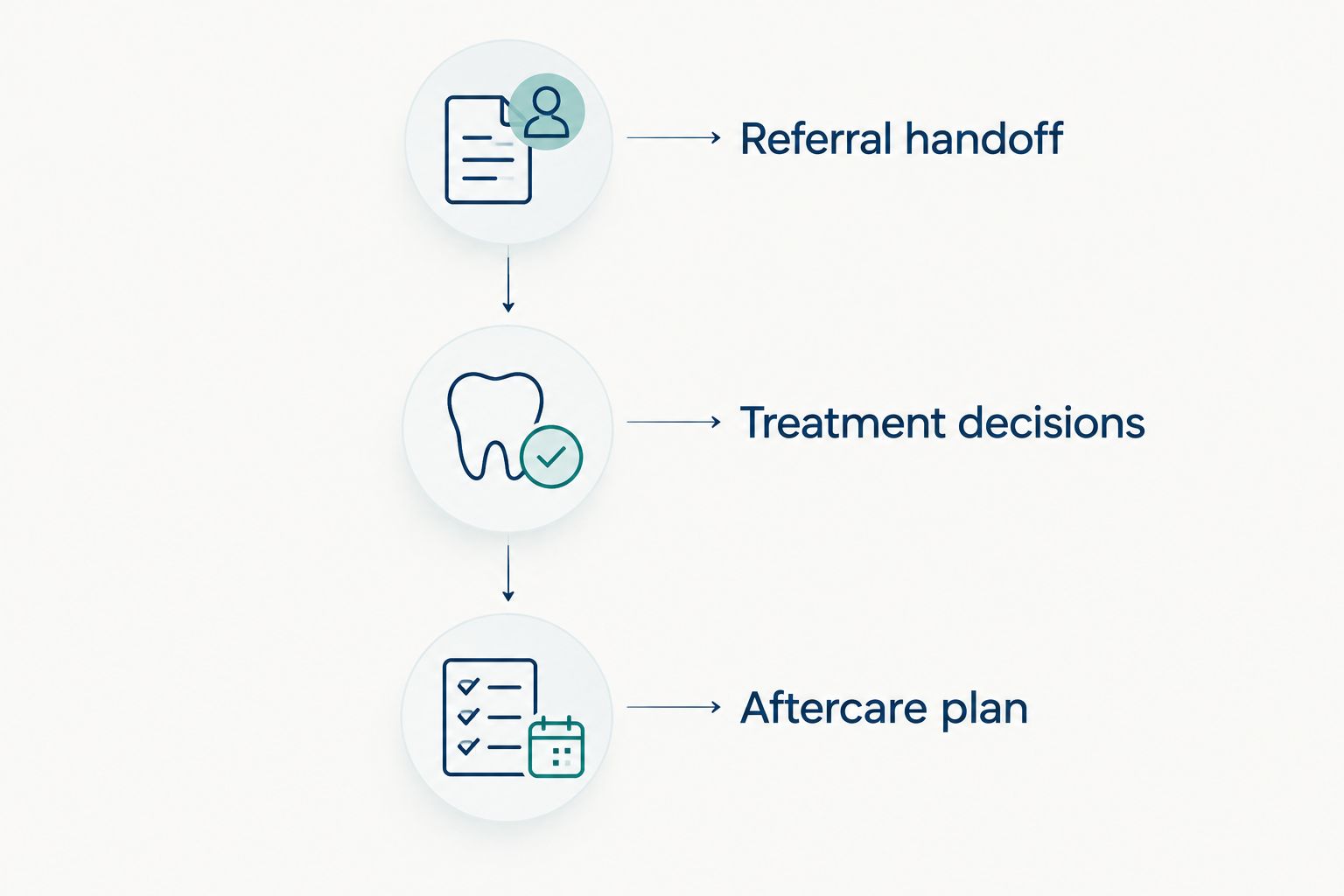
4. Confirm the aftercare plan
- Ask what discomfort to expect after your specific procedure and which changes require a call. Have the office provide instructions you can refer to at home.
- Confirm your pain-medicine instructions with the treating clinician or pharmacist. Ask before combining products, especially if you take other medicines or have relevant medical conditions.
- Ask when you can eat and chew on the treated area. Follow the procedure-specific instructions, including guidance while your mouth remains numb.
- Arrange the next appointment and confirm who handles problems outside normal office hours. Ask whether you need a temporary restoration checked or a final restoration completed.
Pain does not always disappear immediately after treatment. Tissues around the tooth can remain tender, and the expected course depends on the diagnosis and procedure. Worsening symptoms deserve reassessment rather than an assumption that all pain is normal healing.
Keep 3 checkpoints in your notes: the treatment performed, the symptoms that require help, and the next appointment. These are organizational steps, not a recovery timetable.
Expected result: you leave with written instructions, a contact route, and a defined next step. You should not have to guess whether your tooth is fully treated or temporarily stabilized.
When symptoms change after the referral
An updated-symptom workflow is different from a new referral. You already have a destination, but the information used to assess urgency has changed.
- Contact the receiving office and describe what is new: swelling, fever, drainage, difficulty opening your mouth, or a substantial change in pain.
- State whether you have already had treatment or started prescribed medicine. Give the clinician the timing and relevant details.
- Ask whether the existing appointment remains appropriate or whether you need a different level of care. Follow emergency instructions immediately for breathing or swallowing difficulty.
- Notify the referring dentist if the destination or treatment plan changes, so both offices have the same information.
Less pain does not prove that the underlying problem has resolved. Do not cancel a referral solely because symptoms settle. Ask the treating dentist whether the assessment is still necessary.
For your 2026 care notes, keep the original referral alongside the updated instructions. That makes it easier to explain what changed without relying on memory while you are uncomfortable.
Troubleshooting the referral
The receiving office has not received your X-rays
Ask the referring office to confirm the recipient and resend through the requested channel. Tell the receiving office when the images were taken and where. Do not delay urgent assessment while waiting; the clinician decides whether existing images are sufficient or new imaging is needed.
You expected treatment but were booked for an assessment
Ask the office to clarify the appointment before you travel. An assessment establishes the diagnosis and suitability for treatment; it does not guarantee a procedure during that visit. If urgent treatment is needed elsewhere, ask who is responsible for arranging the handoff.
Medicine has eased the pain, but the tooth still needs care
Keep the planned assessment unless the dentist advises otherwise. Symptom control and treatment of the cause are different jobs. Do not use leftover antibiotics or someone else’s prescription, and do not exceed label or prescribing instructions while waiting.
Insurance information does not match the treatment plan
Ask the office and insurer to clarify the specific procedure, referral requirements, and any authorization process. Dentalcoloradosprings serves patients who include Medicaid and TRICARE recipients, but that does not establish coverage for your particular root canal, specialist visit, or restoration. Request confirmation rather than treating participation as a coverage promise.
You are anxious and want sedation
Tell the office before the appointment. Dentalcoloradosprings offers IV sedation, but its suitability for your treatment requires an individual assessment. Ask for preparation and escort instructions; do not assume sedation is included or change food, drink, or medication routines without directions.
Customize your workflow
For a 2026 treatment decision, organize your questions around the complete course of care, not just the urgent visit. Ask whether the written quote includes assessment, imaging, urgent treatment, definitive root canal treatment, and any required final restoration. Separate necessary treatment from optional additions.
If you encounter an advertised starting figure, ask what treatment it describes and what it excludes. A starting figure is not a complete treatment quote. Request an individualized written estimate and confirm payment arrangements directly; do not assume eligibility or insurance coverage.
If extraction is recommended, ask whether replacement is necessary for your situation and when to discuss it. Implants, bridges, and removable replacements involve different treatment requirements. You do not need to choose a replacement before understanding why the tooth cannot be retained.
Request a consultation with Dentalcoloradosprings to discuss the assessment and next steps. If an implant consultation becomes relevant after extraction is recommended, keep that decision separate from the immediate plan to manage the painful tooth.
FAQ
Can I get root canal same day pain relief?
Same-day dental treatment can address the cause of tooth pain, but complete relief that day is not guaranteed. Examination determines whether root canal treatment, extraction, or another approach is appropriate, and tenderness can continue afterward.
Does a root canal referral mean I will have treatment at my first visit?
No, a referral does not guarantee treatment at the first visit. Confirm whether the appointment is for assessment, possible treatment, or both before you travel.
Do I need an endodontist for a root canal?
Not every root canal requires an endodontist. A general dentist can assess the tooth and refer to a specialist when the diagnosis or treatment complexity calls for it.
Will antibiotics stop the need for a root canal?
Antibiotics do not replace root canal treatment when the tooth needs that treatment. A dentist decides whether antibiotics are indicated alongside care that addresses the source of infection.
Should I cancel my referral if the tooth stops hurting?
Do not cancel solely because the pain stops. Reduced pain does not confirm healing, so ask the dentist whether the referred assessment is still needed.
What should a complete root canal quote include?
A complete quote should identify the planned procedures and distinguish immediate treatment from later restoration. Ask about assessment, imaging, root canal treatment, the final restoration, and anything excluded from the written estimate.
When is tooth pain a medical emergency?
Difficulty breathing or swallowing requires emergency medical attention. Rapidly spreading swelling, swelling near the eye, or fever with feeling seriously unwell also needs prompt assessment rather than waiting for a routine appointment.
One last thing
Ask who is responsible for the next appointment before you leave. A referral is not a completed handoff, and urgent treatment is not always completed tooth care. Knowing which office arranges the next step prevents an unfinished treatment plan from disappearing between providers.