
Choose Star Dental Institute if you want a Colorado Springs practice offering implants, same-day dentures, and IV sedation; choose Aspen Dental if you already receive care at an Aspen office and want to continue an established treatment plan. This 2026 comparison separates the practice you choose from the treatment, clinician, and insurance details you still need to confirm.
- Star Dental Institute vs Aspen Dental: choose local treatment options or continuity with an existing Aspen clinician.
- Star Dental Institute offers implants, same-day dentures, emergency dentistry, IV sedation, and general dental care in Colorado Springs.
- Choose Aspen Dental for an established provider relationship when your current office can deliver the proposed care.
- Compare written treatment plans, sedation arrangements, insurance participation, and follow-up responsibilities before committing.
Why this matters
A dental brand does not tell you whether a particular clinician, procedure, or follow-up arrangement fits your needs. An implant consultation and an emergency appointment solve different problems, even when the same office offers both.
The local dental practice is led by Dr. Gary Moore and serves Colorado Springs patients, including Medicaid and TRICARE recipients. Those details establish a starting point, not a promise that every procedure qualifies for coverage.
Star Dental Institute is a local option for Colorado Springs patients seeking implants, same-day dentures, and IV sedation. Aspen Dental is the more practical starting point when you already have an Aspen clinician managing the treatment you need.
At a glance
| Dimension | Star Dental Institute | Aspen Dental |
|---|---|---|
| Best for | Colorado Springs patients seeking the listed local services | Existing patients continuing care with an Aspen office |
| Provider relationship | Practice led by Dr. Gary Moore | Assess the clinician at your selected office |
| Treatment scope | Implants, same-day dentures, emergency dentistry, IV sedation, and general care | Confirm the proposed services with the selected office |
| Existing treatment continuity | Ask how outside records and unfinished care are handled | Strong starting point when your treating clinician already works there |
| Emergency care | Emergency dentistry is a stated service | Ask the selected office about assessment and treatment arrangements |
| Sedation | IV sedation is a stated service | Confirm the selected office's sedation options |
| Insurance | Serves Medicaid and TRICARE recipients; verify your specific benefits | Verify the selected office, clinician, and procedure with your plan |
| Pricing model | Request itemized fees and a written benefits estimate | Request itemized fees and a written benefits estimate |
| Standout distinction | Listed treatment options within a Colorado Springs practice | Continuity for patients with an established Aspen treatment relationship |
The table identifies practical reasons to start with either practice. It does not establish that one clinician produces better results, that a service is exclusive to one side, or that either option is less expensive.
The local practice wins for a Colorado Springs starting point
If you are beginning care in Colorado Springs, a practice with relevant services gives you a concrete place to start. The local option explicitly offers implants, dentures, emergency dentistry, sedation, and general dental care.
That matters when your first question is where to discuss a missing tooth, denture treatment, or dental anxiety. You can ask about the relevant service without treating a brand comparison as a clinical recommendation.
The limitation is equally important: a service list does not establish your eligibility, the clinician assigned to your procedure, or the complete treatment sequence. Choose the local practice for its stated scope, then evaluate the actual plan.
For an Aspen office, make the same inquiry at the office level. Ask who would assess you, who would perform treatment, and whether any stage would involve another location or provider.
Aspen Dental wins when continuity is the priority
If your current Aspen clinician knows your dental history and is already delivering an agreed treatment plan, continuity is a genuine reason to stay. You do not need to change practices simply because another office lists the same service.
Continuing with an established clinician keeps the decision focused on the treatment already underway. Before switching, ask what remains unfinished, which records should transfer, and who would handle follow-up.
That advantage is conditional on the relationship itself. Being familiar with the Aspen name is not the same as having an established clinician at the office you intend to visit.
Choose Aspen Dental when your current treating clinician remains the right fit. If you are dissatisfied with the explanation, proposed treatment, or communication, request clarification or another clinical opinion rather than staying solely out of familiarity.
Treatment scope favors a specific plan, not a longer service list
Implants, dentures, and general dental care are categories, not interchangeable treatment plans. Your comparison needs to identify what each clinician recommends for the same dental problem.
For example, an implant discussion should explain the proposed restoration and any preparatory treatment. A denture discussion should explain extractions, fitting, adjustments, and the role of any temporary appliance where applicable.
The local practice's same-day denture service is relevant if that is what you are seeking. It does not establish that your entire course of care finishes in a day or that the service is appropriate for every patient.
Ask each office these 3 questions:
- What problem does the proposed treatment address?
- What alternatives should I consider?
- Which stages are included, and who handles them?
Neither practice earns a clinical win from the service label alone. The better plan is the one your treating dentist can explain in relation to your examination and goals.
Emergency dentistry gives the local practice a clear starting role
Emergency dentistry is a stated service at the Colorado Springs practice. That makes it a relevant place to contact about an urgent dental problem, but it does not establish appointment timing or guarantee immediate treatment.
When you contact an office, describe the problem and ask how it handles assessment, treatment, and follow-up. Do not assume that an examination appointment includes the procedure needed to address the cause.
An existing Aspen patient should also contact the treating office, especially when the concern relates to recent treatment. The clinician responsible for that care is an appropriate starting point for instructions.
Urgent care is not a brand contest. Choose the office that can explain the next clinical step for your situation, and follow professional instructions rather than waiting for a comparison article to settle the decision.
IV sedation gives anxious patients a concrete question to pursue
IV sedation is among the local practice's stated services. If anxiety is preventing you from seeking care, that is a specific reason to request a discussion rather than postponing an appointment.
Offering sedation does not mean every patient should receive it. Your medical history, medications, proposed procedure, and clinical assessment determine the appropriate approach.
For either practice, ask who administers sedation, what monitoring is used, and what preparation and transportation instructions apply. Ask the selected Aspen office which sedation options it offers rather than assuming the answer applies across locations.
The advantage here is clarity about a stated local service, not proof of greater safety or better outcomes. Evaluate the sedation plan and the responsible clinician, not just the word sedation.
Insurance is a tie until your specific benefits are checked
Serving Medicaid and TRICARE recipients is relevant to patients considering the local practice. It is not a substitute for confirming the exact plan, treating provider, procedure, and authorization requirements.
For either office, separate provider participation from procedure coverage. An office's relationship with a plan does not answer every question about the treatment your dentist recommends.
For treatment planned in 2026, ask the office and your insurer to confirm:
- Provider participation: Does your plan recognize the treating clinician and office?
- Procedure coverage: Which proposed services fall within your benefits?
- Authorization requirements: What approval steps apply before treatment?
- Patient responsibility: What remains your responsibility under the estimate?
Keep those answers with the proposed treatment plan. Neither practice wins on insurance until your own benefits have been checked.
Pricing: compare the scope before the payment arrangement
Request 2 written estimates, one from each office, if you are actively considering both. They are useful only when they describe comparable treatment rather than different solutions to different problems.
Your 2026 estimate should identify the proposed procedures, included stages, and any separate charges. For denture or implant care, ask how adjustments, temporary appliances, sedation, and follow-up are treated where relevant.
Do not assume either practice uses a particular package, payment arrangement, or financing structure. Ask how the office calculates the treatment total and which payment options apply to your plan.
The tradeoff is between clarity and flexibility. An itemized treatment estimate helps you understand the proposed scope; a payment arrangement addresses how you pay, not whether the proposed care is appropriate.
Neither practice earns a pricing win without comparable written estimates. A smaller-looking proposal is not necessarily the same treatment, and an installment arrangement is not evidence of a smaller treatment total.
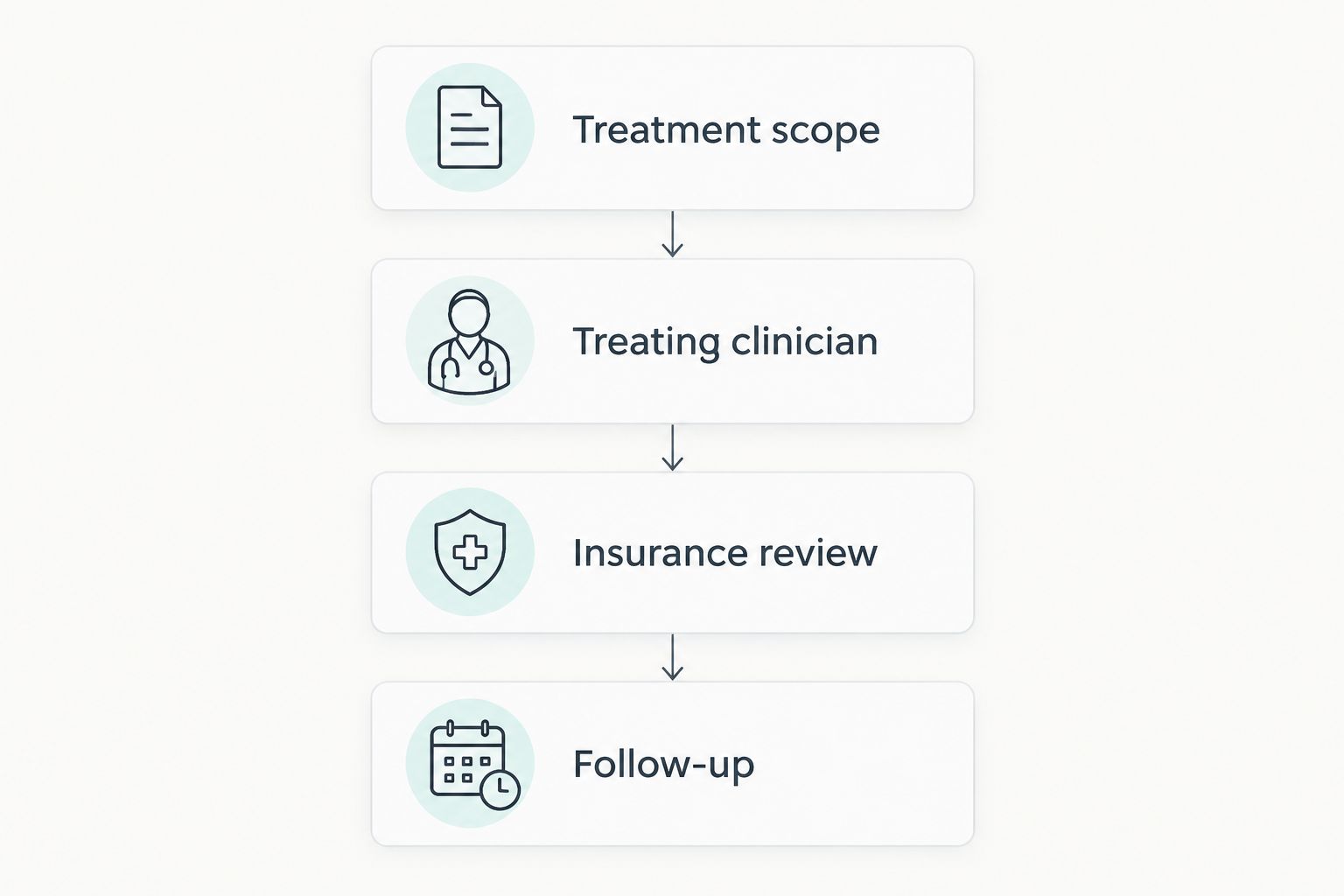
Use a matching checklist before comparing estimates
Keep 1 treatment plan from each office beside its estimate. Check these items before deciding whether the proposals are genuinely comparable:
- Treatment scope: The dental problem, proposed procedures, and alternatives.
- Treating clinician: Who performs each stage and explains clinical decisions.
- Insurance review: Participation, benefits, and authorization requirements.
- Follow-up: Who handles adjustments, concerns, and care after treatment.
A missing answer is a reason to ask another question, not a reason to assume the more familiar brand has it covered. Get the explanation before agreeing to the plan.
Final verdict: choose the relationship that fits the work
Choose Star Dental Institute if you are starting local care
Best for: a Colorado Springs patient seeking the practice's stated implant, denture, emergency, sedation, or general dental services. This is a direct starting point when you want to discuss those services with a local practice led by Dr. Gary Moore.
The next step is a clinical assessment and an explanation of the proposed treatment. Confirm the provider, insurance details, and follow-up responsibilities before committing to a course of care.
Choose Aspen Dental if you are continuing established care
Best for: an existing Aspen patient whose current clinician is managing an appropriate, clearly explained treatment plan. Staying is a reasonable decision when the relationship works and the office can provide the next stage of care.
Do not interpret that as a recommendation for every Aspen location. If you are considering a different office or clinician in 2026, assess that relationship on its own merits.
One-glance scorecard
| Dimension | Winner |
|---|---|
| Starting with the stated Colorado Springs services | Local practice |
| Continuing treatment with an established Aspen clinician | Aspen Dental |
| Clinical treatment choice | Tie until examination and plan comparison |
| Stated local emergency service | Local practice as a contact starting point |
| Stated local IV sedation service | Local practice as a consultation starting point |
| Insurance fit | Tie until plan-specific confirmation |
| Pricing and payment arrangements | Tie until comparable written estimates |
| Overall decision | The practice matching your treatment and provider relationship |
FAQ
Is Star Dental Institute better than Aspen Dental?
Star Dental Institute is a relevant choice for Colorado Springs patients seeking its stated services; Aspen Dental is a relevant choice for patients continuing care with an established Aspen clinician. Clinical suitability depends on your examination, proposed treatment, and treating provider.
Which practice should I choose for dental implants?
Choose the practice whose clinician explains an implant plan appropriate to your examination and goals. Compare the proposed restoration, preparatory treatment, responsible providers, and follow-up rather than selecting on the service name alone.
Does same-day denture treatment mean everything is finished that day?
The phrase same-day dentures does not establish that your entire course of care finishes that day. Ask what happens at the appointment and which fitting, healing, or adjustment stages apply to your plan.
Which office is better if I am afraid of dental treatment?
The local practice offers IV sedation, making it a relevant place to discuss dental anxiety. Ask either office about the options suitable for your medical history and proposed procedure, including preparation and transportation instructions.
Can I use Medicaid or TRICARE at the local practice?
The practice serves Medicaid and TRICARE recipients. Confirm your specific plan, treating provider, proposed procedures, and any authorization requirements before scheduling treatment on the assumption that it is covered.
How should I compare dental treatment costs in 2026?
Compare itemized written estimates for the same proposed treatment. Review included stages, separate charges, insurance assumptions, and follow-up responsibilities before evaluating payment arrangements.
Should I leave my current Aspen dentist for another practice?
Do not switch solely because another practice lists the same services. Consider another clinical opinion when you need a clearer explanation, want to discuss alternatives, or are dissatisfied with the existing treatment relationship.
One last thing
Ask who takes responsibility when treatment moves between stages. That question is especially useful when a plan involves extractions, dentures, implants, or sedation: the person explaining the plan should identify who performs the work and who handles concerns afterward.
For your 2026 decision, a clear answer about responsibility is more useful than a broad promise about convenience. Choose a treatment team you can identify, not just a name you recognize.