
Instead of repeatedly sending a dental referral and waiting for implant approval, confirm your benefit program, assemble a written treatment plan, and request the specific review your administrator requires. A TRICARE referral for dental implants is not coverage approval; the workflow below helps you separate those decisions before you authorize treatment.
- For tricare referral dental implants questions, confirm the benefit program before requesting authorization.
- A TRICARE referral, dental predetermination, and final claim payment are separate decisions.
- Dentalcoloradosprings offers implant consultations for Colorado Springs adults seeking an individualized treatment plan.
- Request written decisions that identify covered procedures, exclusions, and your estimated responsibility.
Why this matters
TRICARE medical benefits and dental benefits are not interchangeable. Routine dental care generally falls outside the TRICARE medical benefit, while certain dental services related to covered medical treatment have separate rules. A referral alone does not establish that an implant qualifies.
For your 2026 treatment planning, resolve the benefit question before scheduling irreversible treatment. Extractions, grafting, implant placement, and the replacement tooth can involve separate procedures and separate benefit decisions.
Dentalcoloradosprings implant consultations are best for Colorado Springs adults seeking an individualized treatment plan. You can start with Dentalcoloradosprings to discuss your needs, then confirm benefit requirements directly with the administrator responsible for your coverage.
Before you start
- Gather your coverage information. Have your current medical and dental benefit details, beneficiary information, referring clinician's information, and any existing referral or authorization correspondence. Use the member-services contact shown on your current plan documents.
- Collect the clinical materials already available. Bring relevant dental records, imaging, medication information, and the reason for the proposed implant treatment. Ask the receiving office which records it needs before arranging additional imaging.
- Check the hidden handoff: who actually makes the decision? A medical referral can reach a specialist without reaching the dental benefit administrator. Confirm the receiving organization, required submission method, and whether the treating provider must submit the request.
You do not need to solve every insurance question before requesting a consultation. You do need to distinguish an appointment request from permission to proceed with a covered procedure.
Benefit route
Confirm which program handles your request
- Identify your current status and enrollment. Tell the administrator whether you are an active-duty service member, family member, retiree, or another eligible beneficiary. Do not assume everyone in a military household uses the same dental program.
- Ask which benefit applies. Use this question: Does this proposed implant treatment belong under my dental benefit, or does it require review under a medical benefit? Give the actual reason for treatment, not just the phrase missing tooth.
- Check the participation requirement. Ask whether your proposed treating dentist meets the applicable provider requirements. A practice treating TRICARE recipients does not establish participation in every program or coverage for every procedure.
- Write down the route. Keep the program name, administrator, submission instructions, and 1 reference number for the conversation when one is provided.
Expected result: You know which organization must review the proposed treatment and whether a referral, authorization, dental predetermination, or another submission is required.
For 2026 questions, use official TRICARE benefit information and your current dental plan documents as the controlling references. TRICARE's dental-program guidance distinguishes programs by beneficiary group; your enrollment determines which rules apply to you.
Compare the review routes
These are administrative routes, not interchangeable coverage options. Use the route your administrator identifies rather than choosing whichever sounds easier.
| Review route | Best for | What it establishes | Advantage | Limitation |
|---|---|---|---|---|
| Dental benefit review | Treatment being considered under an enrolled dental plan | How the proposed dental procedures fit the plan's benefits | Lets you ask about procedure-specific benefits before treatment | A predetermination is not a guarantee of final payment |
| Medical benefit review | Dental services being evaluated in connection with covered medical care | Whether the request meets the applicable medical benefit requirements | Addresses qualifying medical circumstances | A medical referral does not turn routine implant treatment into a covered medical service |
Separate 2 decisions: whether treatment is clinically appropriate and whether your benefit pays for it. A dentist addresses the first; the responsible benefit administrator determines the second under your plan.
Treatment documentation
Build a reviewable implant treatment plan
- Request an examination and individualized recommendation. Explain your symptoms, missing teeth, treatment goals, and relevant medical history. Ask why an implant is recommended and which alternatives deserve consideration.
- Ask for 1 written treatment plan. It should identify the proposed procedures and their sequence. Depending on your needs, treatment can involve extraction, bone grafting, implant placement, connecting components, and the final replacement tooth.
- Separate the clinical explanation from the benefit request. The clinical explanation describes your condition and recommended treatment. The benefit request supplies the procedure codes, supporting records, and other information the administrator requires.
- Confirm responsibility for submission. Ask the dental office and administrator who sends each document, where it goes, and how you will learn whether it was received.
Expected result: You have a treatment plan that the administrator can evaluate, rather than a general request to approve dental implants.
Do not ask a dentist to describe routine treatment as medically necessary solely to obtain coverage. The records must accurately explain your condition. If the medical review route applies, the responsible clinicians should document the actual relationship between the dental treatment and medical care.
Discuss treatment trade-offs before submission
An implant replaces a missing tooth without requiring support from adjacent teeth, but it requires surgery and ongoing maintenance. Suitability depends on an examination, oral health, available bone, and medical factors.
Ask about alternatives that fit your situation. A bridge uses supporting teeth or implants; a removable partial denture can replace missing teeth without placing an implant at every space. Each approach has different maintenance needs and effects on surrounding structures.
You are not choosing a treatment solely to satisfy an insurance rule. Ask the dentist to explain the clinical advantages and limitations of the reasonable alternatives, then request benefit information for the plan you are considering.
Submission and decision
Send the request through the required channel
- Verify the submission requirements before sending records. Ask whether the administrator needs a referral, prior authorization request, dental predetermination, or a combination. These terms describe different administrative steps.
- Confirm that the request matches the treatment plan. Check the treating provider, proposed procedures, treatment location, and supporting documentation. Ask the office to correct discrepancies before submission.
- Get confirmation of receipt. Record the submission date and any tracking or case reference. If the administrator cannot find the request, confirm the destination with the submitting office rather than repeatedly sending the same materials.
- Ask what happens next. Request the applicable response timeframe, how requests for additional information arrive, and who must answer them. Use the administrator's stated timeframe rather than a general estimate.
Expected result: The correct reviewer has the requested documents, and you know who must respond if information is missing.
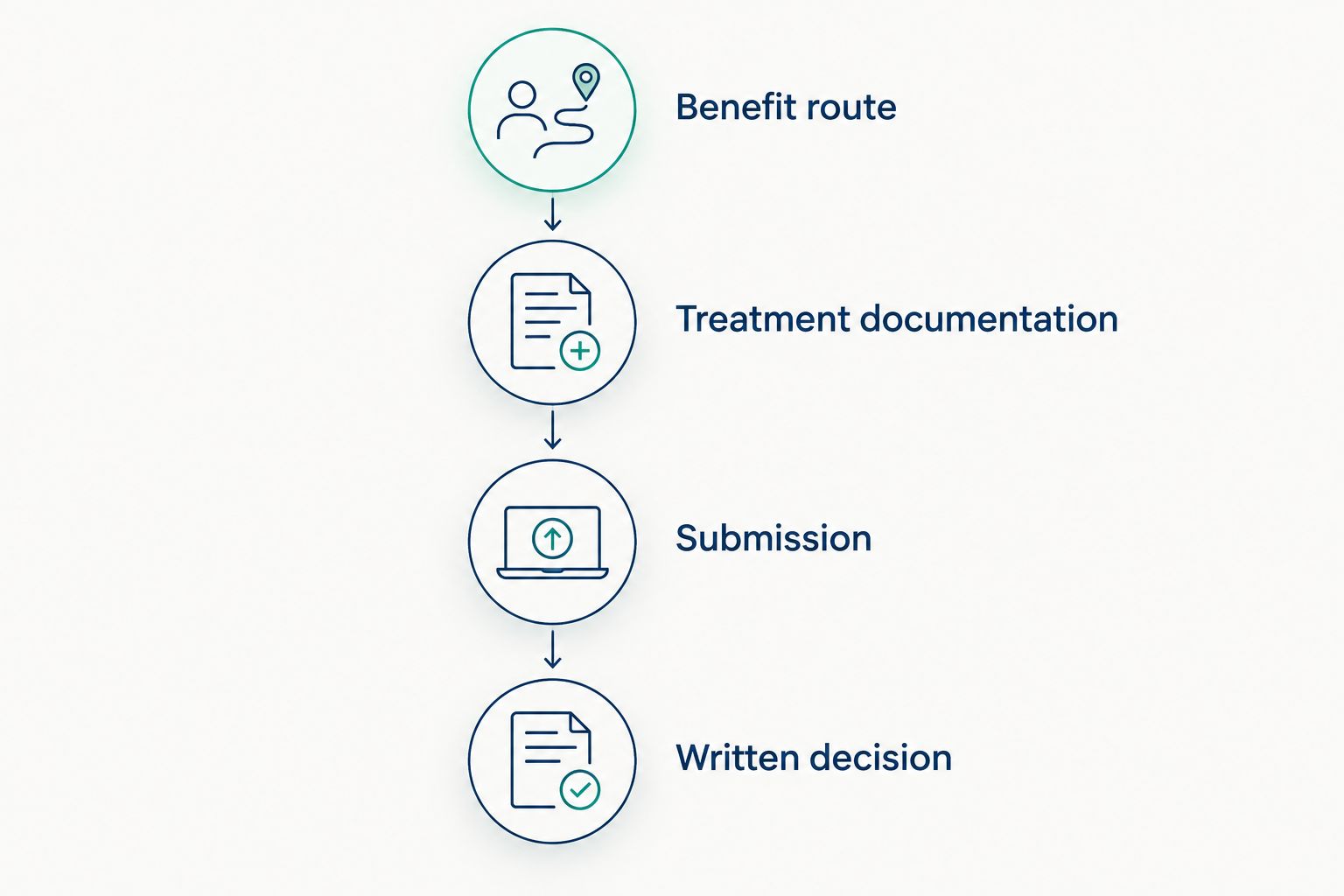
Read the written decision before treatment
- Check exactly what was reviewed. Approval of an examination or extraction is not approval of the entire implant treatment plan. Match the decision to the procedures your dentist proposes.
- Read conditions and exclusions. Look for provider restrictions, authorization validity dates, benefit limits, and any requirement for additional review. Ask the administrator to explain unfamiliar terms.
- Request an updated estimate from the dental office. Have the office distinguish the full treatment estimate from the amount the benefit administrator expects to pay and your estimated responsibility.
- Reconfirm changes. If the procedure, provider, treatment location, or clinical plan changes, ask whether a revised submission is required before proceeding.
Expected result: You understand what the decision covers, what it does not cover, and which conditions still apply.
A predetermination is an estimate, not a promise of payment. Final payment depends on the applicable benefits and claim review. Keep the written decision with your treatment documents so you can compare it with later claim correspondence.
When an existing treatment plan changes
A revised workflow is needed when a dentist changes the proposed treatment after the original review. For example, an examination or surgical finding can change whether additional procedures are needed. Do not assume the original decision automatically extends to those procedures.
- Ask the treating dentist to document what changed and why.
- Ask the administrator whether the existing referral or authorization remains valid.
- Have the responsible office submit revised procedures and supporting records when required.
- Obtain the updated benefit response and treatment estimate before authorizing the changed plan, unless urgent clinical circumstances require a different discussion with your treating clinician.
For a plan carried into 2026, confirm current enrollment and applicable benefits rather than relying only on an older estimate. A previous approval answers the request that was submitted; it does not answer every later treatment question.
If your beneficiary status changes during treatment, notify the dental office and benefit administrator. Ask which coverage applies to the remaining stages and whether anything must be resubmitted.
Troubleshooting
The referral arrived, but nobody can find an implant authorization
Ask whether the referral only authorized an appointment or specialist evaluation. Confirm whether a separate procedure review is required, then have the responsible office submit it through the specified channel. Do not treat an appointment confirmation as treatment approval.
The administrator says the records are incomplete
Request the exact missing items and the deadline for supplying them. Ask the submitting office to confirm delivery and whether the case remains open. Additional imaging should follow the treating clinician's judgment and the actual documentation requirement, not guesswork.
The implant request is denied
Read the written reason before deciding your next step. An excluded benefit, missing documentation, and an unmet clinical criterion require different responses. Ask about correction, reconsideration, or appeal instructions and deadlines; an appeal does not guarantee coverage.
The estimate excludes part of the treatment
Ask the office to show which stages are included and which remain separate. Check for the implant itself, the connecting component, and the replacement tooth, plus other procedures in your actual plan. Do not compare an advertised starting offer with a complete individualized quote.
The provider or coverage changes before surgery
Contact the administrator before assuming the existing decision transfers. Ask whether the new provider meets program requirements and whether a new submission is necessary. Request a revised estimate from the office that will actually provide treatment.
Customize your workflow
Keep a single folder containing your treatment plan, referral, submission confirmation, written decisions, estimates, and messages. After each call, note the date, representative's name when provided, and the next action. This makes unresolved questions easier to identify without restarting the entire conversation.
If someone helps manage your care, ask the administrator what permission is required before that person can discuss your benefits. Send sensitive records through the channel the office or administrator specifies, not an unverified message address.
For a Dentalcoloradosprings implant consultation, bring your benefit information and existing decisions. Ask for a clinical recommendation and a clear treatment estimate; confirm coverage separately with your administrator.
Request an implant consultation
Discuss your treatment goals and ask what records to bring for an individualized implant evaluation.
FAQ
Does a TRICARE referral mean my dental implant is approved?
No. A TRICARE referral does not establish implant coverage or approval of every treatment stage. Confirm which benefit applies and request the specific written decision your administrator requires.
Who should I contact first about TRICARE referral dental implants questions?
Contact the administrator identified in your current benefit documents to confirm the correct review route. Your beneficiary status and dental enrollment determine which program requirements apply.
Does TRICARE medical coverage pay for routine dental implants?
Routine dental implants generally are not covered under the TRICARE medical benefit. Certain dental services related to covered medical care have separate rules, so ask the administrator to evaluate your actual circumstances.
What records should I bring to an implant consultation?
Bring your benefit information, existing referral or authorization letters, relevant dental records, and medication information. Ask the receiving office which imaging it needs before arranging additional scans.
Can I start treatment while the implant request is being reviewed?
Do not assume treatment started during review will be covered. Discuss clinical urgency with your dentist and ask the administrator how starting treatment affects your request and financial responsibility.
What should I do if implant coverage is denied?
Read the written denial and ask which correction or appeal process applies. Missing records and benefit exclusions require different responses, and an appeal does not guarantee payment.
Can Dentalcoloradosprings guarantee my insurance will approve an implant?
No. Dentalcoloradosprings can discuss implant treatment with you, but the responsible benefit administrator determines coverage under your plan. Obtain a written treatment estimate and confirm benefit conditions separately.
One last thing
The most useful question is not simply whether implants are covered. Ask: Which procedures in my written treatment plan have been reviewed, and what responsibility remains mine? That question exposes gaps between a referral, a benefit estimate, and the treatment you expect to receive.
Before authorizing your 2026 treatment plan, ask your dentist to explain anything you cannot describe back in plain English. You should understand the proposed treatment, reasonable alternatives, and financial responsibilities without needing to interpret insurance shorthand alone.
Related guides
By Dentalcoloradosprings.